


In the year 2000, American Airlines did something unusual. The biggest and most longstanding complaint from passengers was then — like now — about space, or lack thereof. Economy class is not only uncomfortable, but an exercise in maintaining one’s dignity in the face of mild disrespect.
The airline spent almost $75m removing more than 7,000 seats from its aircraft, in order to increase economy seat pitch (essentially legroom technically the distance between a fixed point on one seat and the same point directly in front) by an average of three inches. In other words, the carrier listened to its customers. Big mistake. Huge.
Despite a mass marketing campaign called “More Room Throughout Coach”, the gambit was a financial failure, in a case of stated versus revealed preferences. Passengers said they valued comfort, but when it came to buying tickets, they chose the cheapest fare available in a competitive market. The missing seats were quietly inserted back in — and an industry truism was born.
Except, passengers clearly are prepared to pay more to get more. One only has to glance over at the boom in economy extra seats and the premium economy cabin. The failure of American Airlines’ “More Room Throughout Coach” was in taking away choice. Travellers are more than happy to pay for specific perks (see: the rise of unbundling) or upgrades. What they do not like is being denied the option of the cheapest possible ticket, or the fact that their money is not buying them any sort of exclusivity.

A classless society
It is striking how, over recent decades, premium cabins have enjoyed revolutionary upgrades, from flat beds and all-aisle access to onboard bars. Yet at the same time, the economy experience today looks remarkably similar to that of the 1990s, albeit with bigger seat-back screens and charging ports. Chief financial officers really do not want an economy seat so good that it will cannibalise premium products. They needn’t worry.
Indeed, the experience at the back of the plane has if anything deteriorated. On short haul flights, seat pitch has fallen to around 28 inches on budget airlines, down from 31-32 inches in the 2000s. Meanwhile on the Boeing 777, the sort of plane that will take you over oceans, most carriers have squeezed in an extra seat per row. Positive innovations are conspicuous by their absence.
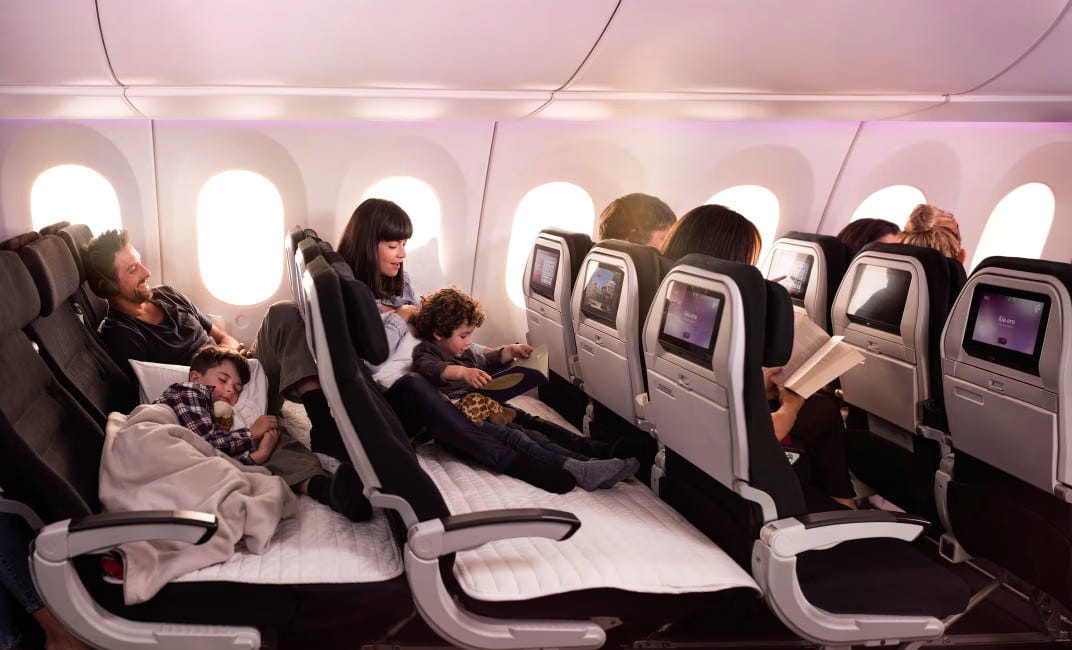
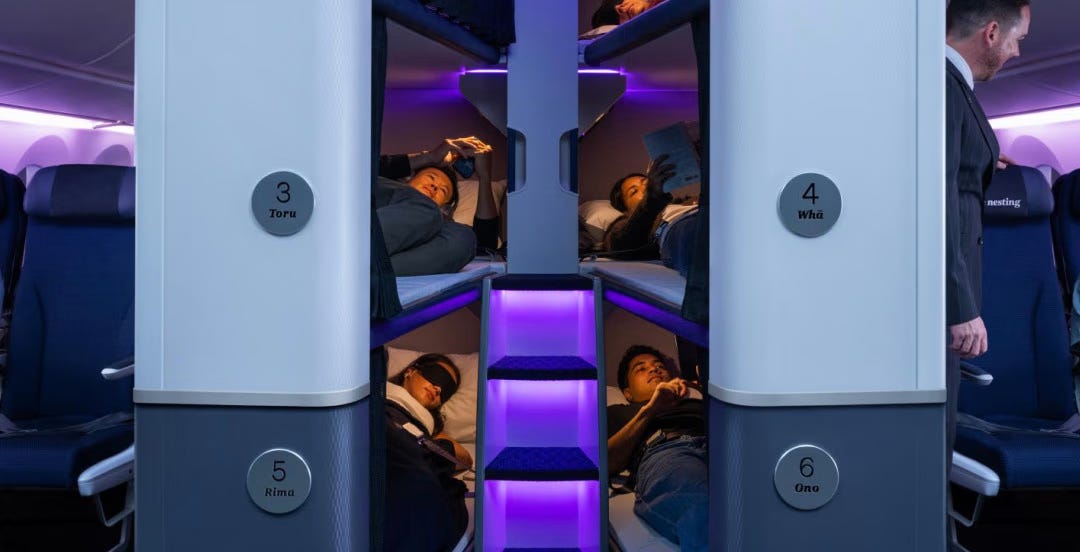
But Air New Zealand has never been afraid to differentiate. It unveiled its Skycouch concept in 2010, whereby for an upgrade passengers can turn a row of three seats into a lie-flat bed — the poor man’s business class, if you will. And today, the airline has gone further, launching Skynest, what it ambitiously calls “the world’s first sleep pods in the sky”. But what they really mean is bunk beds.
Top or bottom?
This is what the promotional images want you to think it will look like.