


It’s easy to forget, because of how it all ended: in confusion, excruciating pauses and ultimately in victory for authoritarianism. But during his prime, Joe Biden was one heck of a communicator.
“That’s not change, that’s more of the same!” he confidently asserted during his 2008 address to the Democratic National Convention, in a straightforward but devastating critique of John McCain’s desperate attempts to distance himself from the heroically unpopular Republican incumbent, George W. Bush.
“Don’t compare me to the almighty, compare me to the alternative” was another of his pithy maxims. But my favourite Bidenism relates, perhaps unsurprisingly, to fiscal events. Adopting his most empathetic tone, Biden would turn to camera and urge his opponents: “Don’t tell me your values. Show me your budget — and I’ll tell you your values.”
In that spirit, following yesterday’s festivities, what are Andy Burnham and John Healey’s values?
The rest is fiscal policy
The first order of business is where not to start. The Budget speech is, for my money, the inexplicably popular podcast to the Red Book and Office for Budget Responsibility’s painstakingly researched (and only grudgingly acknowledged) source material.
If you simply listened to Healey’s words and then popped to Pret for a Dom Raab special,1 you might be forgiven for concluding that the UK economy was doing broadly fine, and the chancellor’s main job was to dole out a few tens of millions here and there to well-deserving interest groups. Would that it were so simple.
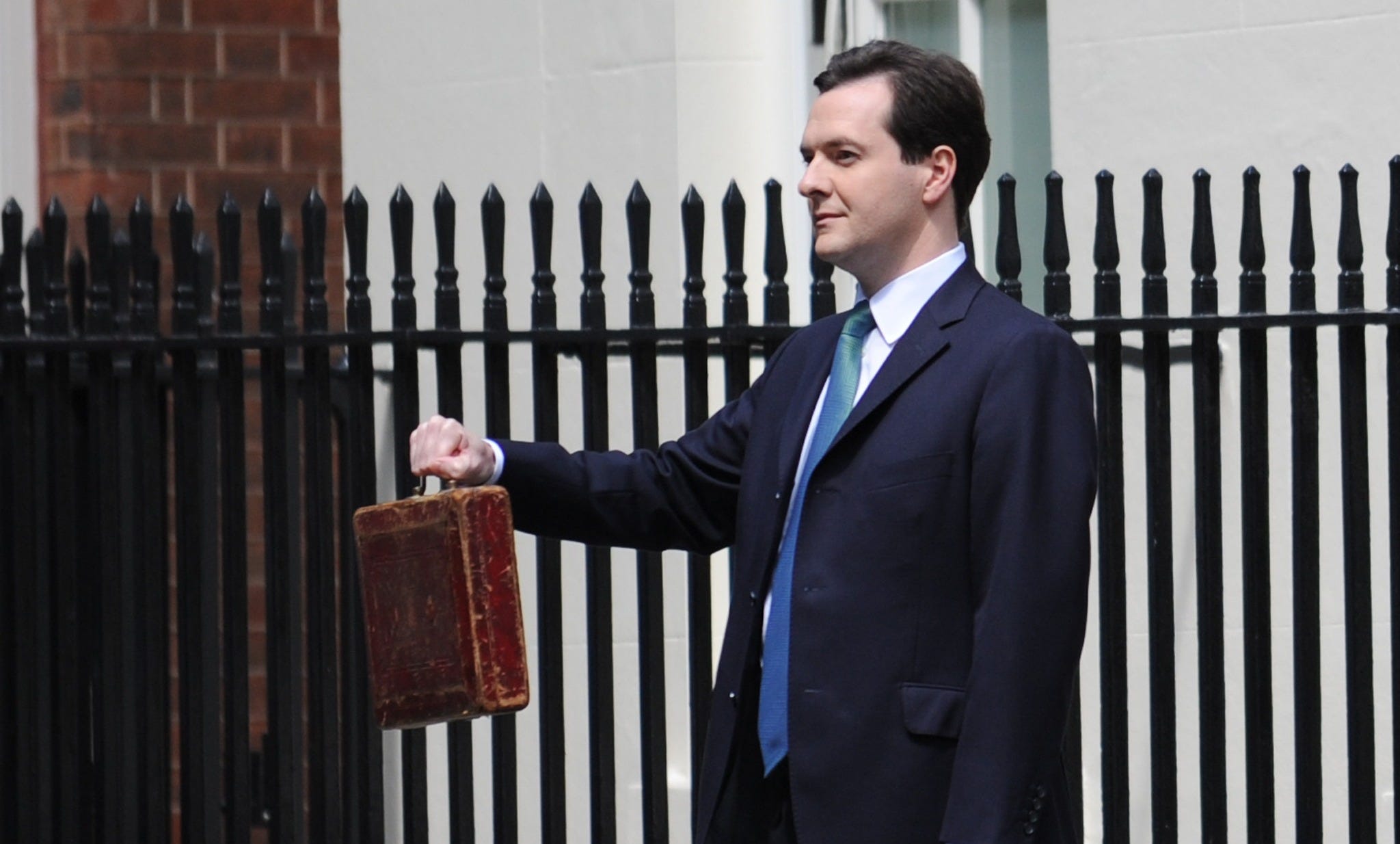
To be fair to Healey, things were even stranger in the George Osborne days. Not the austerity or pro-NATO position of the US government, but the fact that the Treasury had to spend actual money on actual projects in order to land the chancellor’s jokes. It may cost nothing to be polite but being funny can be fiscally irresponsible.
Strait Talk Express
So, the headlines. The UK economy has, in the short-term, weathered the Hormuz-shaped shock better than expected. But there is no getting around it — the Iran war has made Britain, a run-of-the-mill net energy importer, poorer.
For consumers, it has sent the cost of gas and electricity soaring, with a compounding impact on inflation. And for the government, it has hit the public finances hard thanks to higher borrowing costs — around £15bn more on debt interest this year than the OBR forecast back in March, driven by increased inflation raising the cost of index-linked gilts.
Given the sheer amount of change since the spring, the chancellor effectively had two options:
Change with it — that is, offer some combination of spending cuts and tax rises, or
Allow the fiscal headroom bequeathed by Rachel Reeves to absorb some of the shock in the immediate term.
Healey has enthusiastically plumped for the latter. From welfare reform to wealth taxes, options are very much being kept open. This is not obviously stupid, given the sheer level of uncertainty — economic, geopolitical and military — going around. But it’s also not exactly what Burnham promised in his poetry phrase.
So, in place of major tax reforms or big-ticket spending items, we got the chancellor’s refrain of “breathing space”. For households, that looks like short-term cost of living support while for government, it provides for time to work out next steps. The problem, which I set out below, is that this Budget falls short on both fronts.
Pain in every postcode
This is not to ascribe blame per se. For one thing, Healey and Burnham are not responsible for oil jumping from $60 a barrel at the start of the year to $115 today. But they do still have choices around how to respond. And in an uncertain world, a smaller fiscal buffer (£15bn, down from £23.6bn) confers real risk.
Specifically, that if the Strait of Hormuz remains closed and economic conditions continue to deteriorate, the chancellor will be forced to come back next year to raise taxes, with all the negative pre-Budget discourse that entails. Just ask Healey’s predecessor, sat on the backbenches.
As the OBR notes, “if productivity growth were 0.5 percentage points higher or lower than forecast, borrowing could reach £50 billion lower or £40 billion higher.” That is essentially a big, fiscal watchdog-shaped shrug.
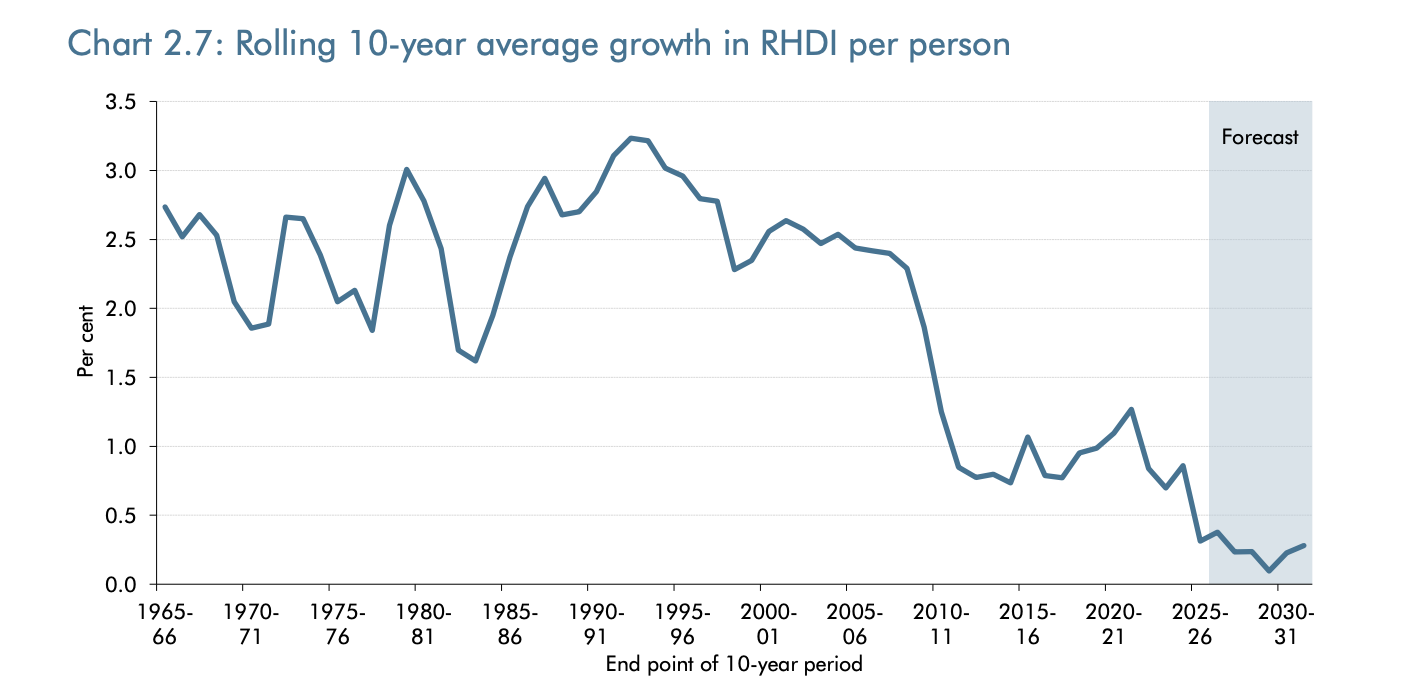
One thing that is guaranteed, however, is pain. FOMO dictates that I share the graphic everyone else already has. It shows real household disposable income, a somewhat esoteric term for ‘do people feel like they have any money?’ And it doesn’t make for pretty reading. The forecast is bad, made even worse by the fact that it’s been two decades of this sort of thing with no end in sight.
The broader phenomenon is neatly illustrated by the energy support package. Compared with the equivalent proposed by Liz Truss, it’s fairly small beer: a £100 cash transfer to households living in council tax bands A–D (in a bearish sign, the website for checking your home’s tax band swiftly crashed), coming in at a cost of £2.6bn. While £100 is not to be sniffed at, it runs into the uncomfortable reality that the energy price cap is set to rise by almost £300 next January and again later in the year.
The simple truth is that, given the cost of energy, the number of households in the UK and the government’s precarious fiscal position, it is very difficult to subsidise people’s bills to the point where they might actually thank you for it.
For instance, Healey could have announced a £1,000 package at far greater cost. Of course, we’ve seen that film before. The bond market freaks out, the cost of borrowing soars, the government U-turns and everyone is poorer than when they started.
Can we get back to politics, please?
Briefly, because I can feel my average dwell time slipping. It might seem churlish to criticise a Budget for not doing much when that was precisely the aim. Don’t make things worse, don’t further aggravate business and for goodness sake, don’t spook the bond market.
To that end, mission accomplished. Borrowing costs barely budged, bank shares even rose despite a hike in the profits surcharge (though I suspect this is a result of wishful thinking: any ‘time limited’ tax rise is likely to be about as temporary as when income tax was introduced as a stop-gap measure to fund the wars against Napoleonic France.)
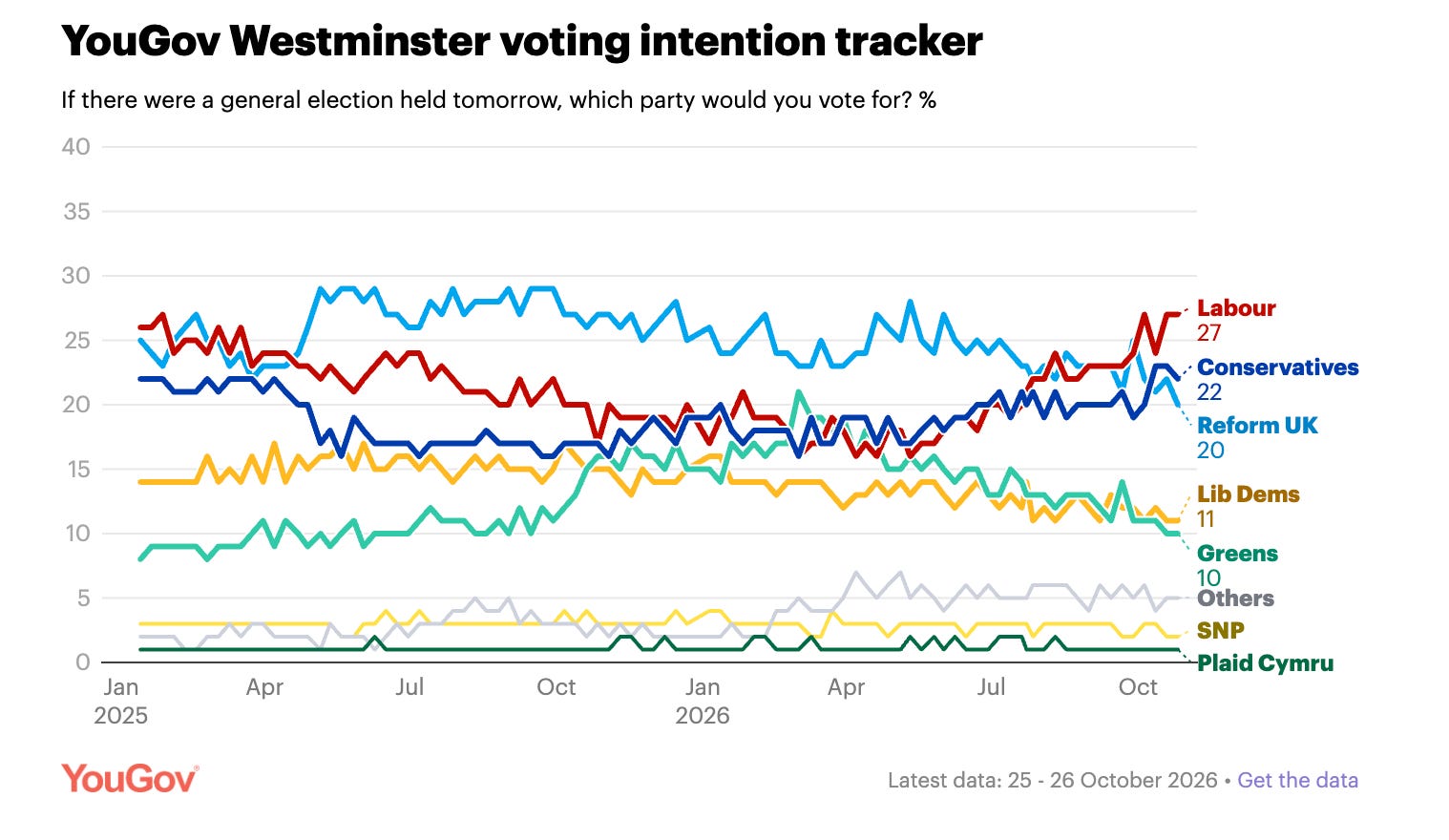
It’s just that… Burnham will never be more powerful than he is today: a massive parliamentary majority, rising poll numbers, a cabinet that isn’t quite compliant (see Rosebank, immigration reform) but is pretty darn eager to impress the new boss.
And then observe the sheer tonnage of can-kicking: on welfare reform, defence spending, you name it, pushed into the Spending Review, now not expected until late 2027. This is the same guy who as recently as a few months ago wanted to unpick Thatcherism and blow raspberries at buyers of gilts?
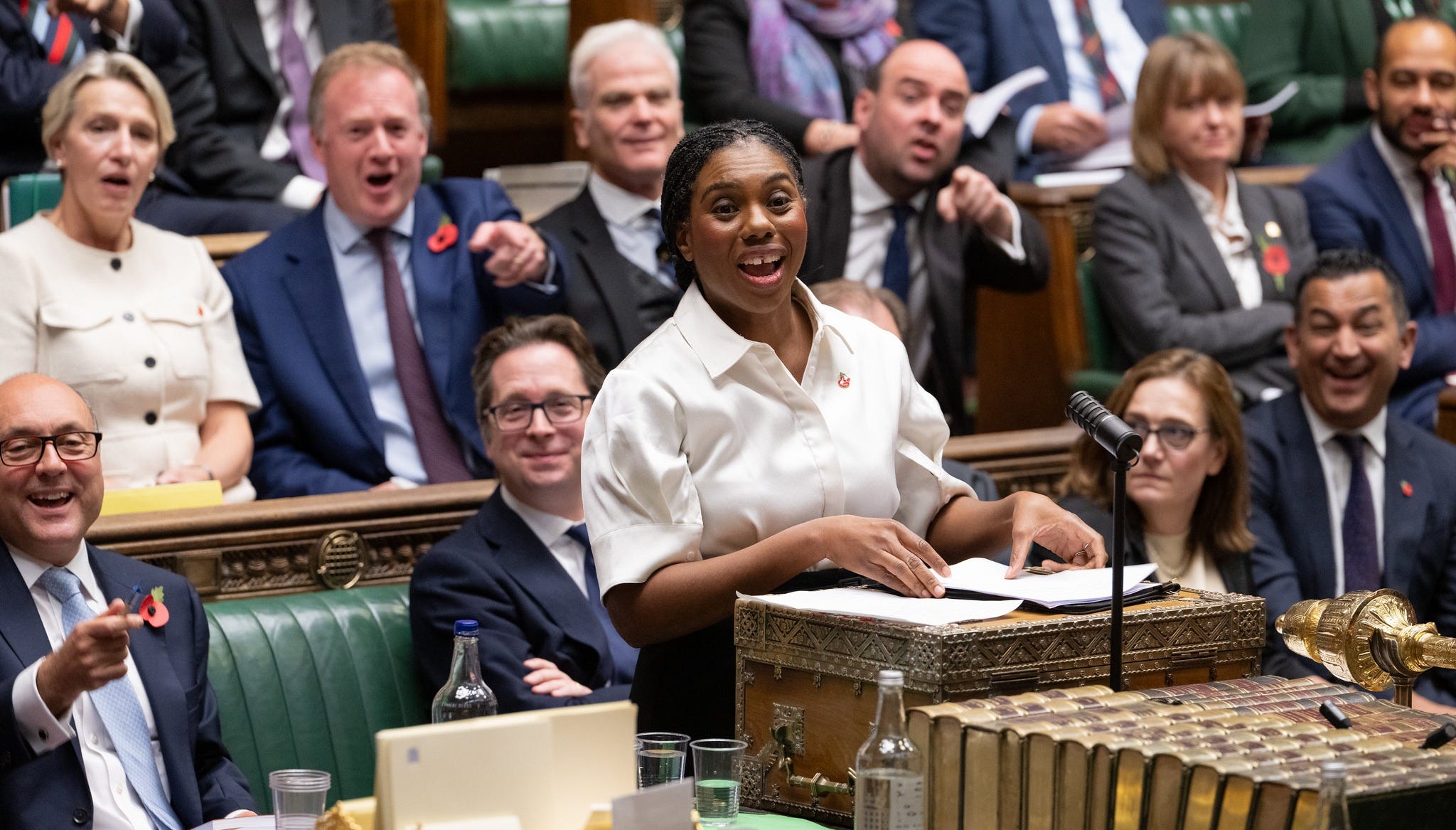
As for Kemi Badenoch, the sheer lack of surprises meant she was able to deliver her Budget response — historically a fiendishly difficult task — with little deviation from the pre-prepared script. She even got, by the standards of the Commons chamber, a decent joke in, about how Burnham had gone from wanting to overturn 40 years of neoliberalism to cutting 4p off the price of gherkins.
It’s just my job, five days a week
In this writer’s opinion, the single biggest disappointment in this Budget was that Healey didn’t get out his novelty-sized scissors, cut the ribbon and proudly declare the Strait of Hormuz open. In retrospect, he and Burnham really shouldn’t have campaigned quite so vigorously for Donald Trump’s election in 2024, but we are where we are.
In the event, I think you know what the prime minister’s values are: a larger role for the state in delivering services, an unprecedented rebalancing of power from Westminster to the regions and higher taxes on the wealthy. But you wouldn’t necessarily get that impression from this Budget.
Chicken Caesar and Bacon Baguette, Super Fruit Pot and a Vitamin Volcano Smoothie