


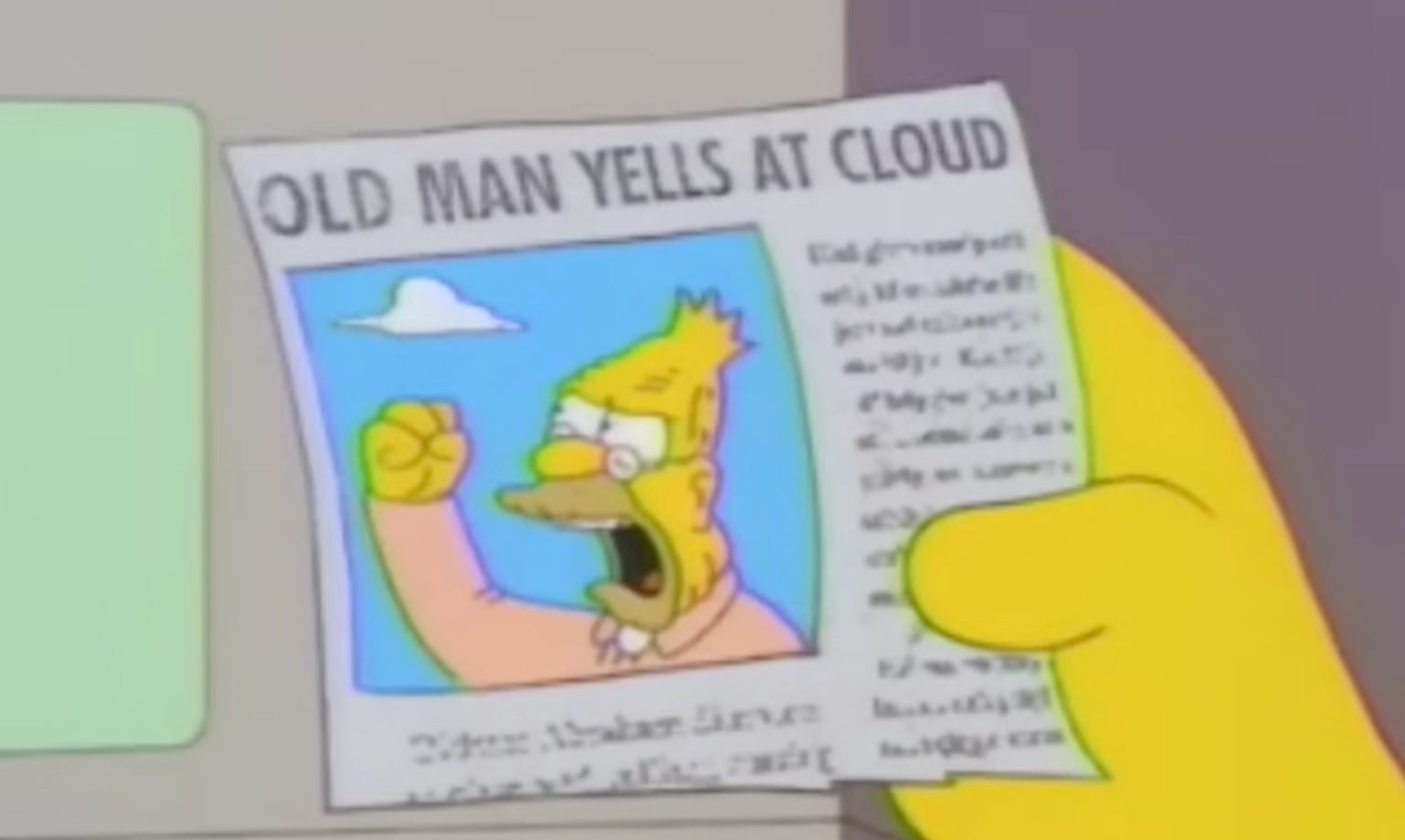
“Time,” the American science fiction writer Ray Cummings once observed, “is what keeps everything from happening at once.” The downside, of course, is that it also has a nasty habit of doling out birthdays with ever more implausible candle-to-cake ratios. Worse still, younger generations appear to genuinely consider things you clearly remember happening to be somehow historical events. Time, in other words, bends very much according to one’s perspective.
For example, the release of The Beatles’ Love Me Do is closer to the reign of Queen Victoria than it is to the present day. Similarly, if Apollo 13, starring Tom Hanks premiered 25 years after the actual moon mission, does that mean we ought to prepare for a docudrama centred on a disaster of equally epic proportions set in the year 2000? Perhaps, the Millennium Dome featuring Joseph Gordon-Levitt as Peter Mandelson and Daniel Day-Lewis as the giant fibre-glass structure (the man can transform into anything).
I was pondering this on a slightly hungover Sunday morning when, feeling suitably sorry for myself, I started watching the end of season review of Arsenal’s 1997/98 campaign. For the uninitiated (and Tottenham supporters), the club won the league and cup double that year, thanks to a combination of Arsène Wenger, Dennis Bergkamp and the old back four.
I attended the final home match of the season, when Arsenal beat Everton 4-0 to win the title, and must have watched the above review on VHS hundreds of times, to the extent that I could recite each word of Martin Tyler commentary (“It’s Tony Adams, put through by Steve Bould, WOULD YOU BELIEVE IT? THAT SUMS IT ALL UP!”) In other words, I was there and it happened to me.
Around the same time, I discovered a whole host of other tapes my Dad had accumulated over the years. It turns out, Arsenal had won the league before. And so I became well acquainted with 1989 (“It’s up for grabs now!”), 1991 and 1994. These were before my time, of course, but still looked vaguely modern. It was when I naively inserted the tape showing highlights of the 1970/71 season, when the club won its first double, that it became clear I no longer resided in Kansas.
The kits, with no shirt sponsor! The sideburns! The state of the pitches! The tackles bordering on grievous bodily harm! What the hell was going on in the early 1970s? No wonder Ted Heath lost re-election. And then, just as I was beginning to feel better, I was hit with a wave of grief. Mathematics has never been a supportive friend, but it transpires that 1998 is the exact midpoint between 1971 and 2025.