



Both arrived on our shores 30 years ago this month and went on to disrupt a hitherto sleepy and perhaps even boring institution: Arsène Wenger was appointed manager of Arsenal and the first buy-to-let mortgages became available in the UK.
Up to that point, anyone wishing to purchase a property for the purpose of renting it out either had to do so with cash or rely on commercial loans, which were typically more expensive and available on maximum 10-year terms. Consequently, investors were usually better off parking their money elsewhere.
But the birth of the buy-to-let mortgage allowed banks to treat rental income as a means of assessing affordability, which opened the sector to a vastly greater pool of potential investors. You can’t use potential income from an index fund to buy stocks, but you could for property. And it worked out for a lot of new entrants.
A new report by estate agent Hamptons found that for every £1 invested in the average UK buy-to-let property in late 1996, landlords have seen £22.30 in total returns by this year (including capital growth and net rental income after running costs). That represents a cool 2,130% total return over the 30-year period.
Containing multitudes
Of course, broader macroeconomic conditions and societal changes have proved vital. By the autumn of 1996, the UK housing market had started to recover from the nasty bout of negative equity that followed the 1990s recession. These were the early stages of a prolonged boom which continued all the way until the foothills of the Global Financial Crisis.
Growth averaged around 10% a year over the period, with house prices more than tripling by the time Robert Peston began his breathless commentary while customers of Northern Rock queued to take their money out of the troubled bank. And such frothy conditions meant a few things.
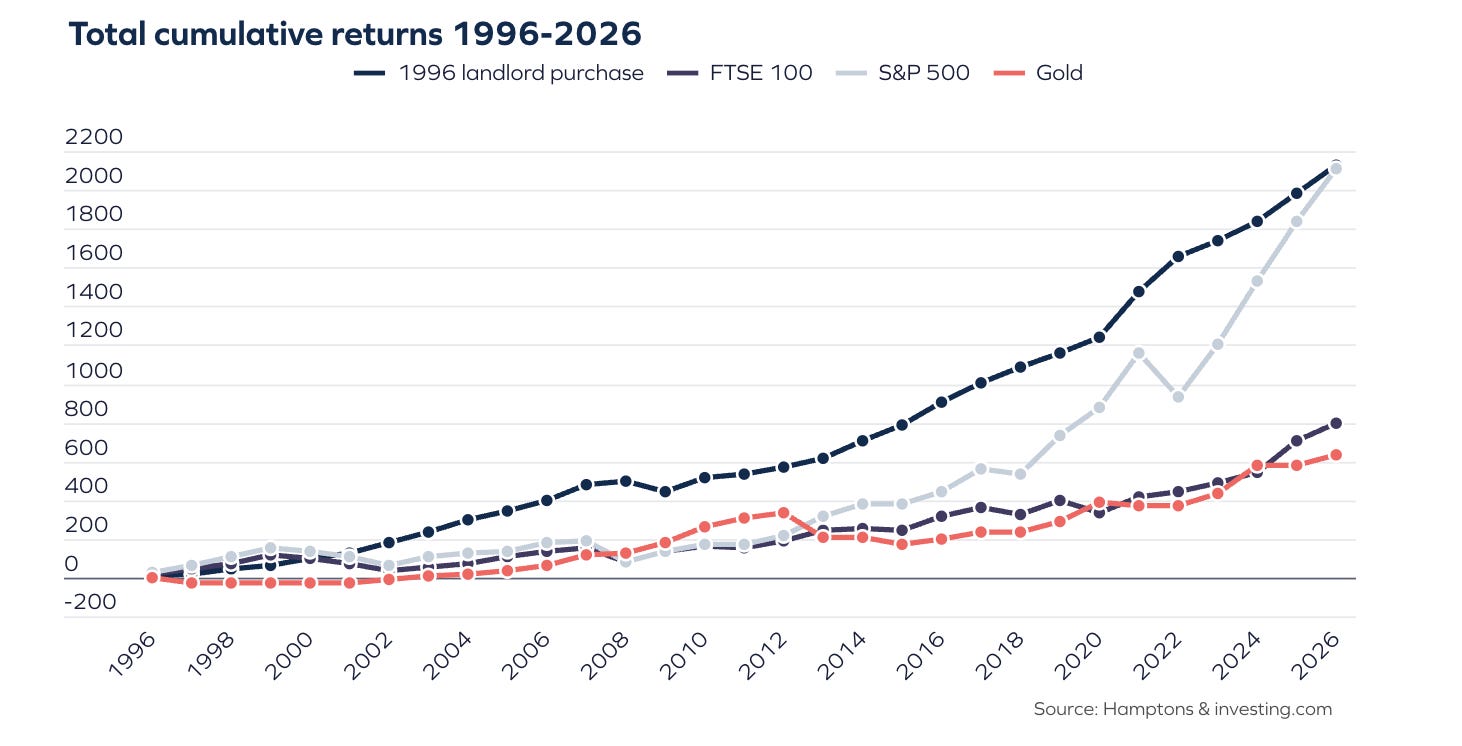
First, landlords were making large portions of their money from capital gains rather than rental income. Second, the equity they were building up meant they could afford to expand their portfolios, ie take out more buy-to-let mortgages. Third, they could be less concerned with the cash flow from rental income because rising house prices were the key driver of wealth.
Then there were the societal changes. Young people were marrying and settling down later, and so were in the rental sector for longer. Higher levels of immigration were a boost to the market, both in terms of sheer numbers but also because recent arrivals are more likely to live in private rented accommodation.
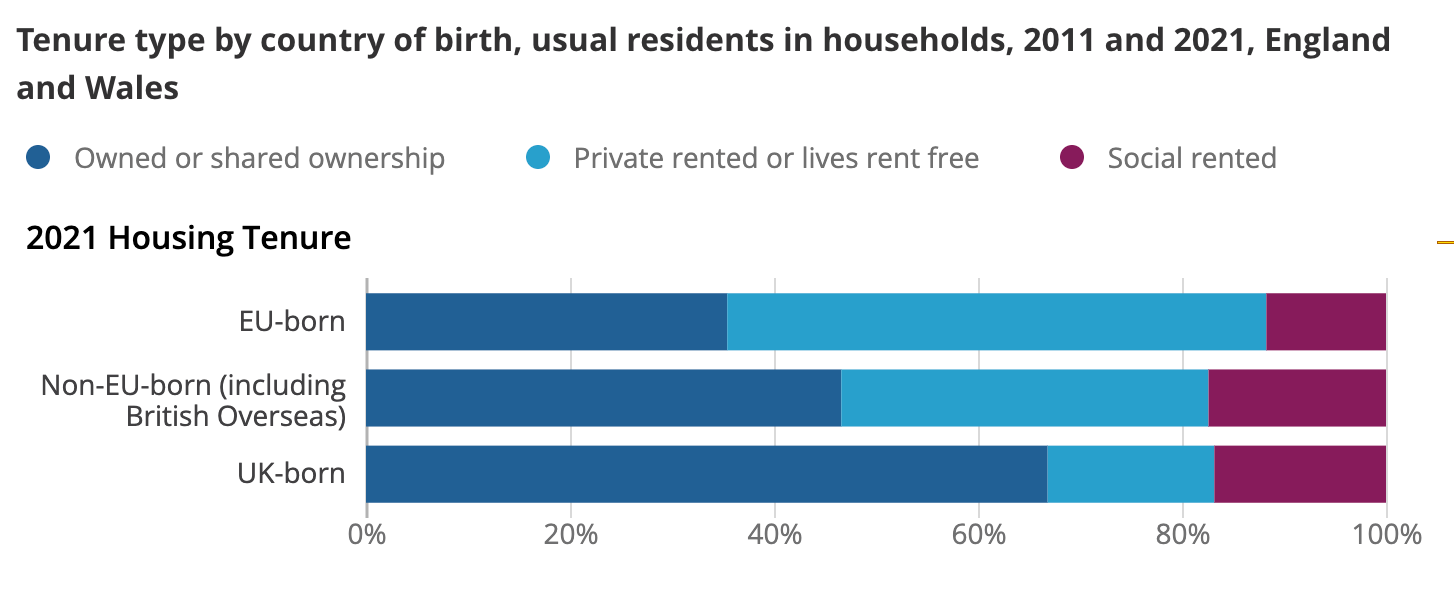
This is especially the case for international students, whose numbers dramatically increased over a similar time period. These changes and more were also self-fulfilling, in that the very boom in house prices would price willing buyers out of the market and into the private rental sector for longer.
But then the barn dance came to a juddering halt. The Global Financial Crisis put a stop to double-digit house price growth, froze up the mortgage market and made us all a lot poorer. It also brought a certain George Osborne to the Treasury.
Turning peasants into Tories
From time to time, and only fleetingly, really, I try to make the case that Osborne was the more important chancellor than Gordon Brown. But I just can’t make it stick. If you grant the Bank of England operational independence, that’s basically the ballgame. Nevertheless, Osborne is a key figure in this story.