


I wasn’t much interested in politics in the late-1990s, what with the booming economy, thriving rules-based international order and my being in primary school. For instance, I’m fairly certain I couldn’t have picked John Major, Bill Clinton or Benazir Bhutto out of a lineup.
And yet, growing up in the Suburb,1 ferried daily between Highgate and Hampstead, I knew all about Jack Straw. I mean, how many interior ministers had a bright yellow castle named after them?
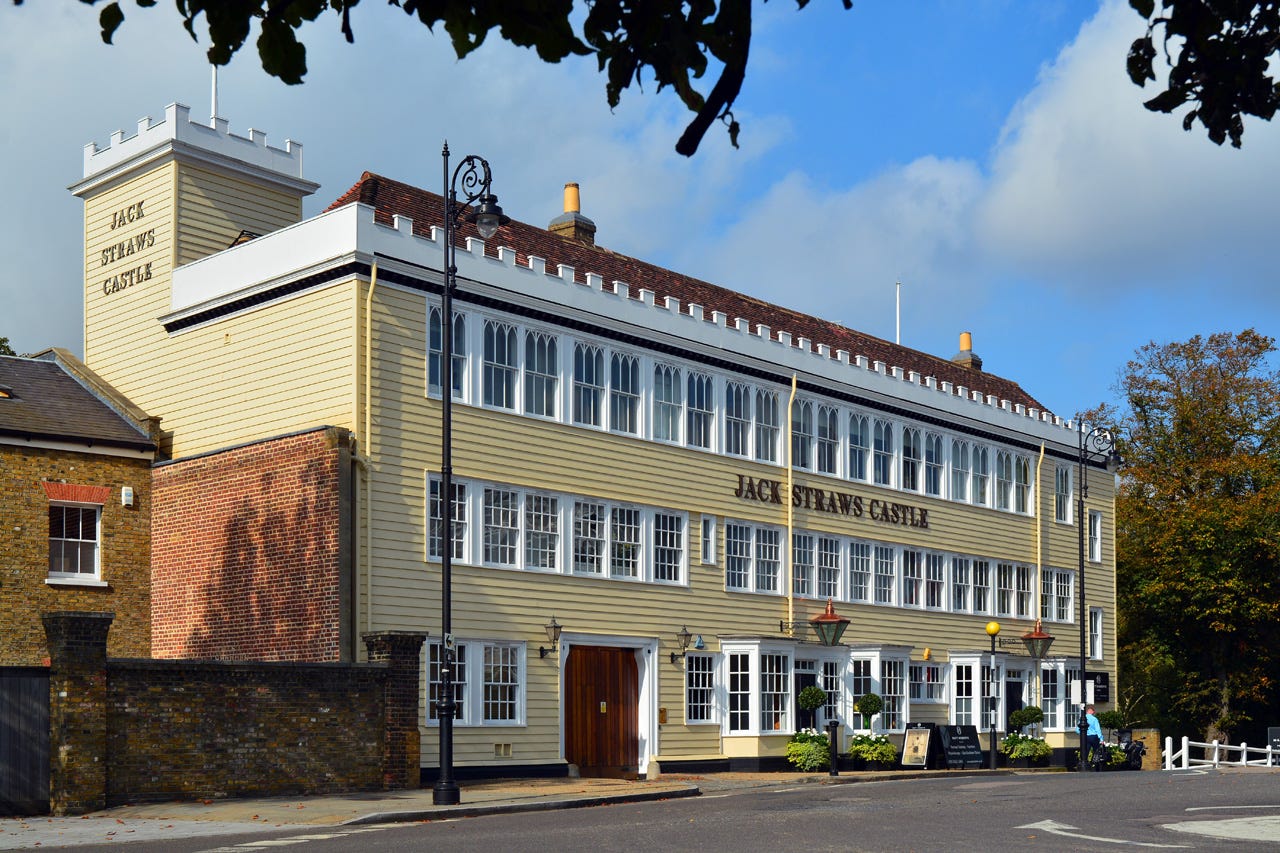
Jack of all trades
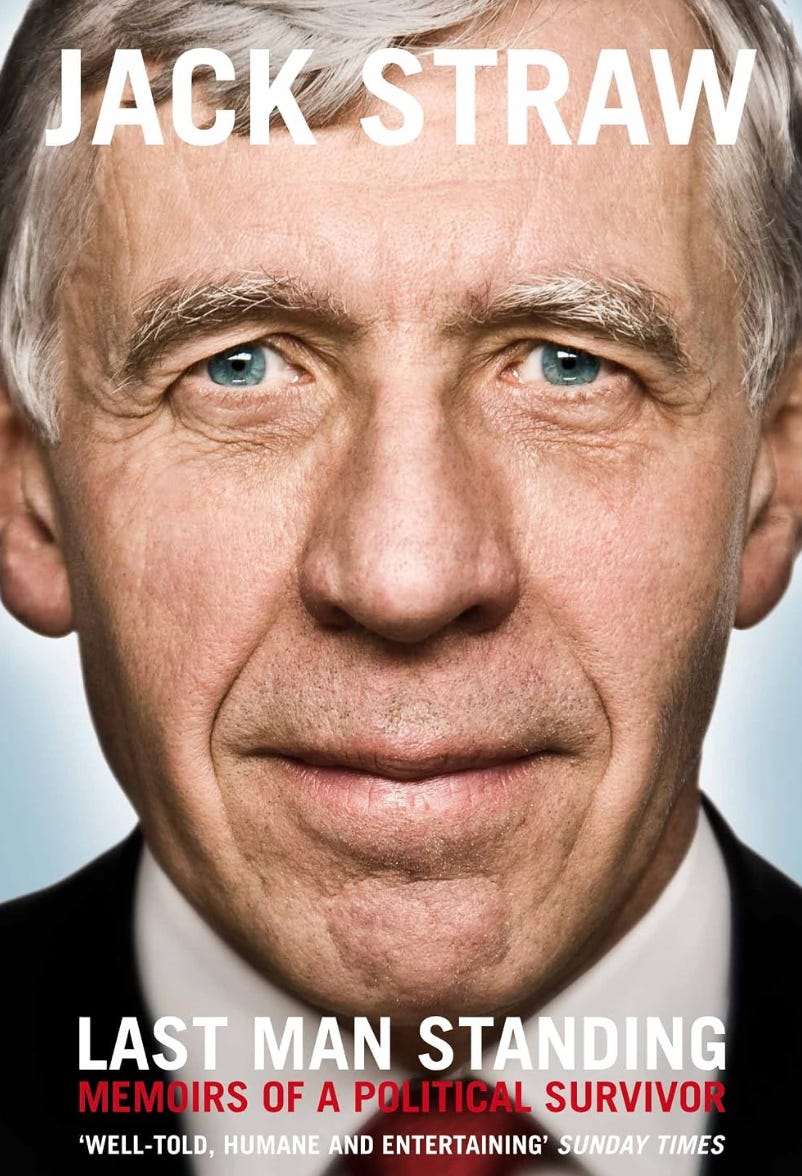
The title of Straw’s memoirs, Last Man Standing, published in 2012, refers to the convention that the Lord Chancellor is the final member of the outgoing government to resign. Though, given the rather more generous proportions of his successor, Ken Clarke, Straw at least got to keep the ceremonial tights.
It also alludes to his extraordinary and unbroken tenure in office. Straw is among only three ministers to have served continuously in cabinet for all 13 years of the Labour government: as Home Secretary from 1997–2001, Foreign Secretary from 2001–2006, Leader of the House from 2006–2007 and Justice Secretary from 2007–2010.
For completeness, the other two were Gordon Brown (Chancellor 1997–2007, Prime Minister 2007–2010) and Alistair Darling (it would be quicker to list the departments he did not run). Tony Blair, of course, was gone by 2007 and only ever held the one post in government.
Clutching at straws
Straw survived four years at the Home Office, traditionally a graveyard of political ambition — and he did so before its partition into a separate Ministry of Justice. As Foreign Secretary, he oversaw the UK’s response to the September 11 terrorist attacks, the rise of Islamic extremism as well as the wars in Afghanistan and Iraq. And as Justice Secretary, he helped to consolidate a new and sprawling department.
He did this, by the way, after serving the full 18 years on the opposition benches and even found time to run both Blair and Brown’s successful leadership bids in 1994 and 2007 respectively. Little wonder that his friends playfully referred to him as a political tart.
Straw was also a lucky general, something he freely admits. Critically, however, his talent for survival was matched by an intellect, empathy and base level of competence. A sort of yin to Chris Grayling’s total fucking uselessness.
Straw man (I’m not even close to running out of puns)
Last Man Standing is a terrific book and forms a vital part of the historical record. For paid subscribers, I’ve collated the most amusing, alarming and quotable passages, starting with one freebie because it’s just too delicious not to have the widest possible audience:
Straw recalls the old-stagers who reassured him that however bad things were in the 1980s, they were no worse than in the 1920s and 1930s. One such grandee was Bob Edwards, MP for Wolverhampton South East, born in 1906, who had fought in the Spanish Civil War and, ten years before that, attended the 15th Conference of the Soviet Communist Party, where he’d met Stalin, Molotov and Trotsky.
Years later, when hard-left activists showed up at Edwards’ constituency party and one of them, the age of his grandchildren, started quoting Trotsky at him, Edwards silenced him with the immortal line: “That wasn’t what Trotsky said to me.”