


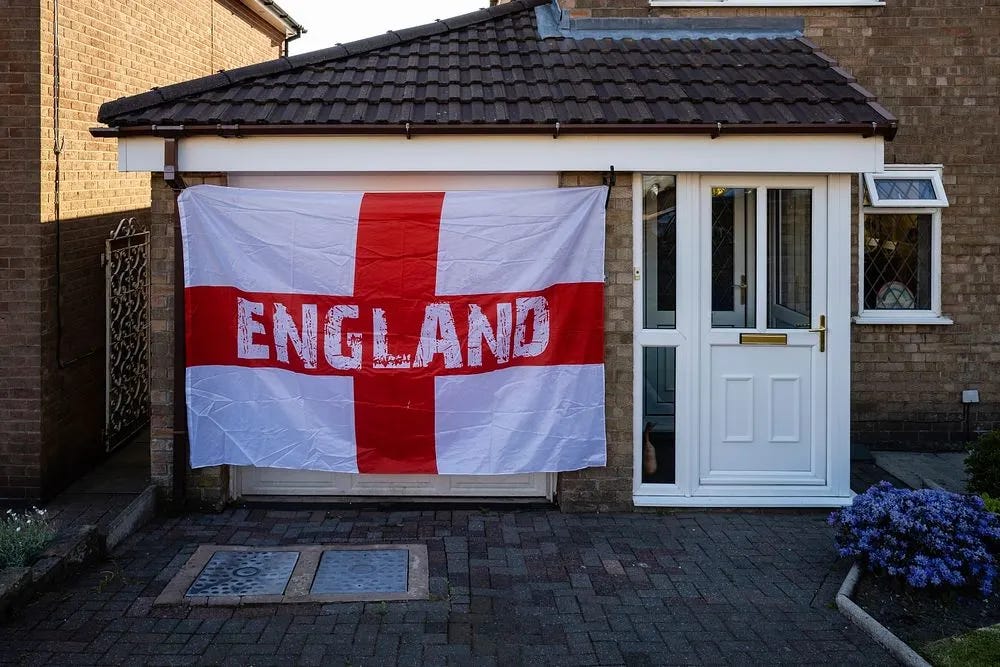
It is among my more parochial thoughts. Partway through Collapse, Vladislav Zubok’s terrific book on the dissolution of the Soviet Union, the realisation dawned: the gravest threat to the United Kingdom as a political union is not the election of Scottish, Welsh and Northern Irish separatists (though that frankly isn’t helping matters) but the awakening of English nationalism.
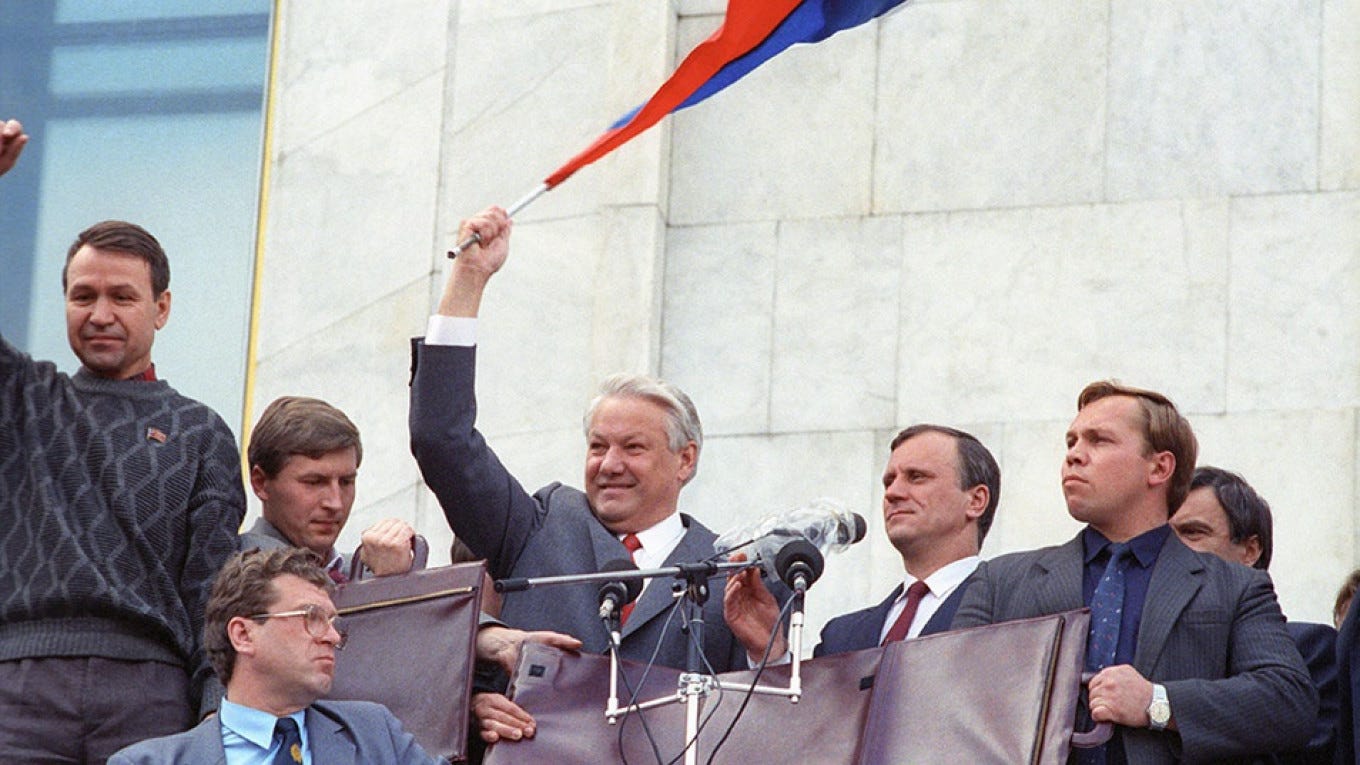
Zubok’s contention was that the collapse of the USSR — overlord of one-sixth the Earth’s land mass, with a four-million-strong army and by the 1980s the world’s largest producer of oil — was far from inevitable. Instead, it was something of an inside job. Mikhail Gorbachev’s political and economic reforms, intended to reinvigorate Soviet communism, served only to loosen the very structures holding it together while empowering Russian nationalism, as embodied by Boris Yeltsin.
The unions that unravel are not necessarily the ones whose peripheries have the strongest grievance, but those where the centre stops believing in itself.
You’d think this might have occurred to me when I was working on devolution policy at the Treasury. But as a North London boy, I was far too busy trying to persuade my brain that ‘Barnett’, as in the formula, had two ‘Ts’, unlike the borough. Incidentally, this affliction followed me to the Evening Standard, where I continually struggled to spell the mayor’s name correctly, having grown up next door to the Kahns. A charming family, but deeply unhelpful to me professionally.
Devolve and forget
When it comes to devolution, Northern Ireland is, as ever, sui generis. For one thing, the place was formed following partition. But it also had a parliament long before Scotland and Wales. It even had its own prime minister until 1972, when the UK government suspended Stormont and imposed direct rule from London.
Edinburgh only got its devolved parliament and Cardiff its assembly (upgraded to a parliament in 2020, like a football ‘head coach’ getting a title bump to ‘manager’ after a couple of successful seasons) in 1999. Back then, it was all rather convivial: a Labour government in Westminster devolving power to Labour-run Scotland and Wales1. No more.
*Graham Norton Show anecdote*
I was once in meetings all day with David Gauke, then chief secretary to the Treasury, who was having a rough time, engaged in one-on-ones with all devolved finance ministers. First, came Sinn Féin’s Máirtín Ó Muilleoir, then the SNP’s Derek Mackay and finally, as the sun sank below the Whitehall horizon, Labour’s Mark Drakeford.
I remember nothing about these meetings except that, when the Welsh finance minister entered the office and extended his hand, the chief secretary practically gave him a bear hug. Sure, Gauke was a Tory and Drakeford Labour but, as he explained, it was just nice having a chat with someone whose central political project wasn’t to leave the Union.
In fact, it’s been like this for a while. Northern Ireland (when it has a functioning Executive) has a Sinn Fein first minister, Scotland has been run by a variety of SNP administrations since 20072 and even Wales (Wales!) has a Plaid Cymru-led government.
But what of the threat from the UK’s very own Russia — England, where 85% of the population lives3 to the point that we don’t even bother with a separate parliament for it? Perhaps if life felt a little less pressured and governments a little less chaotic, the English might look at the current settlement — earnestly referred to as a patchwork of devolution — and baulk.