


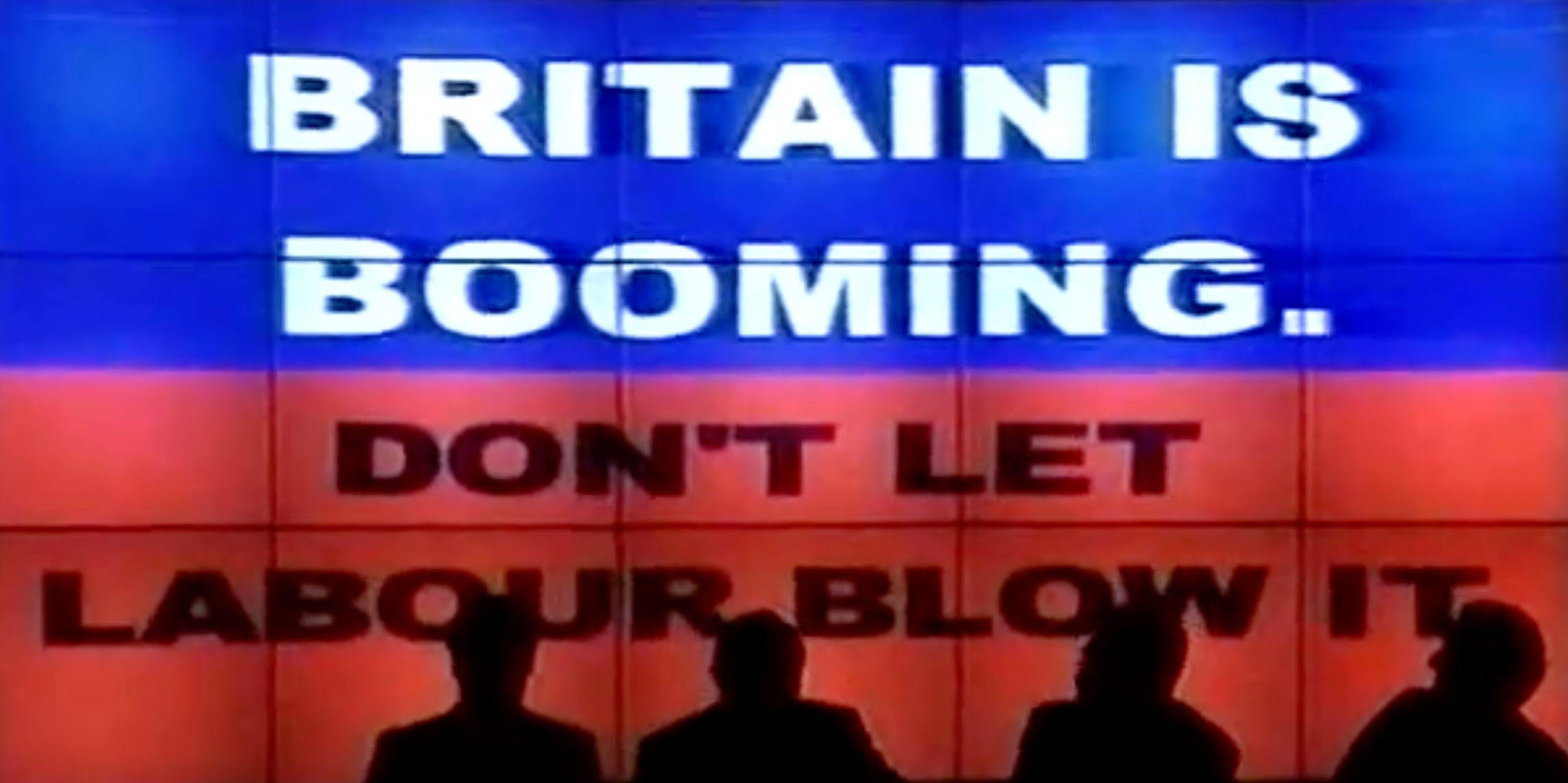
John Major was… well, he wasn’t angry. No, that would be going too far and, in any event, unbecoming of the man and the moment. It was March 2001 and the former prime minister had risen to deliver what would turn out to be his valedictory address. The House of Commons greeted his presence in the way it did most of the lobby fodder speaking on the third day of a Budget debate: with a sea of empty green benches.
Having rewatched the tape, read the Hansard and consulted an online thesaurus, I feel confident in describing Major as miffed. In the way that a first-time buyer might be if a conveyancer didn’t acknowledge their email or a friend who realises they have been invited to the wedding party but not the ceremony. Good — I hate the waiting around and climbing onto coaches anyway.
As it was a Budget debate, Major felt obliged to draw out a few criticisms. The 26 increases in personal taxation and 19 on business since 1997 — an allusion to the then opposition Labour charge against the previous Conservative government and its 22 tax rises, which he bemoaned as “patently untrue”.
But mostly, that prematurely grey man of the 1990s, the Bruce Rioch to George Graham’s Margaret Thatcher and Arsène Wenger’s Tony Blair, paid tribute to the economic inheritance bequeathed to the Labour government. The key paragraph:
Some hon. Members, but perhaps not all, believe that an economic miracle began on 2 May 1997. Let us take a date at random — 1 May 1997. Growth was set to be 3.5% for the next year. Inflation was 2.6% and stable. Unemployment was falling rapidly and, although still high, was down to just over 1.5m. The fiscal deficit was falling sharply — a point that the chancellor invariably overlooks because it embarrasses his campaign to discredit his predecessors. The trend of a falling fiscal deficit was clear, and it was falling sharply. The right hon. Gentleman can take credit for not wrecking the trend, but he cannot take credit for beginning it, for it preceded him by four years.
And he’s right, of course — at least in broad terms. The economic inheritance enjoyed by Tony Blair and Gordon Brown was as favourable as it was frankly unusual. Just compare it with any other change in government since the war:
1945: severe war damage, shortages and debt
1951: food rationing still in place, periodic balance of payments crises, inflation
1964: low productivity, weak export performance, recurring currency pressures
1970: slowing growth, rising inflation, increasingly troubled industrial relations
1974: oil crisis, three-day-week, stagflation
1979: inflation, strikes, rising unemployment (“Winter of Discontent”)
2010: weak recovery from global financial crisis, large budget deficit
By contrast, 1997 stands out like a clown at a funeral. Growth was strong, inflation low, unemployment falling and the public finances improving. This wasn’t solely the product of Conservative policy. Sure, the cabinet was having a lot of sex, but they weren’t entirely responsible for the superior worker-to-pensioner ratio, let alone the post-Cold War peace dividend. But if government gets the blame for what happens on their watch, then they should also take the credit too.
Given all the economic good news, one might be forgiven for asking: how the heck did the Tories lose the 1997 election? And not just lose — suffer their worst parliamentary result since the Duke of Wellington in 1832? Well, I’m afraid we need to remove our 2026-tinted — what is productivity growth again? — glasses and actually remember what the government was like by the late 1990s.