


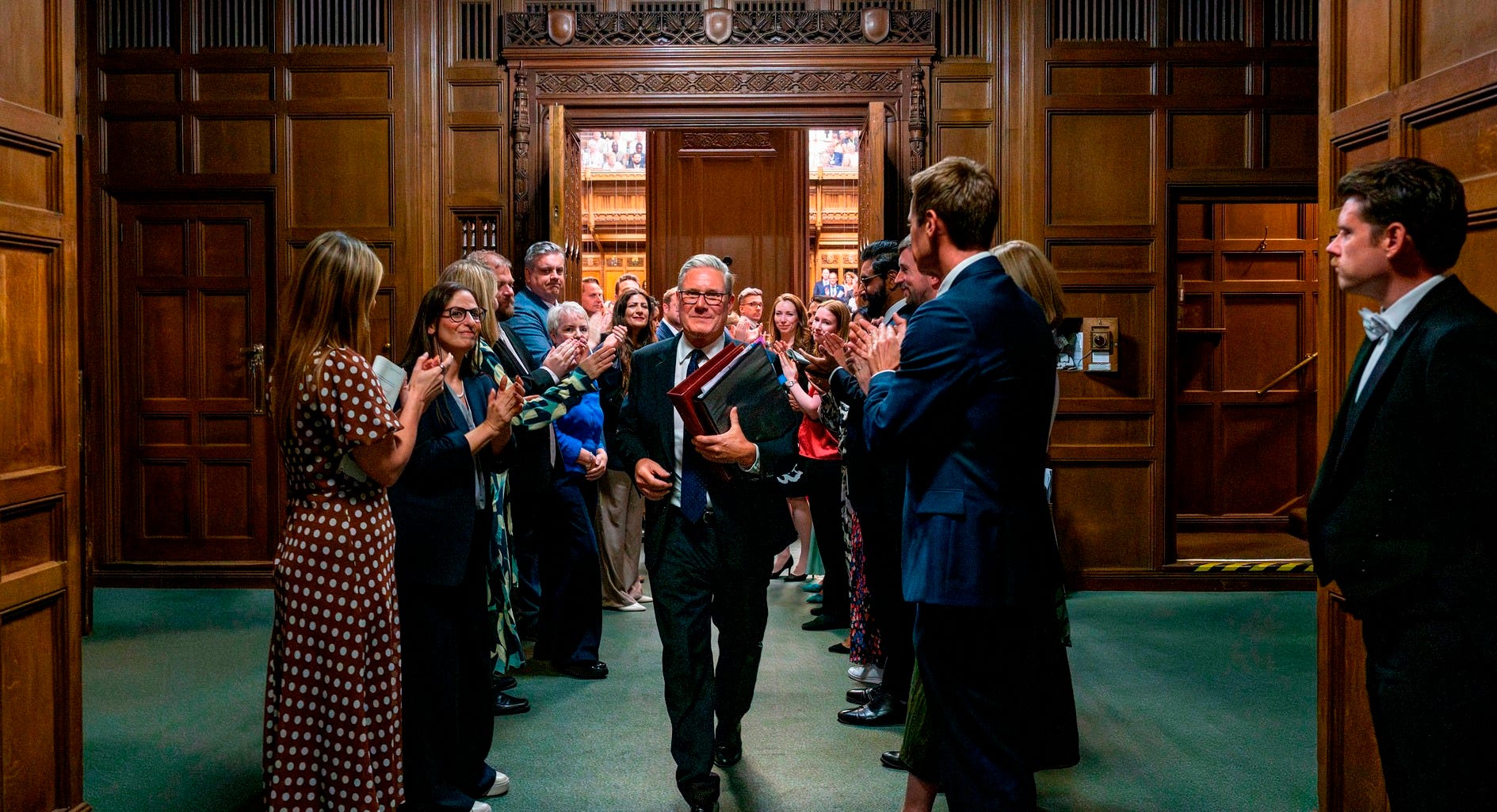
“He’s never going to leave her, darling.”
“He might.”
“He won’t. And in any case, when a man marries his mistress, he creates a vacancy.”
This is a transcript — lightly edited to conceal potentially identifying details and Jägerbomb-infused hyperbole — from a series of crisis catch-ups that took place beneath the ever-cracking glass ceiling of Portcullis House on the Parliamentary Estate.
My dear friend was ‘the other woman’ in this Jeffrey Archer novel-esque love triangle and my advice was always the same: dump the clown. Of course, this counsel went unheeded. To be fair, the sex was, allegedly, tremendous. And then, the improbable happened.

He left the other other woman, shacked up with my friend, eventually they got married and had children. I was pleased for her, though a little bruised about my obvious wrongness. I share this story partly to demonstrate that there is no confidence I won’t jeopardise in pursuit of a newsletter intro, but mostly as a reminder that nearly every prediction of mine fails to materialise.
I thought Gareth Gates would beat Will Young in the first series of Pop Idol1; I was convinced that Rafael Nadal would defeat Roger Federer in the 2017 Australian Open final and I genuinely believed that Keir Starmer would be a moderate success as prime minister. In fact, I undersell my error of judgement.
In the prelapsarian days of June 2023, I wrote an article for the Evening Standard2 with the headline (and for the millionth time, I didn’t write the headline) “Why Sir Keir Starmer may end up being the left-wing Thatcher”. To paraphrase Emperor Hirohito, these words developed not necessarily to my advantage.
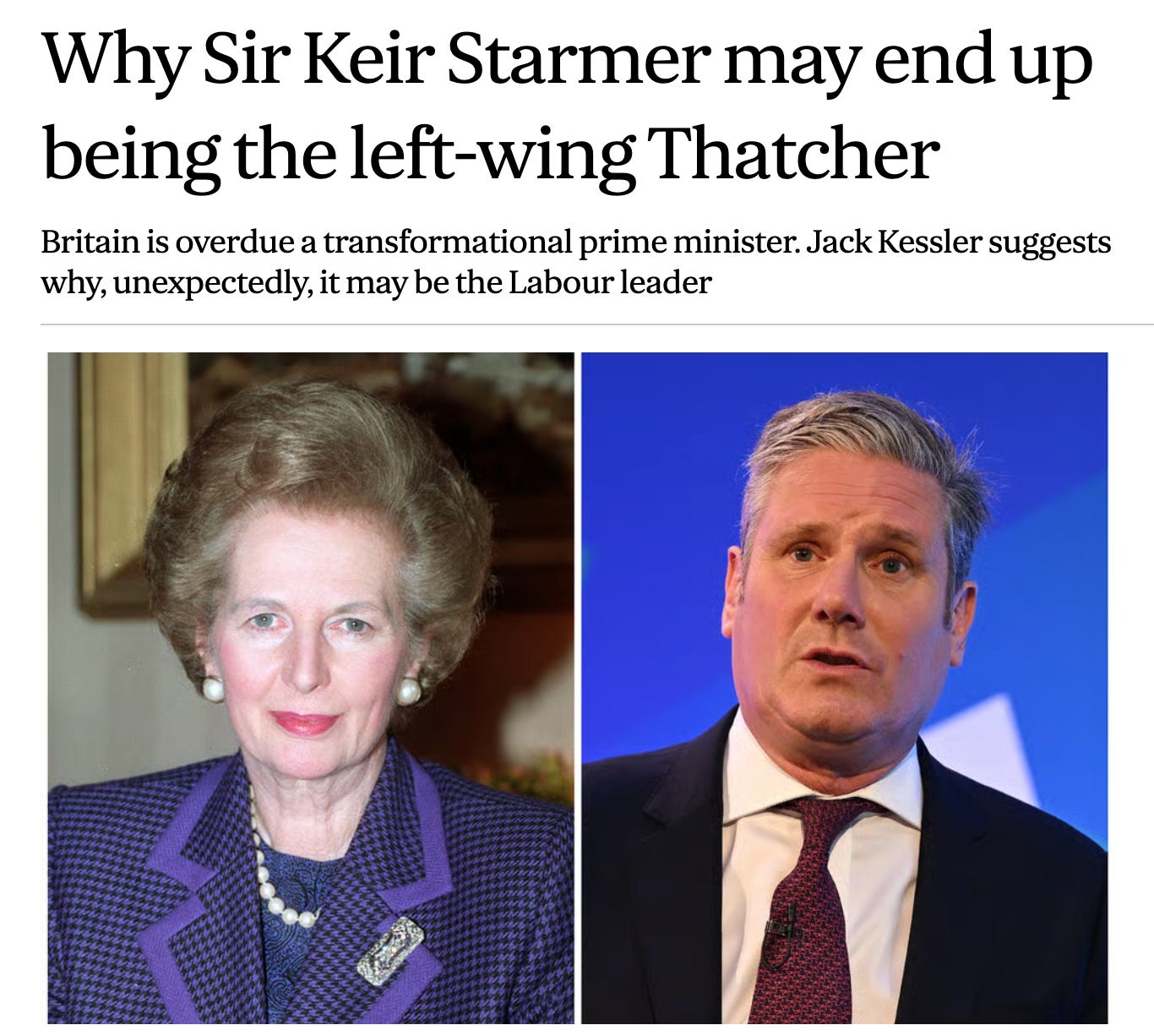
My reasoning was informed in part by timing: following two decades of stagnant living standards and a succession of short-lived Conservative prime ministers, Starmer had the opportunity (and appeared on course for a large Commons majority) to break from the status quo, from planning and employment to net zero.
The argument was a little flimsy, I concede. But it was also underpinned by a heuristic of mine that, on reflection, obviously requires urgent structural examination: Starmer had been a successful leader of the opposition and my view at the time was that this was the best guide to a successful premiership.
Keir Starmer was good at politics
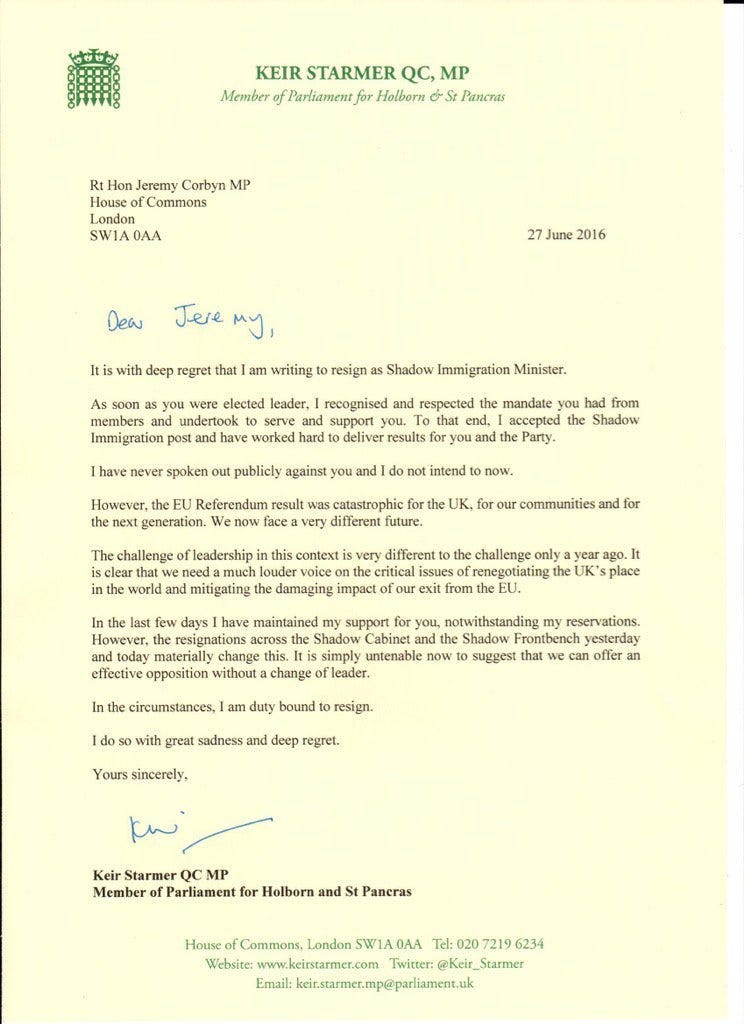
Soon after being elected MP in 2015, Starmer identified that the next Labour leader would have to come from within Jeremy Corbyn’s shadow cabinet. And so — though he did resign as shadow immigration minister (serving under shadow Home Secretary Andy Burnham) as part of the wave of resignations that followed the EU referendum — it was one of those ‘in sorrow rather than anger’ letters.
Months later, and following Corbyn’s landslide re-election as Labour leader, Starmer swiftly accepted the post of shadow Brexit Secretary, a position he wielded for maximum political benefit. By serving in the shadow cabinet, Starmer could not only demonstrate loyalty to the leader, but also leverage the sharpest dividing line between Corbyn and the membership: Europe.
Don’t forget that Labour members at this time loved their leader but, unlike him, they also largely wanted Britain to remain in the EU. Starmer sensed an opening. He used his role (some in the leader’s office may say “abused”) in order to shift the party’s position towards a second referendum. This was the political sweet spot for anyone hoping to succeed Corbyn: public fealty to the leadership, but firm pro-EU credentials for the membership. It worked.
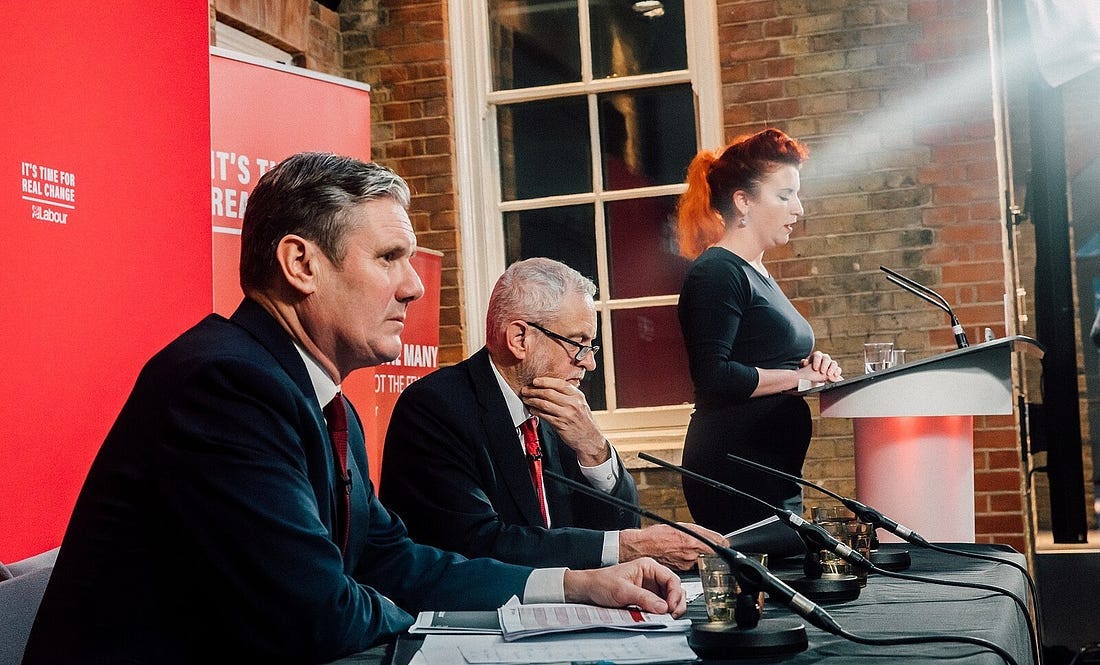
Starmer went on to defeat the actual Corbynite candidate, Rebecca Long-Bailey, to win the 2020 Labour leadership election, with 56.2% of the first-round vote. And having secured the position, he subsequently went on to denounce Corbynism, worked meticulously to rid the party of antisemitism and even kicked his predecessor out with such élan it would have made Nikita Khrushchev blush.
This was not even the first time Starmer had demonstrated strategic patience in advancing his political career. Having stepped down as Director of Public Prosecutions in November 2013, he stood for the safe Labour seat of Holborn and St Pancras — with a little help from party HQ.
It was reported at the time that rivals complained that the contest was delayed by then leader Ed Miliband to ensure that the former DPP had been a member of the party for the necessary 12 months in order to stand.
By the way, as opposition leader, and despite obvious shortcomings, Starmer acted decisively over ‘Beergate’ and was quick to prosecute ‘Partygate’3 which, at the beginning at least, was not the political slam dunk it later became.
Politics vs government
But the skills of opposition don’t perfectly align with those of government. And the benefit of the former (there is only one, and it is time to think) was not used to its fullest, or even the bare minimum. Consider that Starmer:
