


The problem with Sven-Göran Eriksson as England manager wasn’t his obsession with celebrity players, poor in-game management or how he clung to 4-4-2 like candidate Barack Obama said small-town Pennsylvanians cling to guns or religion. It was that he didn’t want it enough.
Whether a meaningless friendly or the closing stages of a World Cup quarter-final, Eriksson would sit there, motionless, expression practically blank. None of the gesticulation of a José Mourinho, the barking instructions of a Neil Warnock or even the single raised eyebrow of a Carlo Ancelotti. Where’s the passion, Sven?
In this regard, at least, the culture has moved on. Indeed, by 2018, the similarly tactically inept Gareth Southgate was attracting widespread praise for his calm and understated touchline demeanour. I mean, no one who wears a waistcoat can be bad at management!
Still, there is one big national job where being prepared, both in words and deeds, to show you ‘want it’, remains a prerequisite. The location is Threadneedle Street, the role Bank of England Governor, and the stubborn opposition inflation.
Phew. We got there in the end.
Unemployment or inflation, sir?
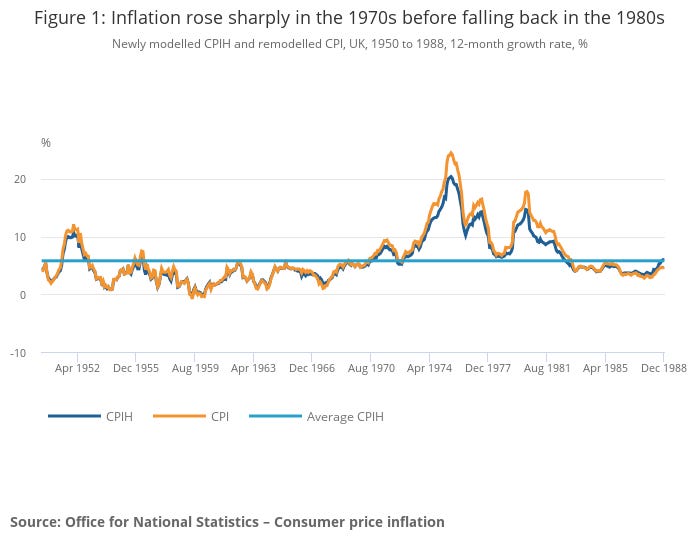
If you subscribe to a daily newsletter, bad news: you probably remember the 1970s. Specifically, how prices in Britain rose by roughly 750% in the 25 years to 1992 — more than in the previous 250 years.1
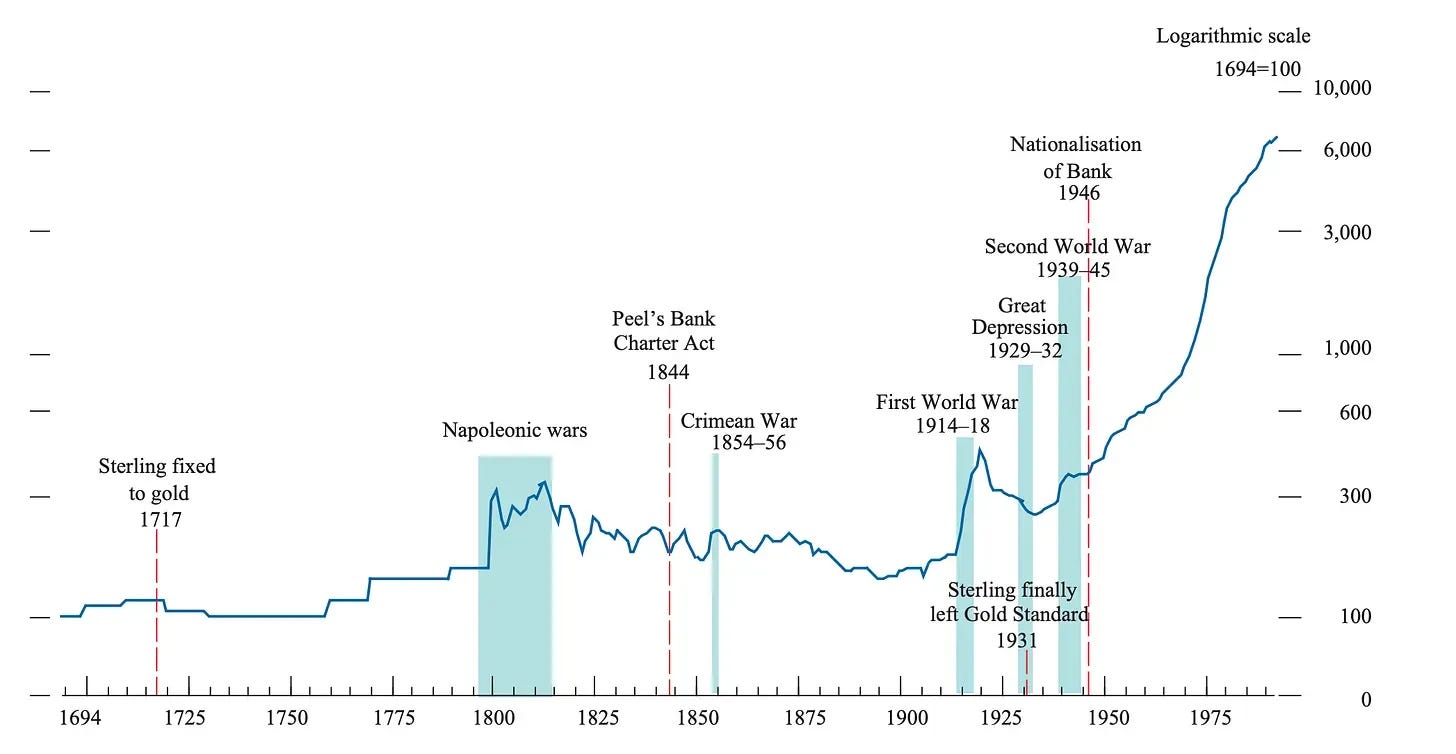
Many pixels have been spilled about why this happened, including in these pages: the loss of a monetary anchor following the collapse of Bretton Woods, the Barber boom, various oil shocks, unbridled union power, wage-price spirals, the failure of incomes policies, sterling crises, poor productivity and political constraints. But it is the last of these that will be the focus of today’s newsletter.
Up until the election of Margaret Thatcher in 1979, both Conservative and Labour governments were unwilling to accept the unemployment and industrial disruption required to restore price stability. This was understandable in a post-war Britain, where memories of the 1930s ran deep, and where Butskellite, corporatist, Keynesian consensus (pick your poison) ruled the waves.
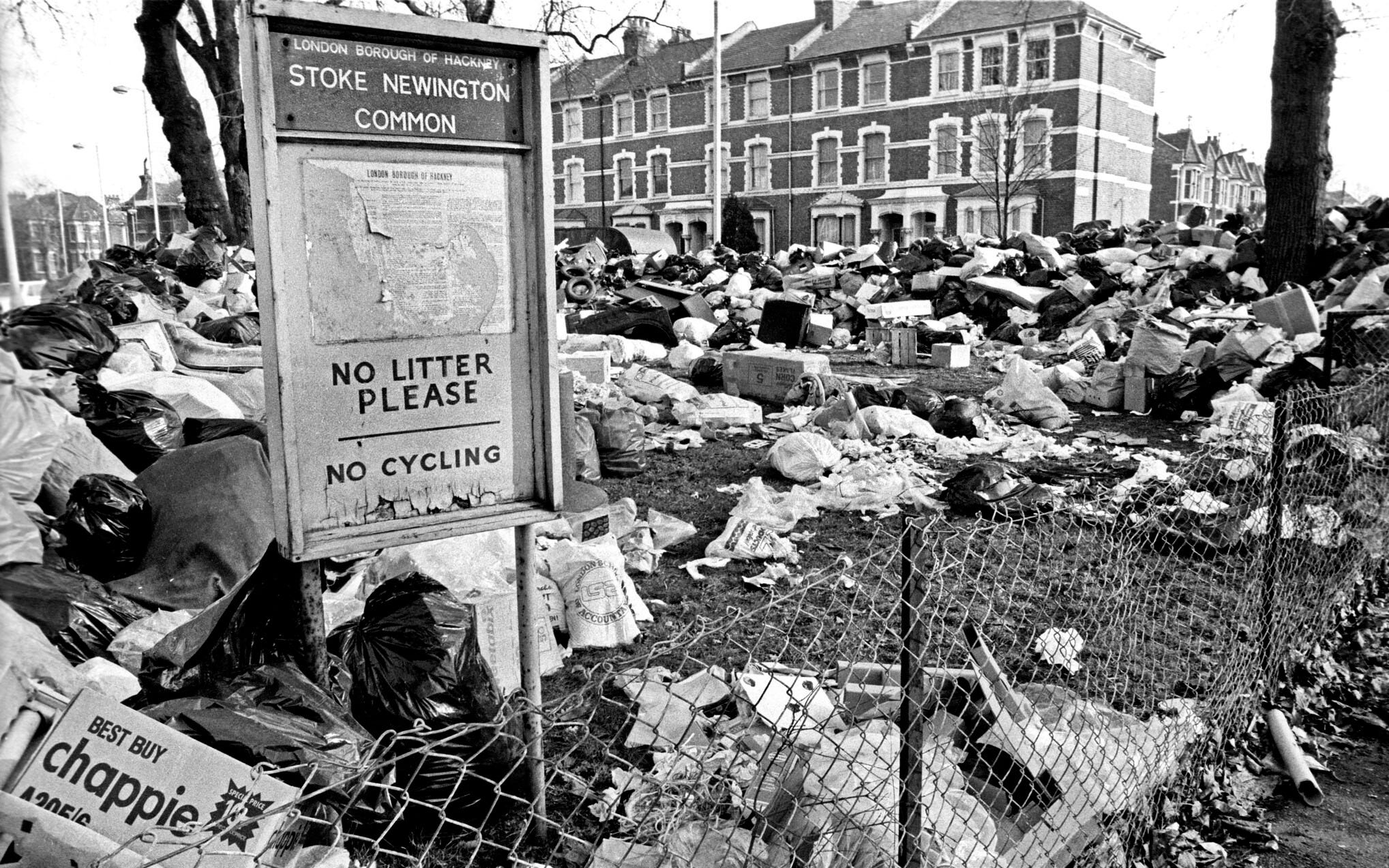
It took the comprehensive failure of James Callaghan’s economic and industrial relations policies,2 culminating in the unburied dead of the Winter of Discontent, to not only bring Thatcher to power but also to create the political space to chart a new, money-supply-focused course, culminating in the more-interesting-than-it-sounds Medium-Term Financial Strategy.
TL;DR if the entire point of Labour governments was that they could achieve industrial harmony, even at the cost of a little inflation, now that harmony had itself been debased to the point of wheelbarrow money, perhaps it was time to try something else?
Thank you for your monetary policy report, which I read with great interest
Last week, the Bank of England’s Monetary Policy Committee (MPC) voted by a majority of 8-1 to increase interest rates by 0.25 percentage points, to 4%. Don’t be fooled by that sole dissenter. Catherine Mann, who warned last month that the Bank had been slow to reassure markets that it had a grip on inflation, is no dove — she voted for a 0.5 percentage point rise.
The 25 basis-point hike we got, the first since August 2023, is not difficult to justify. The Iran War, now in its ninth month, has sent global energy prices skyward3 from what were already elevated levels. UK CPI inflation has risen from 2.6% in June to 3.5%4 in September, and the Bank expects it to hit 5% by the middle of next year, only coming back to the 2% target in late 2028, and even then only if rates rise to almost 5%.
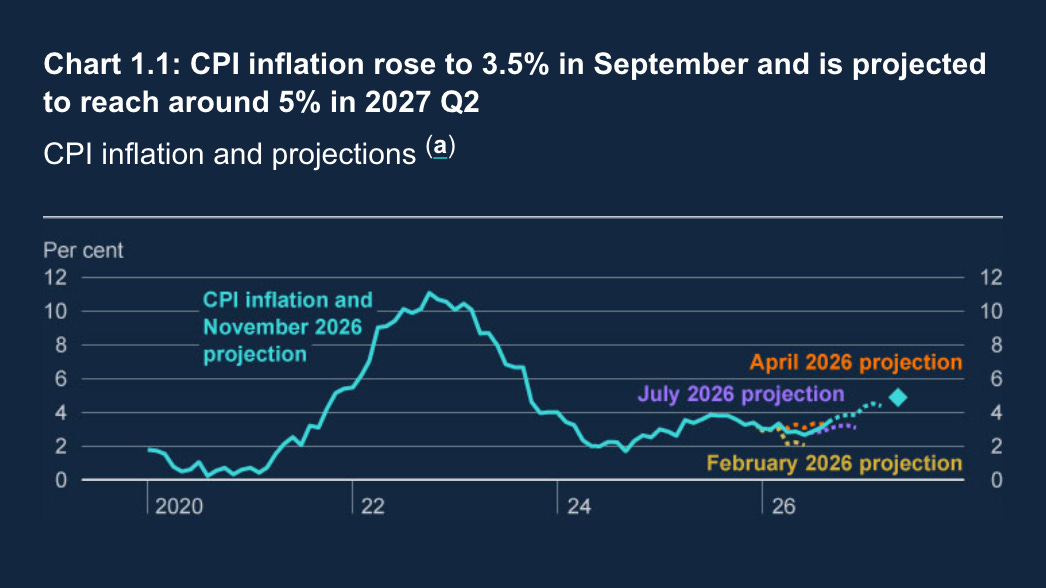
Clearly, UK monetary policy cannot influence global energy prices or the capricious decision-maker in the White House. Nevertheless, interest rates are the primary tool by which the Bank can meet its 2% target and guard against second-round inflationary effects in wage and price-setting, i.e. the sort of things that lead to more persistent inflation.
Speaking after last week’s announcement, Governor Andrew Bailey engaged in some fairly typical central bank fence-sitting:
Today’s increase shouldn’t be seen as the first in an inevitable long sequence of hikes. But unless the conflict in the Middle East is resolved, neither does it seem likely to be the last increase.
What Bailey says matters, but financial markets have already priced in a steeper climb in interest rates, to 4.75% by the end of next year. Get that two- or five-year fix in now, folks.
An inflationary outlier
Clearly, 5% inflation is not the 11.1% seen in October 2022, let alone the 24.2% in 1975. There are numerous other substantive differences too. For one thing, Britain has an operationally independent Bank of England, responsible for setting interest rates, and a broad understanding that the money supply matters.
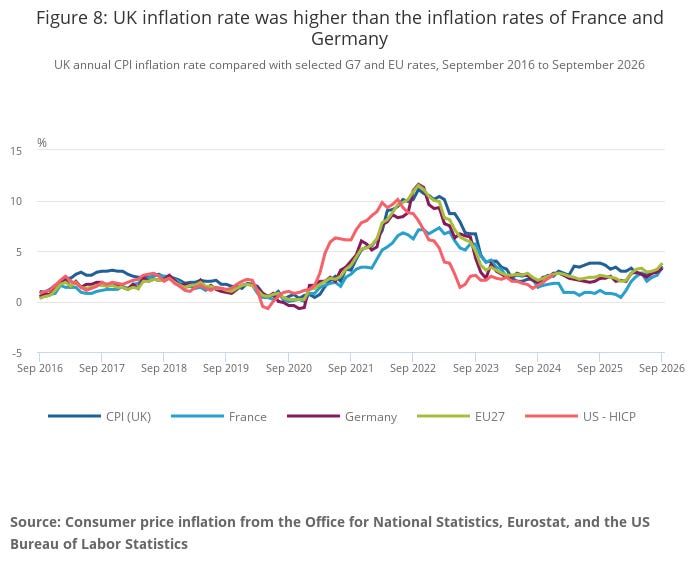
But this inflation has been going on for some time, and it is eating away not only at people’s purchasing power, but the Bank’s credibility. As Chris Giles, Financial Times’ economics commentator notes, the UK’s inflation performance since 2019 (I’ve double-checked and can confirm that is seven years ago) has been worse than that of its peers.
UK prices measured by CPI were 32.4% higher in the third quarter of 2026 than the fourth quarter of 2019, compared with 26.6% in the Eurozone and 29.7% in the US. Moreover, wages have grown significantly more than prices in Britain than elsewhere, something that sadly cannot be attributed to superior productivity gains that might justify greater returns to labour.
In other words, wage catch-up dynamics — that is, where workers demand and receive higher pay rises to compensate for past real-income erosion caused by high inflation — are more severe in the UK than elsewhere, which is “an inflation risk at a time of an energy shock”.
It’s no free lunch for the government either. Britain’s persistently higher inflation drives borrowing costs up, largely in the form of index-linked gilts but also just in the idea that buyers of bonds demand higher yields. Higher inflation also places pressure on spending — the chancellor is faced with departmental ministers asking for more money, lest they be forced to oversee real-terms cuts.
The Bank’s hitherto wait-and-see approach on interest rates was not obviously stupid. Not when the world was changing so quickly, second-round effects were yet to materialise and initial forecasts were for the UK to suffer particularly badly from the conflict in the Middle East. But the idea of Britain as a soft touch on inflation is a view that has existed for some time.
A 2024 review by Ben Bernanke found the Bank had underestimated how persistent UK inflation would be after the pandemic, and that it may have been slow to raise rates. That reluctance continues, with the US Federal Reserve, European Central Bank, even the Bank of Japan moving first. Why?
The Bank of England operates under a sort of dual mandate. Its primary objective is achieving low and stable inflation (the 2% target) and, subject to this primary objective, to support the government’s other economic aim, which is strong, sustainable and balanced growth. At present, neither is being achieved. Indeed, as the Bank’s former chief economist Andy Haldane told The Spectator last month:
I left the Bank of England’s Monetary Policy Committee in June 2021. Inflation was bang on 2 per cent. It has been above its target every month since I left the committee. I’m not suggesting causality there… but more than five years of misses, does beg the question in the markets’ mind: are they serious?
You read that right. Inflation has been above target for almost all of the last five years.
Make me hawkish, Lord — but not yet
The Bank’s continued failure on inflation is hard to justify. It doesn’t need to plunge the UK economy into a deep recession or spark mass unemployment to get a grip on price stability — a combination of Donald Trump, the Iranian regime and artificial intelligence can do that. But it is another reminder that the battle — between those who want low inflation and those, even the unelected, who’d rather an easy life — is never quite won.
Inflation becomes entrenched when people, from the shop floor to the trading floor, begin to doubt that policymakers will do what is necessary to bring it down, in the face of all the inevitable side effects.
And so the question for Bailey et al. is simple: getting back to that 2% target — do they want it enough?
This is my all-time fave stat and I will keep repeating it until I get some positive reinforcement
To be fair to Callaghan, his 1976 Labour Conference speech, drafted by Peter Jay, is often credited as the beginning of the end:
We used to think that you could spend your way out of a recession, and increase employment by cutting taxes and boosting Government spending. I tell you in all candour that that option no longer exists, and in so far as it ever did exist, it only worked on each occasion since the war by injecting a bigger dose of inflation into the economy, followed by a higher level of employment as the next step. Higher inflation followed by higher unemployment. That is the history of the last twenty years.
In October, Brent crude oil futures price averaged $108 per barrel, around 70% higher than in the run-up to the February Report, before the conflict began
Direct energy effects contributed around 1 percentage point