



You’ll see them on stage, at the local village hall or leisure centre, often wearing silly hats and looking oh so pleased with themselves. “Mum, watch! I’m standing next to the prime minister!” And for the princely sum of £500, you can do the same.
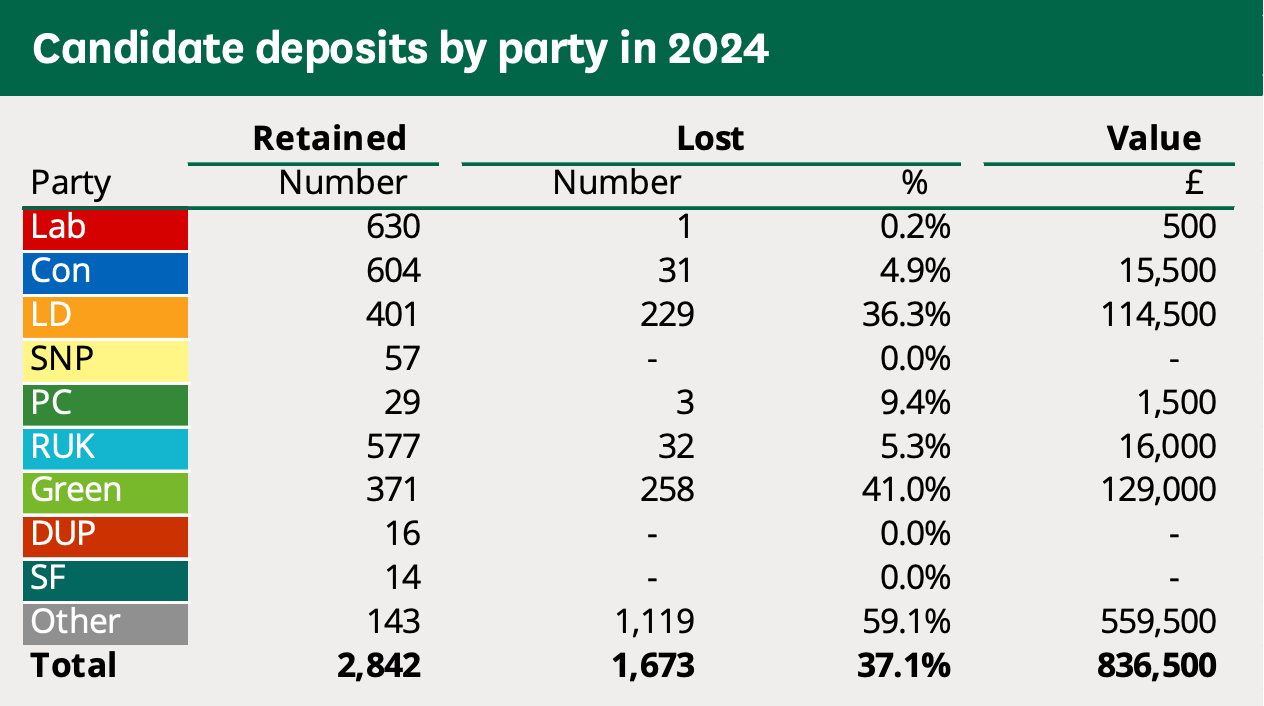
It’s not corruption — perish the thought. It’s how much it costs to stand as a candidate for parliament,1 paid to the returning officer and refunded in the event of securing at least 5% of the vote. At the last election, there were 1,673 lost deposits (37% of all candidates), raising £836,500 for the Treasury’s Consolidated Fund.
Incidentally, the record for the most lost deposits in a single contest [learning is fun] occurred at the 2008 Haltemprice and Howden by-election — the one David Davis called for reasons no one quite understands to this day. With the other main parties declining to stand, independents poured in and 23 out of the 26 candidates lost their deposits.
Such were the conniptions being suffered by health and safety officers over the structural integrity of the temporary stage at Haltemprice Leisure Centre that the candidates were forced to stand in a semi-circle on the floor as the returning officer read out the results: Tory hold, though Davis didn’t get his shadow home secretary role back.
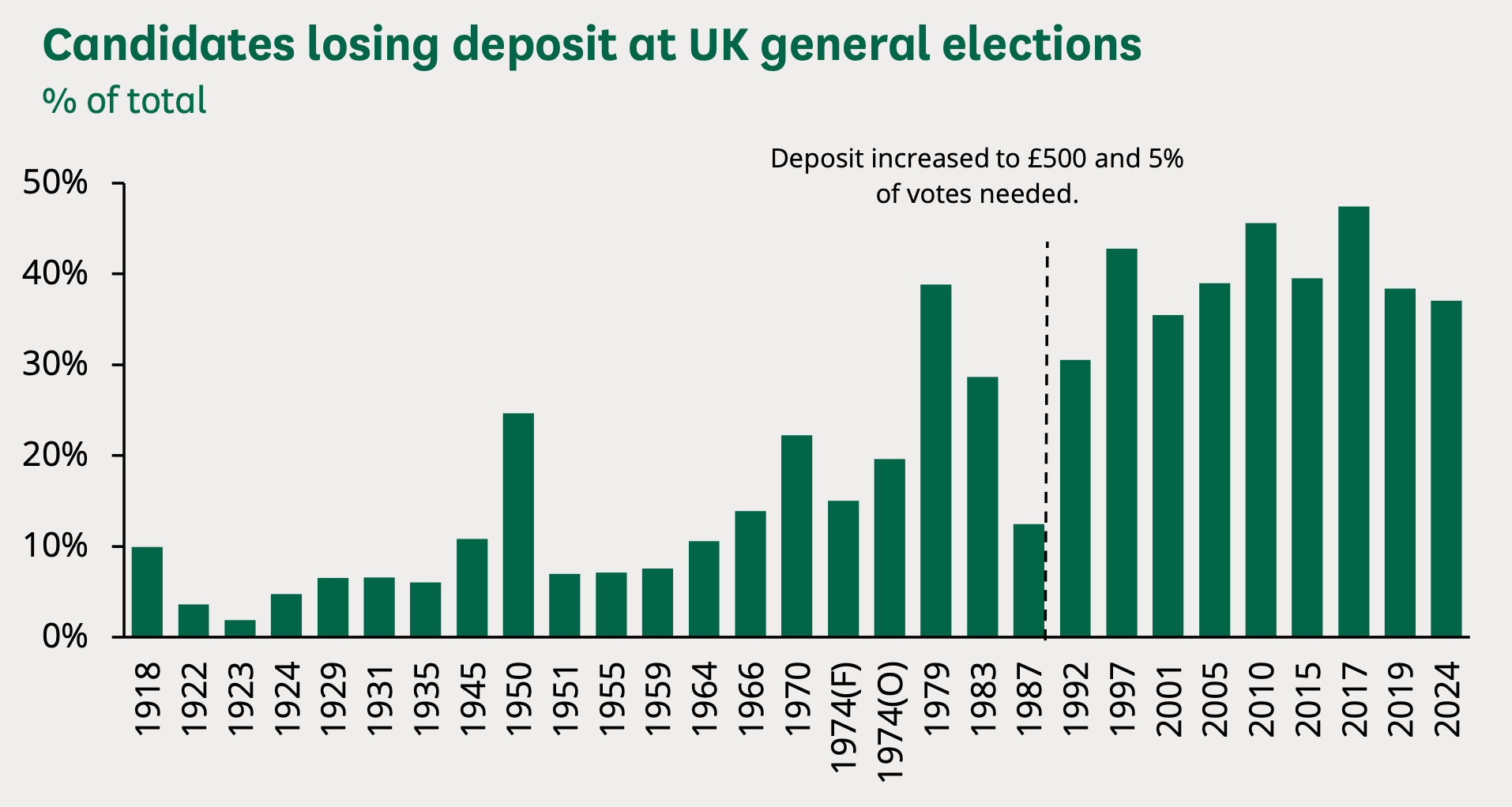
The proportion of lost deposits has steadily increased since the 1990s, in part as a result of a change in the law. Deposits were first introduced in the Representation of the People Act 1918 over latent Edwardian concerns that there were “frivolous” candidates standing for election.
Originally set at £150 and requiring 12.5% to be returned, in 1985 the cost was raised to the current £500 and the vote share lowered to 5%. Since then, we have seen more independent and fringe candidates stand. Not least because, due to the ravages of inflation, £500 today is worth only £155 in 1985 money.2
How would you feel if I told you today’s newsletter wasn’t actually about deposits? Relieved? Or would you have no idea because you closed the email at around the point of “Consolidated Fund”? Either way, it’s about things that have stayed the same price for a really long time.