


Jacob Rees-Mogg is few people’s idea of a moderniser — a reputation that the double-breasted, Eton-educated, faux-Edwardian former Conservative MP for North East Somerset has assiduously cultivated. And this extends beyond the cosmetic.
From his extraordinary remarks at the start of the 2019 general election, in which he appeared to blame victims of the Grenfell Tower tragedy for following the fire brigade’s ‘stay put’ guidelines, to his opposition to abortion in all circumstances, including cases of rape and incest, Rees-Mogg says what he thinks, no matter what his usually more conciliatory party leaders would prefer.
And yet, in one crucial regard, Rees-Mogg has been something of a radical in this iteration of the Conservative Party. For he has been utterly — and publicly — consistent in his rejection of an old idea that has gained traction among elements of the new Right: that Englishness or Britishness is somehow a matter of racial or genetic purity.

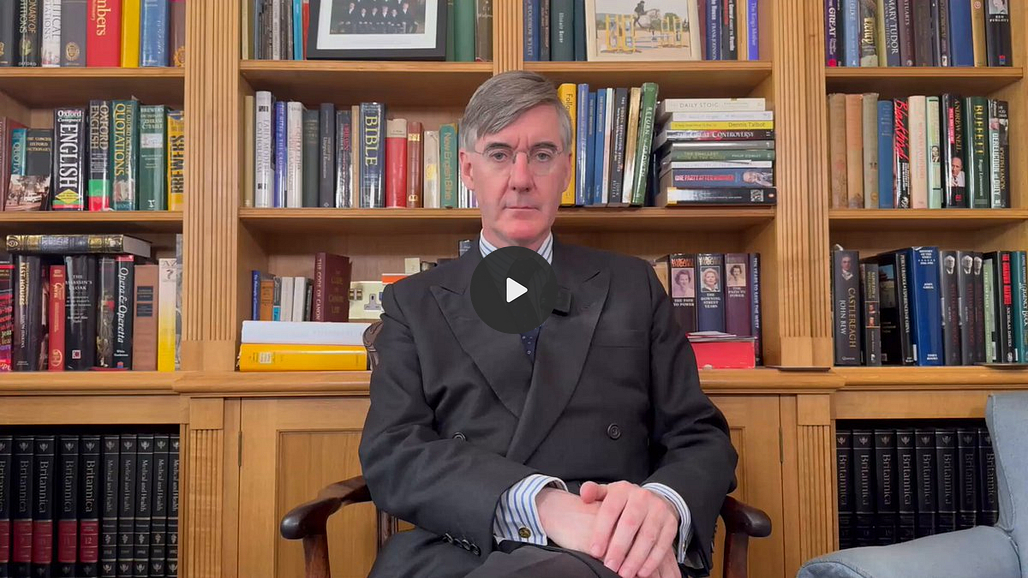
In a September 2026 article for The Spectator, based on a video he had recorded and published on X, formerly Twitter, Rees-Mogg described the English as a “mongrel people, not an Aryan master race”, arguing that Englishness is based on “values and culture and strengths and liberties” rather than ancestry. In doing so, he was calling out not just prominent members of Reform UK, but his own party.
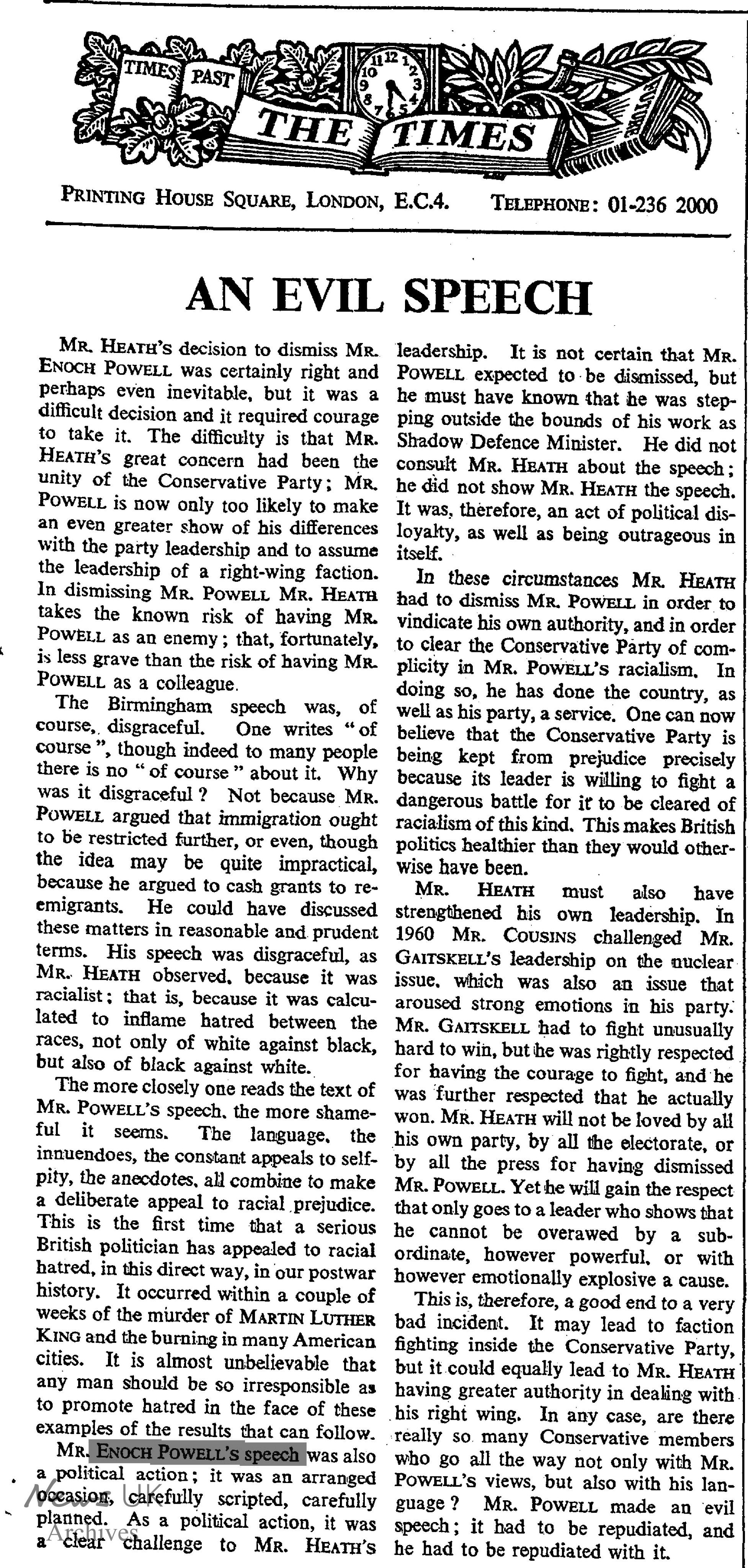
And this was by no means something new for him. In April 2018, Rees-Mogg tweeted a reproduction of his father, William’s, 1968 editorial in The Times, which condemned Enoch Powell’s ‘Rivers of Blood’ speech, writing: “My father’s view which has stood the test of time about Enoch Powell’s famous speech.”
The past is a foreign national
Britain’s two main political parties of the last hundred years have decidedly mixed records when it comes to race relations. Labour governments under Harold Wilson passed the 1965, 1968 and 1976 Race Relations Acts, which variously prohibited racial discrimination in public places, employment and housing as well as establishing the Commission for Racial Equality.
Following the Macpherson Inquiry into the murder of Stephen Lawrence, Tony Blair’s government legislated to extend race-equality obligations to public authorities, including the police, while in the final breaths of the Gordon Brown administration it passed the 2010 Equality Act.

On the other side of the ledger, of course, is the Commonwealth Immigrants Act 1968, which severely restricted immigration to Britain, particularly by East African Asians holding British passports, and which a report commissioned by the Home Office in response to Wendy Williams’s Windrush Lessons Learned Review said was designed to “reduce the proportion of people living in the United Kingdom who did not have white skin.”
Later, in 2020, Labour became only the second party, after the far-right BNP, to be found by the Equality and Human Rights Commission to have committed unlawful acts of harassment and discrimination, in this case relating to antisemitism, requiring the party to implement a legally binding action plan, which it completed in 2023.
The Tories, for their part, did not repeal Labour’s race relations legislation, admitted tens of thousands of Ugandan Asian refugees in 1972 while Ted Heath sacked Enoch Powell from his shadow cabinet following the 1968 ‘Rivers of Blood’ speech. He had little choice, with multiple cabinet ministers saying they’d resign if Powell was not sacked, but still.
Later, Theresa May launched the Race Disparity Audit in 2017, set up the Windrush compensation scheme after the scandal, while the party can lay claim to a number of individual ‘firsts’, including Rishi Sunak as the first British Asian prime minister. On the flip side are the Commonwealth Immigrants Acts of 1962, the 1971 Immigration Act, and the Windrush scandal itself.1
The past is clearly important both for reasons of context and path dependency, but the present is where we are fortunate enough to reside and it’s where we turn to next.
Ian Wright, Wright, Wright
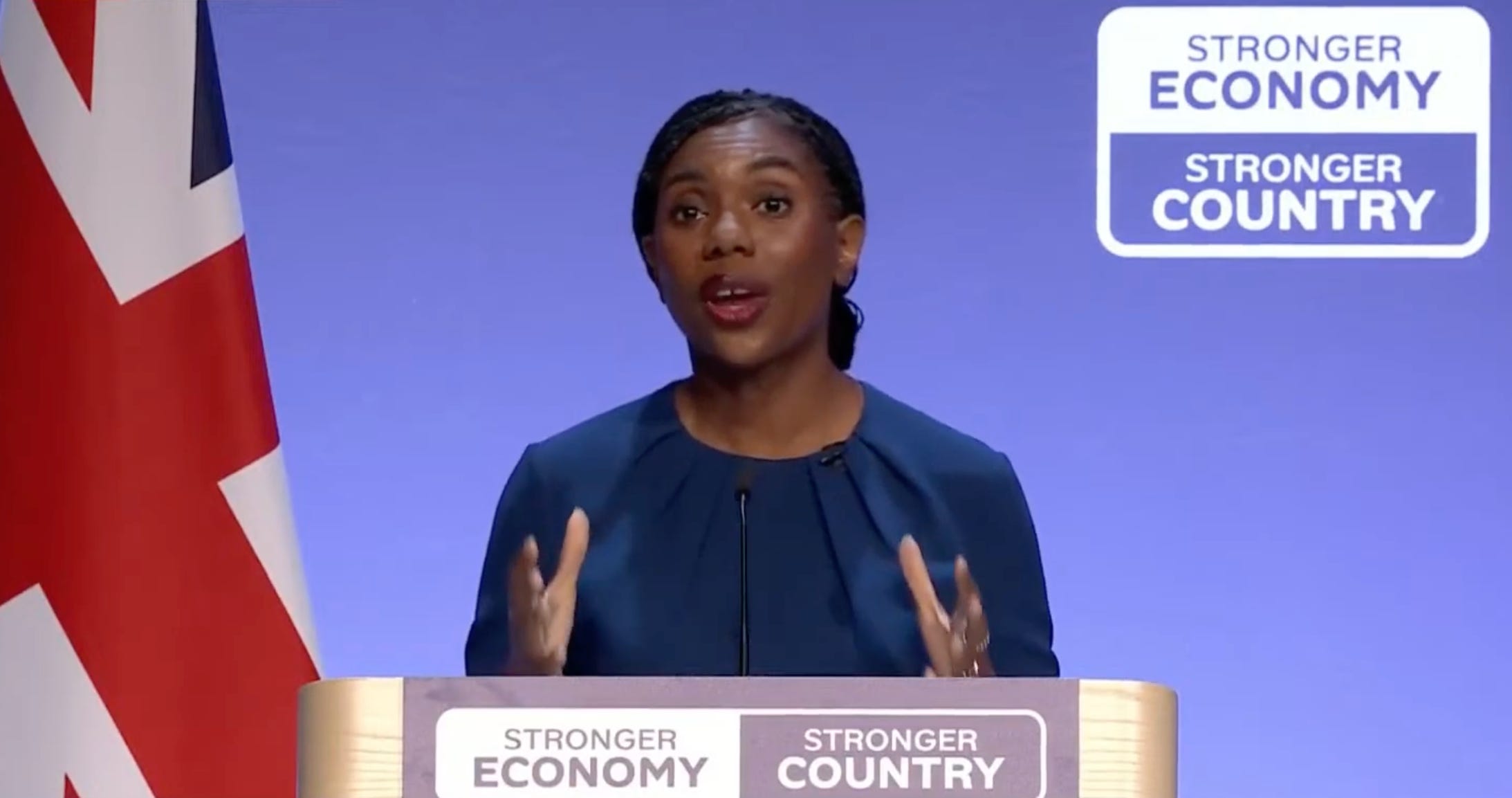
In her speech to the Conservative Party conference in Birmingham yesterday, Kemi Badenoch took a direct swing at Reform UK, an indirect one at members of her own shadow cabinet and in some ways her really quite recent former self. The Tory leader explicitly, passionately and in highly personal terms, condemned the rise of an ethno-nationalist conception of Britishness. She said:
I don’t want to live in a country run by people who threaten journalists, call veterans traitors and debate whether my mixed-race children are English.
I don’t want to explain to my son when we’re watching our brilliant England team play football that some people don’t think our black players are English.
I remember back in the day when Ian Wright and John Barnes were playing, nobody was questioning whether they were English.
We certainly didn’t have sitting MPs questioning whether they were English.
We must not let these people take us backwards.
That is not the country we are.
Reform MPs are openly questioning people’s identity.
They are not like us; we are not like them.
We are different.
We are the Conservative Party.
Put aside the typical Badenoch inattention to detail. Yes, Barnes and Wright were absolutely subject to appalling racist abuse in the 1980s and 1990s. But get over yourself. The broad point stands. The Conservative Party, which for two years now has flirted with — or at the very least stayed conspicuously quiet on — the notion that, amongst other things, nationality is racial — has firmly come down against it.
You might think, how could they do otherwise? The centre-right party in a liberal, multi-ethnic democracy, the most successful party in the history of free and fair elections, led by a black woman with mixed-race children, a fact Badenoch noted in her address.
And yet, this is the same Badenoch who only recently handed Rupert Lowe, leader of the far-right Restore Britain party, a seat on the influential Commons Public Accounts Committee because he “shares our values on cutting waste”.
Never mind the fact that Restore has had public backing from Tommy Robinson (real name Stephen Yaxley-Lennon) and, as reported by the Telegraph, has received donations from people such as Steve Laws, founder of Remigration Now, which calls for the expulsion of every non-white and Jewish person from the UK.

The leader of a party in which one of its ‘rising stars’, Katie Lam, then a shadow home office minister, suggested in 2025 that a large number of people living legally in the UK should be sent “home” and the leader’s spokesperson initially said these views were “broadly in line” with party policy. Or a colleague of Robert Jenrick, then still not only a Conservative MP but shadow justice secretary, when he complained about a lack of “white faces” in parts of Birmingham, something Badenoch defended as a “factual statement”.
And this is relatively recent. Cast your mind all the way back to the prelapsarian days of *checks notes* 2024 when Sunak suspended then Tory MP Lee Anderson for suggesting that “Islamists” had “got control” of Sadiq Khan, on the apparent basis that the mayor is a practising Muslim. From a party management perspective, this was by no means a cost-free decision for the prime minister. Anderson had allies and later defected to Reform. But Sunak did it anyway.
Speaking of which, politics isn’t a simple morality tale. It is extremely political. Badenoch’s choice — and it was a choice — to establish some clear blue water between the Conservatives and conservatism with Reform UK and its nativist tendencies is an old-fashioned dividing line straight out of the George Osborne era.
By which I mean, it ought to unite the Tories while splitting Reform. Nigel Farage — forever determined to ride the horse of nativism while maintaining the barest of cordons sanitaires against the explicitly racist far-right — will ultimately have to come closer to deciding whether he wants the likes of Suella Braverman and her views on race in his party, or if those people are better off in Restore, further splitting that section of the electorate Badenoch has decided she doesn’t want.
Does this change in approach reflect purely noble intentions? Who the hell cares? I want parties to do anti-racist things regardless of whether they feel it in their bones or their parents marched on Cable Street. And I want them to be rewarded at the ballot box for it too.
In the same way that I’d like Labour to rule out cooperation with the Greens, whether it’s because they agree with me that the Greens are now an antisemitic party or purely because they are concerned that such a conception, should it take hold, could poison the broader progressive bloc.
In short, let’s bring back shame to public life and political benefit to those still capable of feeling it.

At this point, I might as well go the whole amoral hog. In an era of spiralling costs, from the energy transition to demographic change and hybrid war with Russia, social reform is attractive because it is practically free. Equal marriage under David Cameron didn’t add to the deficit. The legalisation of abortion under Harold Wilson didn’t spark a balance of payments crisis. Historical consensus suggests that votes for women was not a leading cause of the Second World War.
But I’m getting overexcited. Ultimately, neither Labour nor the Tories have done nearly enough to confront the sort of open racism we have seen in recent years. To be clear, I’m surprised by neither. Speaking as a British Jew and therefore from lived experience, I don’t automatically view parties of the Left as being inherently more anti-racist than those of the Right.
Anti-racism (that is, being against all racism, not just racism targeted at your favoured minorities) is something you do, not something you are. Badenoch may be late to the party, but not as late as others, and I choose to highlight and celebrate the fact that she decided to show up at all.
I’m by no means an expert in this area but have just tried to do my best to provide a bit of a historical sweep