


If Lines To Take had a guiding philosophy (beyond, oh god there are literally no new ideas in the world or any further mileage to be made from another fuel duty take) it would be a belief in institutions: The Bank of England, the National Health Service and the old Arsenal back four (Winterburn, Adams, Bould/Keown, Dixon).
Think of this newsletter as one of those “wife guys”, except the wife in question is Andrew Bailey, the kids are the other eight members of the Monetary Policy Committee and we will turn this car around if you don’t maintain price stability.

*Land of Hope and Glory plays softly in the background*
Institutional roots run far deeper than any physical organisation. They help to lay down rules, reinforce norms, promote traditions and establish practices that shape all manner of personal and societal behaviours. TL;DR functioning institutions stop people from murdering their neighbours.
It is for this reason that, unless political actors are prepared to accept constraints on their power — even when inconvenient — and practise what social scientists call “forbearance”, it doesn’t really matter whether your constitution was written down by revolutionaries 250 years ago or is an uncodified hodgepodge of acts, conventions and common law.
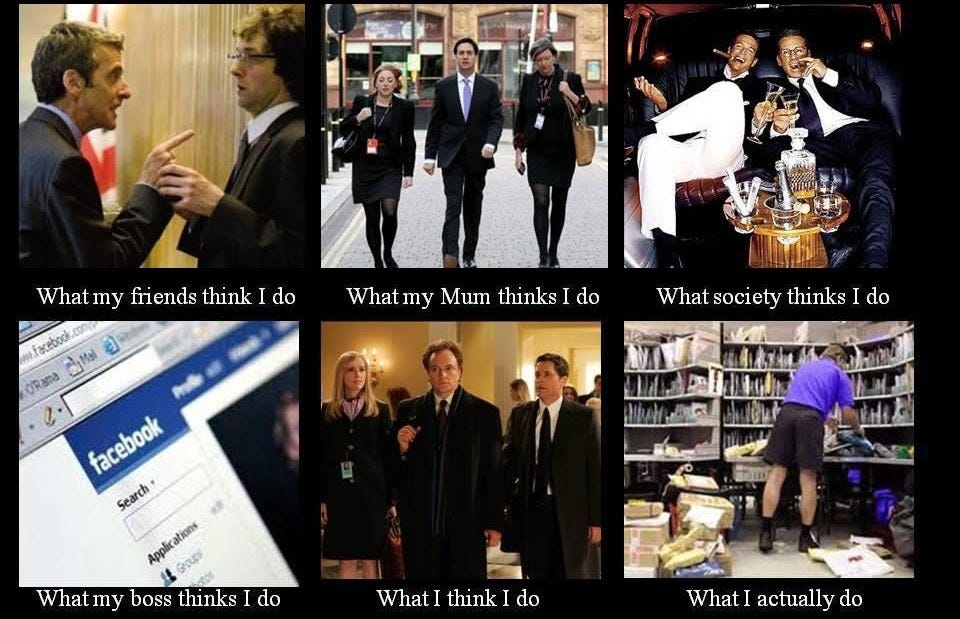
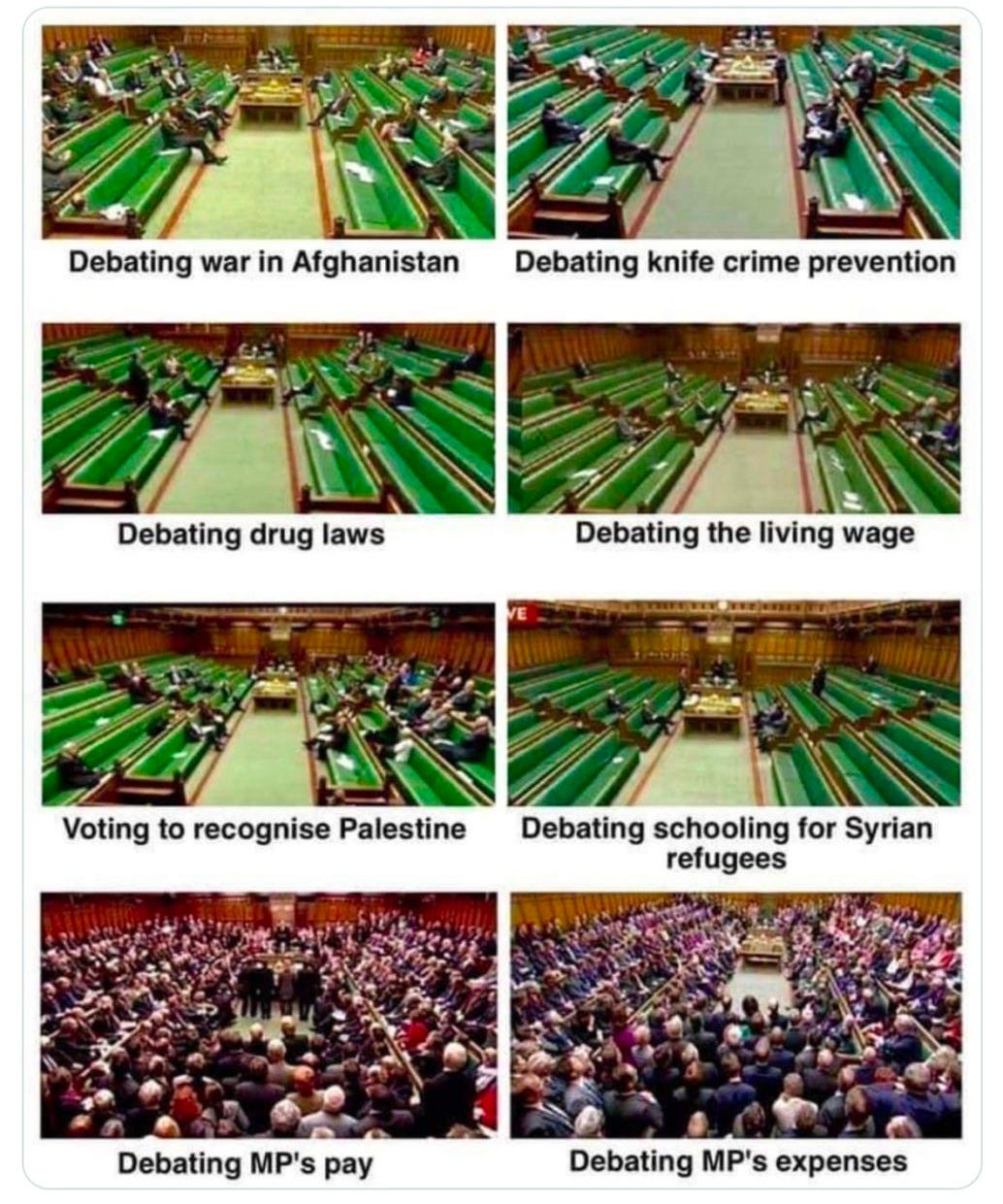
I suppose it’s no coincidence that I’ve worked for two such institutions: the House of Commons and the civil service. And why I continue to defend Parliament, for all its shortcomings and low skulduggery, as a Good Thing. And get annoyed at this sort of 2010s meme which, to be fair, seems pretty quaint now:
But nor am I a cheerleader for when parliament takes flagrantly anti-transparent steps. Such as the recent decision to remove the names of MPs’ staff from the Register of Interests.
And what do you do?
In its stead, we now have to take their word that they have no interests. Literally, the latest release says: “All staff listed by this Member have confirmed that they have no registrable interests.”
To be clear, this is usually the case. But not always. And sure, this isn’t cash-for-questions or Nigel Farage and the £5m crypto donation, let alone the sheer quantum of corruption going on in the United States. Still, it is a retrograde step that will only serve to undermine public confidence in the long run, even if no one normal1 will know about it.
Full disclosure: during the summer recess, Fridays, or really anytime I came to work hungover, the UK taxpayer was not achieving record value for money out of my services. All I will say in mitigation is that I was in my twenties, not brilliantly paid and I did work reasonably hard while the House was sitting.
Regardless, Your Honour, let me tell you what I wasn’t doing:
Lobbying on the side for tobacco/social media/gambling companies
Spying for China (or, to be clear, anyone else)
Writing speeches for some public affairs executive
Nor was I related by blood or marriage to the boss, though I won’t pretend I pulled myself up by my bootstraps or have imposter syndrome because I’m from the North.
Moreover, we already have a transparency problem around who gets access to Parliament and politicians. I’m thinking specifically of the miles of lanyards with their all-access parliamentary passes dangling from the necks of donors, lobbyists and hangers-on, all sponsored by MPs and peers. Removing another layer of publicly available information is therefore moving in the wrong direction.
And it’s not just lobbying and influence peddling. I think it is valuable to know whether the person spouting misogynistic, racist or just plain nutty conspiracy myths on social media is working in our Parliament with an ear to our legislators. Perhaps the MP in question doesn’t know, or they do and are fine about it. Either way, some transparency would go a long way here.
The threat is real and rising
The security threats faced by MPs and, by extension, their staff are growing at a frankly alarming rate. I absolutely get why some local councillors, for instance, don’t always want to advertise their home address to the world. The gates at the bottom of Downing Street only protect a select few.
To that end, we need to get much more serious about both the threat and reality of political violence, whether far-right, far-left, Islamist or foreign-state-backed. Not only with reference to the murders of Jo Cox and David Amess, but also how the violence is leveraged to stifle free debate.
We must do more to combat the threat, including in constituency offices, which lack the same levels of police protection as those on the parliamentary estate. But this latest anti-transparency change does not seek to address that. It’s just shutting off a bit of light.
And a less transparent parliament is less capable of acting as the trusted institution we need more than ever.
Not you. You subscribe to a daily politics/public policy/Tony Blair quotes newsletter