


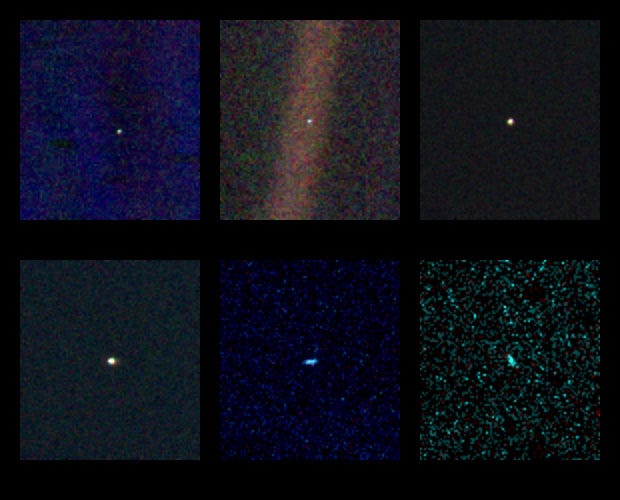
You wouldn’t want to have a phone call with someone on the Moon. It’s not the post-Brexit roaming charges or the time difference (indeed, there is no agreed lunar time zone). Rather, the thing that would drive you nuts is the latency. A conversation might go something like this:
Earthling: Mate, how’s the weather up there?
[1.3 second pause]
Lunarian: You’ll have to speak up, I’m wearing a spacesuit.
[1.3 second pause]
Earthling: I said… never mind. Put Steve on.
Back home, light feels instantaneous. But on a cosmological scale, it’s painfully slow, even when dealing with our nearest neighbours. Some simple maths: the Moon is around 238,000 miles away from Earth, light travels at approximately 186,000 miles per second, so radio signals take about 1.3 seconds to travel between Earth and the Moon (radio signals travel at light speed) and another 1.3 seconds to get back.
This is noticeable, but is at least workable. Of course, the further you go, the worse it gets. It would take three minutes each way to have a chat with a Martian, and that’s only when the Red Planet is at its nearest point to Earth. On average, it would be more like 12 minutes with a peak of 22 when Mars really needs its space.
And it goes on. Want to speak to someone enjoying a winter break on the nearest star to our Solar System, Proxima Centauri? At 25 trillion miles away — or 4.24 light-years — you're looking at a communications delay of, well, 4.24 years. At which point, it’s less like a phone call and more like an endless WhatsApp with that friend who never texts you back.
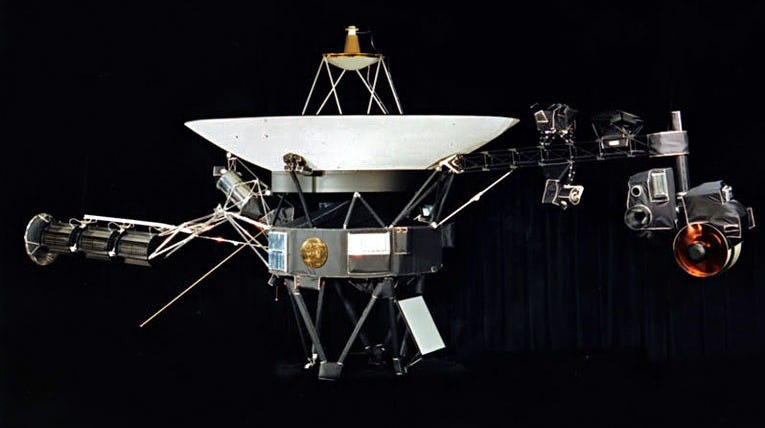
And this brings us to Voyager 1. Launched on 5 September 1977,1 it is set to become, this very Wednesday, at 10:16am GMT, the first human-made object to travel an entire light-day from Earth. And even if you don’t fall asleep every night to space videos, that’s pretty darn cool.
