


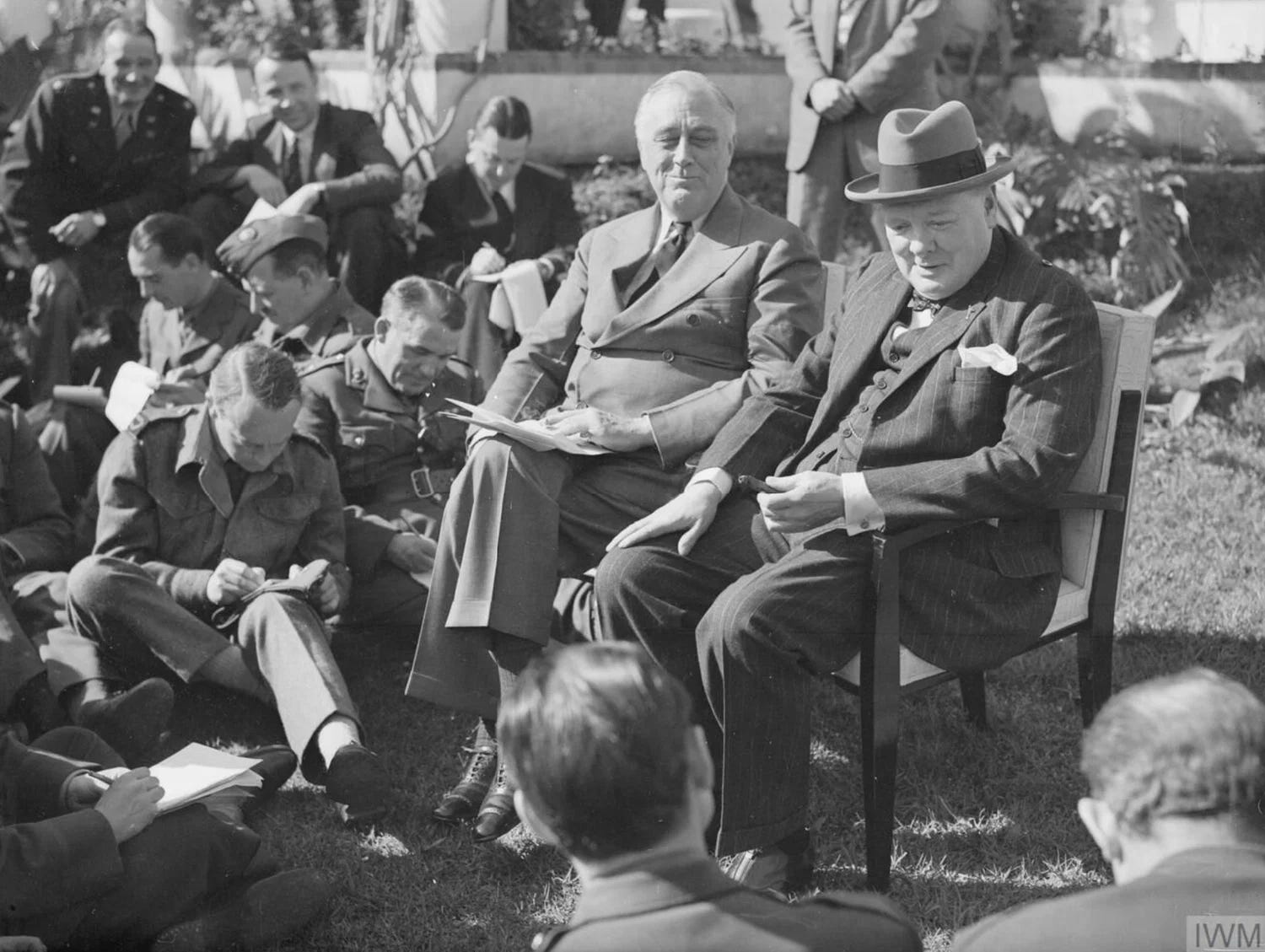
It was, amid a total war and following a series of demoralising military defeats, a fairly stunning diplomatic triumph. At a meeting between US President Franklin Roosevelt and UK Prime Minister Winston Churchill in Casablanca in early 1943, the British secured pretty much everything they wanted.
As Tim Bouverie, author of Allies at War, a terrific history of the often complicated World War II alliance between the ‘Big Three’, observes, the US Joint Chiefs — who had arrived in Morocco utterly opposed to any further operations in the Mediterranean — left it having assented to, amongst other things, the invasion of Sicily by July.
“If I had written down before I came what I hoped that the conclusions would be, I could never have written anything so sweeping, so comprehensive and so favourable to our ideas,” crowed Lieutenant-Colonel Sir Ian Jacob. And it was not as if the Americans didn’t know. “It taught us a lesson” recalled US Army General Ed Hull. “We lost our shirts” decried US General Albert Coady Wedemeyer.
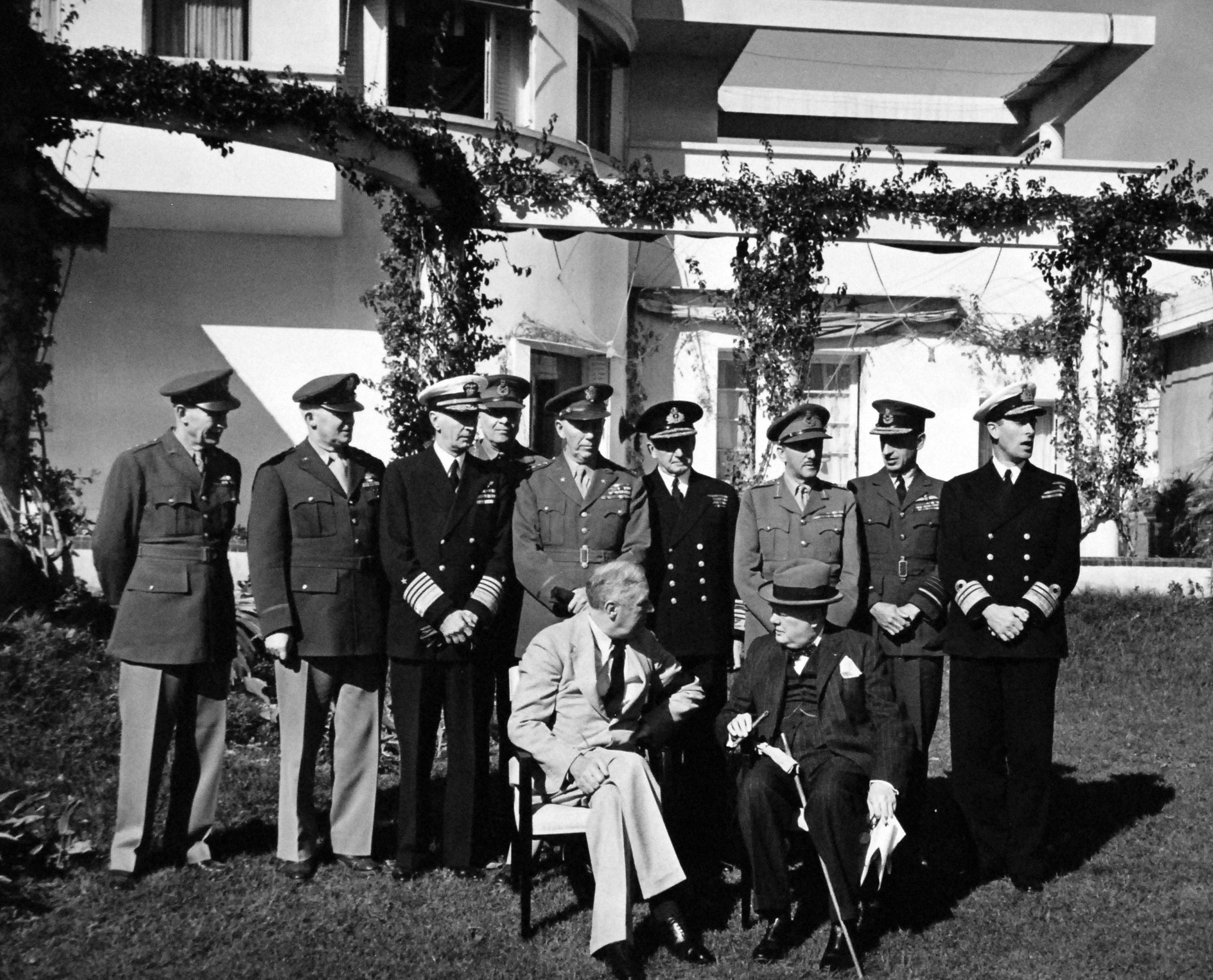
How had the British achieved such a comprehensive outmanoeuvring of their better fed, funded and far more numerous partner? It wasn’t, as the Americans were always quick to cite, classic British sleight of hand or subterfuge. Rather, it was that other Whitehall trick — exacting preparation and a “Rolls-Royce secretariat”.
As Bouverie notes, whereas the Yanks had sailed over with just a few staff, the Limeys had arrived with a 6,000-ton troop ship acting virtually as a “floating headquarters”. Moreover, each of the many British representatives had written a paper to be filed with the US Joint Chiefs. “They swarmed down upon us like locusts” was Wedemeyer’s biblical lament, before going on to concede his admiration for Britain’s “super-negotiators”:
[I]t was apparent that we were confronted by generations and generations of experience in committee work, in diplomacy, in rationalising points of view. They had us on the defensive practically all the time.
Brexit, pursued by a bear
Three-quarters of a century later, as it sat down to negotiate with the European Union, Britain was shorn not only of its imperial lustre but also its prized attention to detail and contingency planning. It may only have been a photo opportunity, but the image of Brexit Secretary David Davis sitting down without notes, opposite EU chief negotiator Michel Barnier and his team’s thick pile of papers, understandably raised alarm bells back home.
The Europeans themselves were confounded. Up until the Brexit vote, and contrary to received wisdom among press and public alike, the British were considered among the most effective negotiators in Brussels. This reputation — for thorough preparation, technical expertise, fluency in regulatory detail and the building of coalitions around specific policy goals — was well-earned1.
Indeed, according to a 2007 research paper carried out at Gothenburg University (which I’ve lifted from Mats Braun via UK in a Changing Europe because I have neither the time nor the Swedish language skills), Stockholm’s diplomats frequently showed a preference for working with their British counterparts rather than their fellow Scandinavians.
The reasons were both an indication that the countries were likely to have a similar opinion on the issue, but also the reputation of British diplomats.
As former UK Ambassador to the EU Sir Ivan Rogers set out in his resignation letter and various testimonies, the UK entered the Brexit negotiations without a settled plan or agreed negotiating objectives — something that was blindingly obvious to most Britons.
Yet given the UK’s reputation in Europe, contemporary accounts suggest that EU negotiators initially assumed this ambiguity reflected a deliberate negotiating strategy, rather than the sheer incoherence bequeathed by a combination of the Vote Leave campaign, David Cameron’s refusal to sanction Brexit contingency planning and Theresa May’s political weakness.
Preparation can only take you so far
As a result of the rather painful and public self-own that was Britain’s Brexit strategy, and the terribly thin Trade and Cooperation Agreement it ultimately produced, a narrative has been allowed to fester in some quarters that the great crime was a lack of preparation.
As set out above, the absence of planning was near-total and certainly contributed to the political crisis and economic weakness of the years 2016 to present. However, whether one is negotiating with the might of Roosevelt’s wartime America or Barnier’s Brussels mandate, planning, preparation and a “Rolls-Royce secretariat” can only take you so far.
As World War II progressed, and American economic might and greater military manpower became ever more apparent, the centre of gravity began to shift westward. Meanwhile, no amount of preparation would have altered the basic fact that the US was hostile to the continued existence of the British Empire, for reasons of anti-imperialism and commercial ambitions.
The same was true with the EU. Davis could have turned up with an army of civil servants, each with their own peer-reviewed papers and an all-singing, all-dancing Anand Menon doll. It wouldn’t have altered the reality of the Northern Ireland border, the status of EU citizens in Britain, or the fact that one side was a medium-sized market of 70-odd million, the other a regulatory superpower home to 450 million.
Failing to prepare usually is preparing to fail, but it also has hard limits in asymmetrical negotiations. Gravity — whether military, political or economic — almost always reasserts itself in the end. The lesson for Britain's next negotiation, whether with Washington or Brussels, isn't to prepare less, but to understand where power lies and make the best of a difficult hand.
See: the UK rebate, various opt-outs such as the Euro and Schengen
I like this. “The lesson for Britain’s next negotiation (EU) is also…timing”. Michel Barnier was interviewed the other day and seemed almost too benign in what we could get out of any re-entry negs. I found it all quite implausible. Keep the pound, no problem. Want a budgetary rebate, yeah, how much! I cannot imagine a worse time to begin such an exercise; yet knowing our politicians, that may well happen. Just as peace though strength, we also have a concept of negotiation through (relative) strength.