


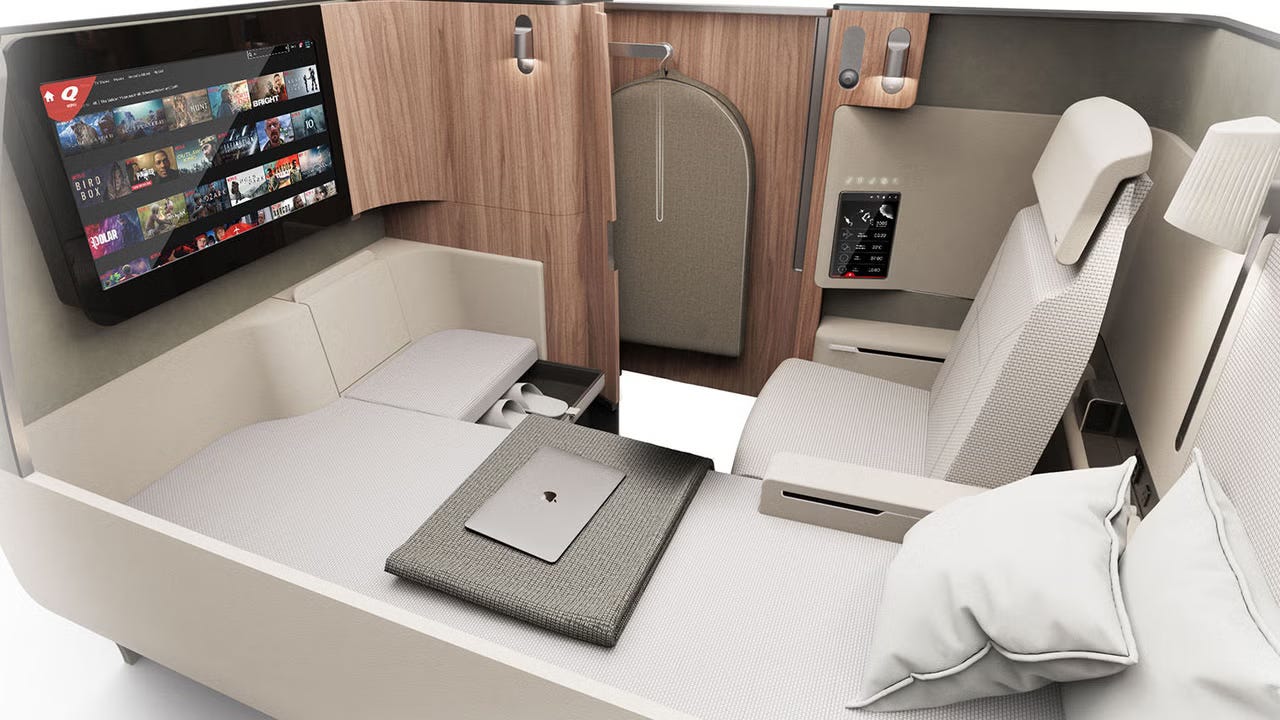
You can have your West 57th Streets, Avenue Montaignes and Mount Nicholson Roads — the most expensive real estate around lies roughly 40,000 feet above the Earth’s surface, racing along at 550mph.
From the cardboard excuse for economy seats to the self-moisturising pyjamas in first class — every inch of legroom, stitch of thread and kilogram of weight must be accounted for, fought for and ultimately hurled into the sky.
And if you think your finance director is a humourless shill, wait until you meet an airline’s revenue management team. They will crush your dreams and your legs and then tell your mama about it.
So it’s really quite jarring to see space used so ineffectively, and by the O.G. of long haul aviation1 on its newest, most flagship-iest route.
Hop, skip and a grump
Back in 1935, the first true Kangaroo Route operated by Qantas2 from London to required an annual leave-busting 12 days and dozens of stops. By 1947 this had fallen to around four days and seven stops. Today, it’s typically a one-stopper, with a layover in the Gulf or everyone’s favourite airport, Singapore’s Changi.
So it was with great fanfare and not a bit of public relations overdrive that Qantas announced its Project Sunrise — direct flights (technically, non-stop) between the east coast of Australia and London, as well as to New York. The final frontier of aviation, they called it, on the basis that the Venn diagram of aviation geeks and Star Trek fans is a perfect circle3.
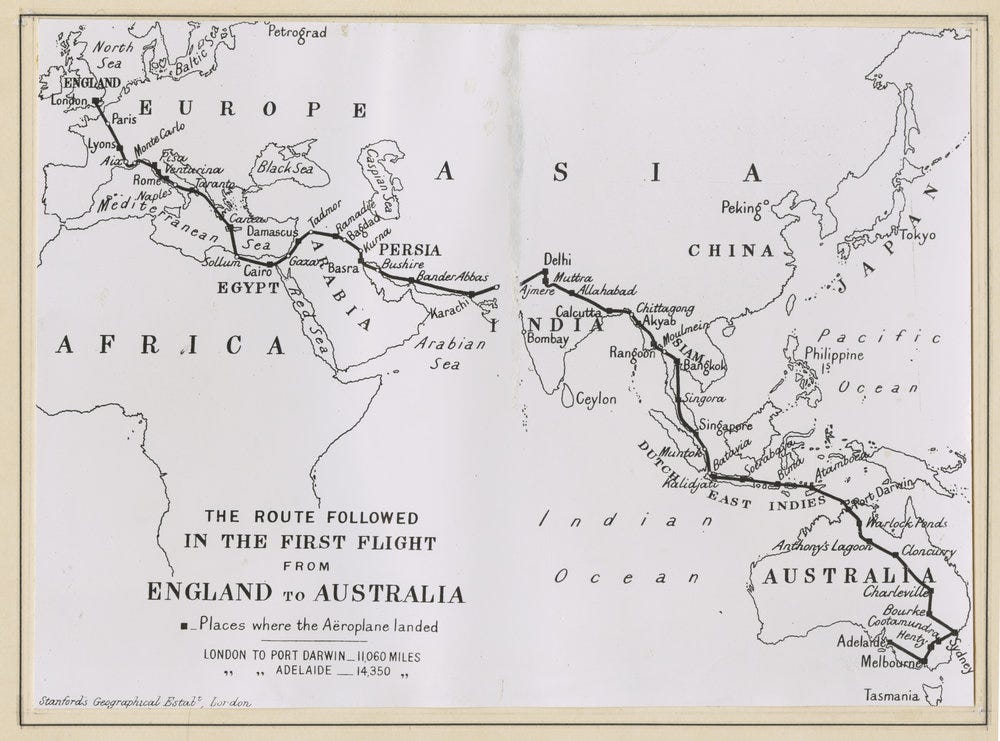
This decade-long endeavour has necessitated a specially configured Airbus A350-1000ULR, fitted with an additional 20,000-litre fuel tank to enable the aircraft to fly more than 10,000 miles (16,000km) and up to 22 hours non-stop. To keep weight down, the planes will seat just 238 passengers with the first flight to London is set for October next year.
This is not a newsletter about how the aircraft will do this (I don’t understand how they ever stay in the sky) or how Qantas plans to make the economics stack up. For that, check out this terrific post by the Analytic Flying Substack. My interest is far more unrefined, verging on the clickbait-y:
I’ve seen the images for what first class will look like and… yeah… it looks quite uncomfortable? And sure, I’m probably not parting with the £20,000 or so it’ll cost to try them out. But it’s the principle.
Shoulder to shoulder
To be fair, an A350 is not an A380. It has ‘only’ one deck, no dead space (where seats legally cannot be installed) for showers or bars. Nevertheless, it feels like in eschewing an off the shelf design for a more bespoke one, Qantas has ended up in a sort of no-man’s land, with neither the efficiency of the former nor the coherence of the latter.
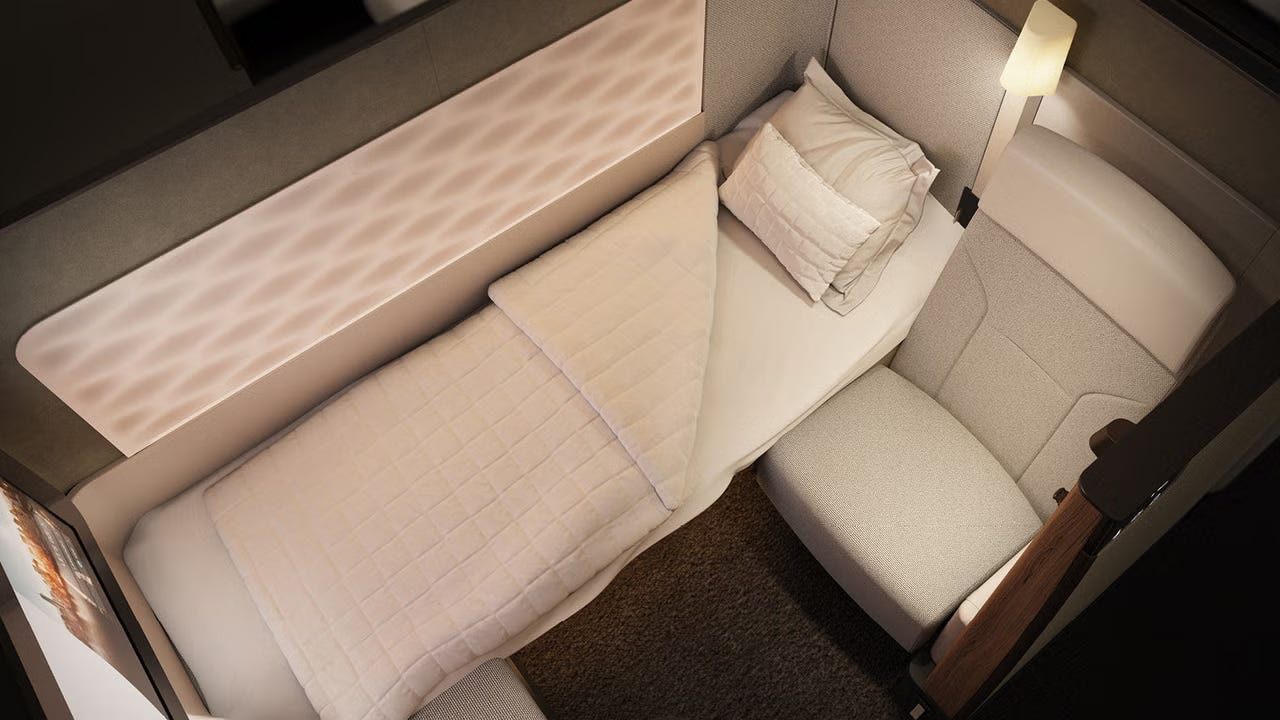
As you can see, first class passengers get enjoy a two-metre-long fully flat bed and a separate reclining armchair. The logic is clear: if wealthy people are going to spend an entire day of their lives on a plane, they may enjoy the benefit of sleeping somewhere different to where they sit. No one wants to go to bed on a mattress covered in crisps (or, being first class, Black Sea caviar).
But the compromise is visible from sea level — is it just me or do both bed and seat look pretty darn tight?