


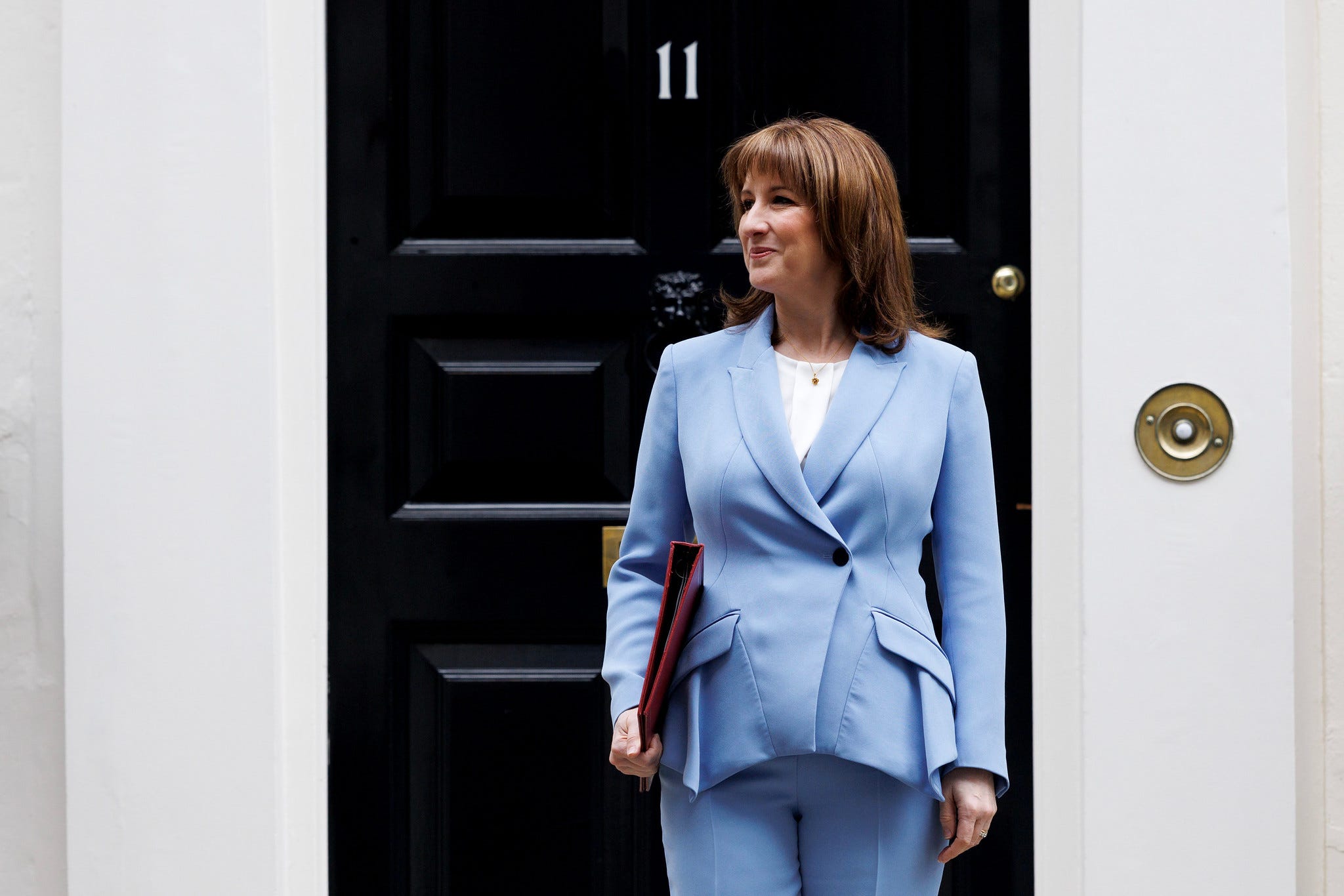
If last November’s Budget speech possessed an air of unreality, overshadowed as it was by the leaking of the Office for Budget Responsibility’s forecast document, yesterday’s Spring Statement was rendered practically moot, predicated as it was on suddenly (and wildly) outdated OBR projections.
The figures, as the OBR acknowledged in its report, were compiled weeks before the US-Israeli strikes on Iran, before Tehran responded with a barrage of missiles and drones directed not only at American bases and Israeli cities, but also at all six Gulf Cooperation Council members1. Before Qatar halted LNG production and the Strait of Hormuz — through which roughly one-third of oil shipments cross — was de facto shuttered.
It all meant that Rachel Reeves, while briefly alluding to the economic uncertainty unleashed by the outbreak of conflict in the Middle East, ended up doing a serviceable impression of Muhammad Saeed al-Sahhaf who, as Saddam Hussein’s Minister of Information, earned the nickname Comical Ali for his many statements about the Iraq War that instantly proved wholly divorced from reality. As the bombs fell and energy prices skyrocketed, Reeves powered ahead, reeling off the good news.
It’s worth highlighting a couple of those OBR projections on energy:
Forecast: gas price of 89p per therm.
Reality: 138p per therm (it had hit 165p at one point on Tuesday)
Forecast: oil price of $68.39 per barrel
Reality: $84 per barrel
Any sustained rise in energy prices would have significant implications for the wholesale cost of energy, for petrol prices and of course all the many goods and services that use them2. Meanwhile, the energy price cap, which is set to fall by over £100 in April, could soon rise by as much as £500.
Everyone has a plan until they get punched in the mouth
This is bad for households but truly toxic for the government. Higher energy prices feed directly into higher inflation, which in turn pushes up interest rate expectations and gilt yields — eroding the fiscal headroom the Treasury had been counting on. Indeed, before the weekend, the odds of a 25-basis point interest rate cut this month were around 90%. That has now fallen to 25%, according to the Financial Times.
Much of the recent fiscal good news was based on lower interest rates reducing the costs of servicing government debt. I mean, remember that this government — facing its own existential threats from Left and Right — has pencilled in spending cuts for an election year. I suspect that Reeves was banking on lower borrowing costs to fund higher spending when the time came. She may no longer have that option.
I ummed and ahhed about the Chemical Ali comparison because Reeves is no punchline. Really, her Spring Statement reminded me of Rishi Sunak’s March 2020 Budget. At the time, the roughly £30bn of fiscal stimulus he announced seemed fairly expansive. It turned out to represent scarcely a drop in the fiscal ocean, with the total cost of government Covid-19 measures ranging from £310bn to £410bn3.