


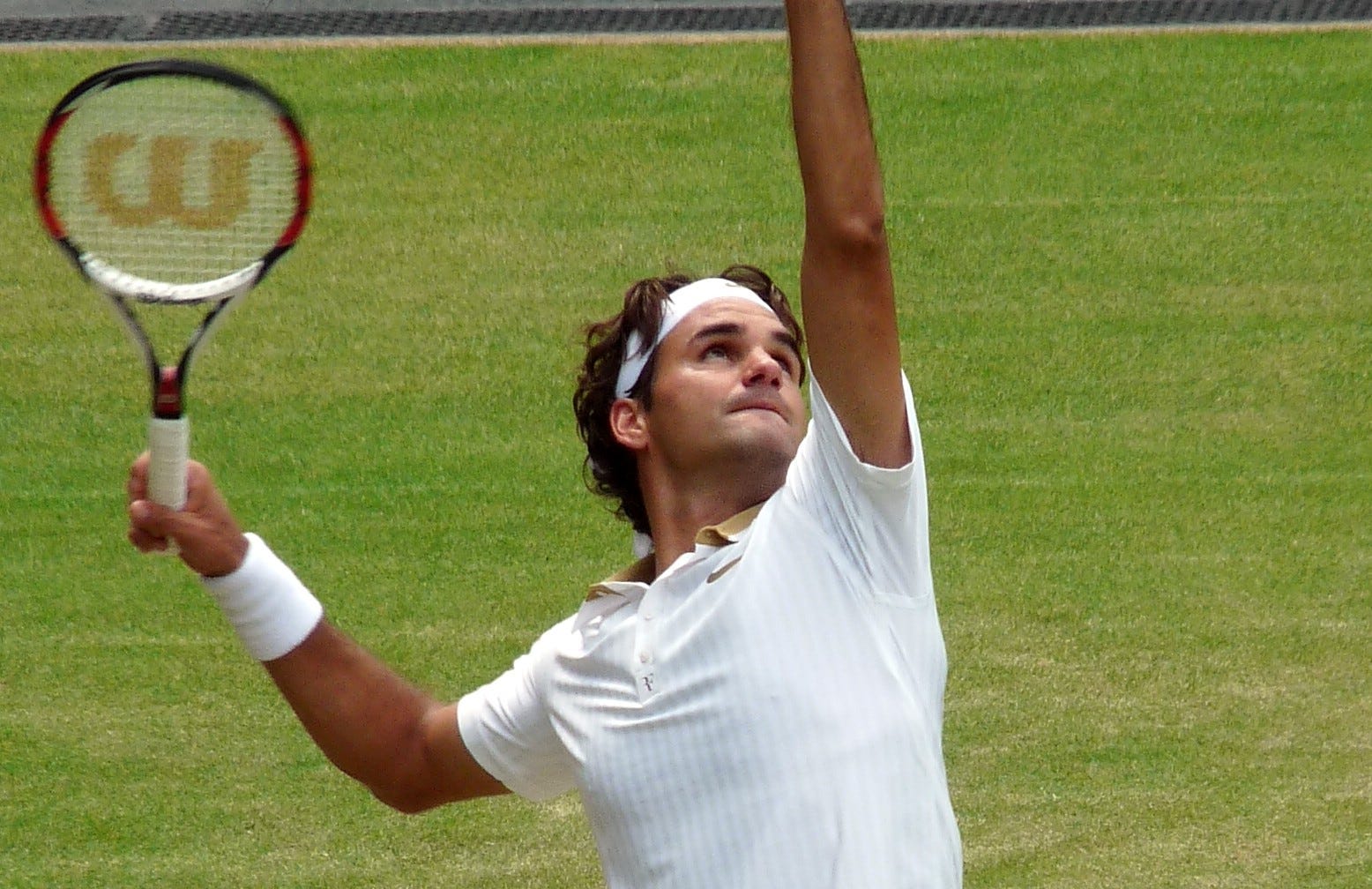
Roger Federer does not hold the most grand slam titles, the most Masters 1000 titles or the most weeks at world no. 1 — that would be Novak Djokovic. He cannot lay claim to the most titles at a single major, the most consecutive weeks in the top-10 or the career golden slam — that’s Rafael Nadal. Nor does he even have a winning head-to-head record against either man.
There is simply no statistical route — none — to arguing that Federer is the most accomplished men’s tennis player of all time. And yet, as he is inducted into the International Tennis Hall of Fame on Saturday, Federer will do so as the most popular and important player in tennis history.
In the words of fellow Hall of Famer and tennis historian (look, ‘newsletter writer’ is a perfectly fine job title but *tennis historian* is better) Steve Flink, Federer transcended the sport. And he achieved this in large part by making people feel things to a quite unusual degree.1
Popular! You're gonna be popular!
During his playing days, Federer was written about in a manner more often reserved for spiritual leaders. David Foster Wallace contributed the most celebrated item in a 2006 essay for the New York Times, “Roger Federer as Religious Experience”, which chronicled the man at the height of his powers.
Five years on, Brian Phillips did the same for the Swiss’ gentle (and at the time, seemingly terminal) decline, with the melancholic subtitle “The long autumn of Roger Federer”. Indeed, I have had one or two stabs myself. He just had that effect on people.
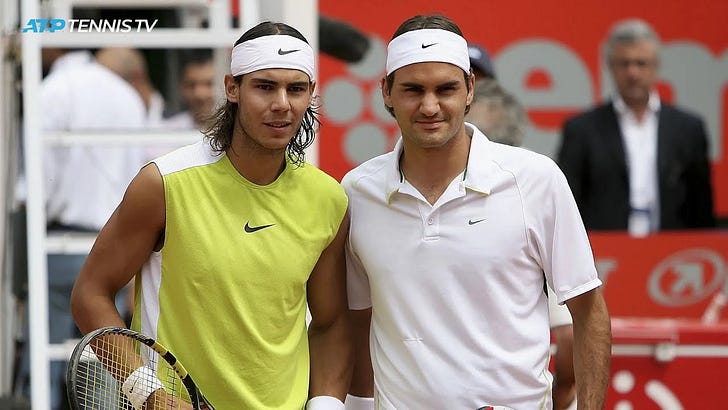
There had, of course, been popular players before. Björn Borg was tennis’ first true teen idol while Evert became America’s sweetheart. Jimmy Connors and John McEnroe were brash and box office but divisive. Later, the dominant pair of the 1990s, Pete Sampras and Steffi Graf, were more admired than loved. Federer was something else.
He was wildly popular at every stage in his career. When being overtaken in the rankings, first by Nadal and then Djokovic. Amid his late-career resurgence. And even during his unipolar moment, of 2003 to 2007, when he won 11 of the 16 slams on offer, fans still overwhelmingly wanted him to win.
Federer could play Andy Murray at Wimbledon, Andy Roddick in New York and Rafael Nadal in Madrid and still have at least half the crowd on his side. Little wonder, then, that Federer won the ATP Fans’ Favourite award 19 times in a row between 2003 and 2021.
The obvious question is: why? Why did people want Federer to win so badly?
If you can’t love yourself…
While Nadal played to suffer and Djokovic to prove the haters wrong, Federer did it simply to play. And he let fans become co-conspirators. Calvin Tomkins, longtime art critic for The New Yorker, once observed that “the beauty of tennis, like the beauty of dance, is kinaesthetic, in that we respond to certain shots as though we had made them ourselves.”
