


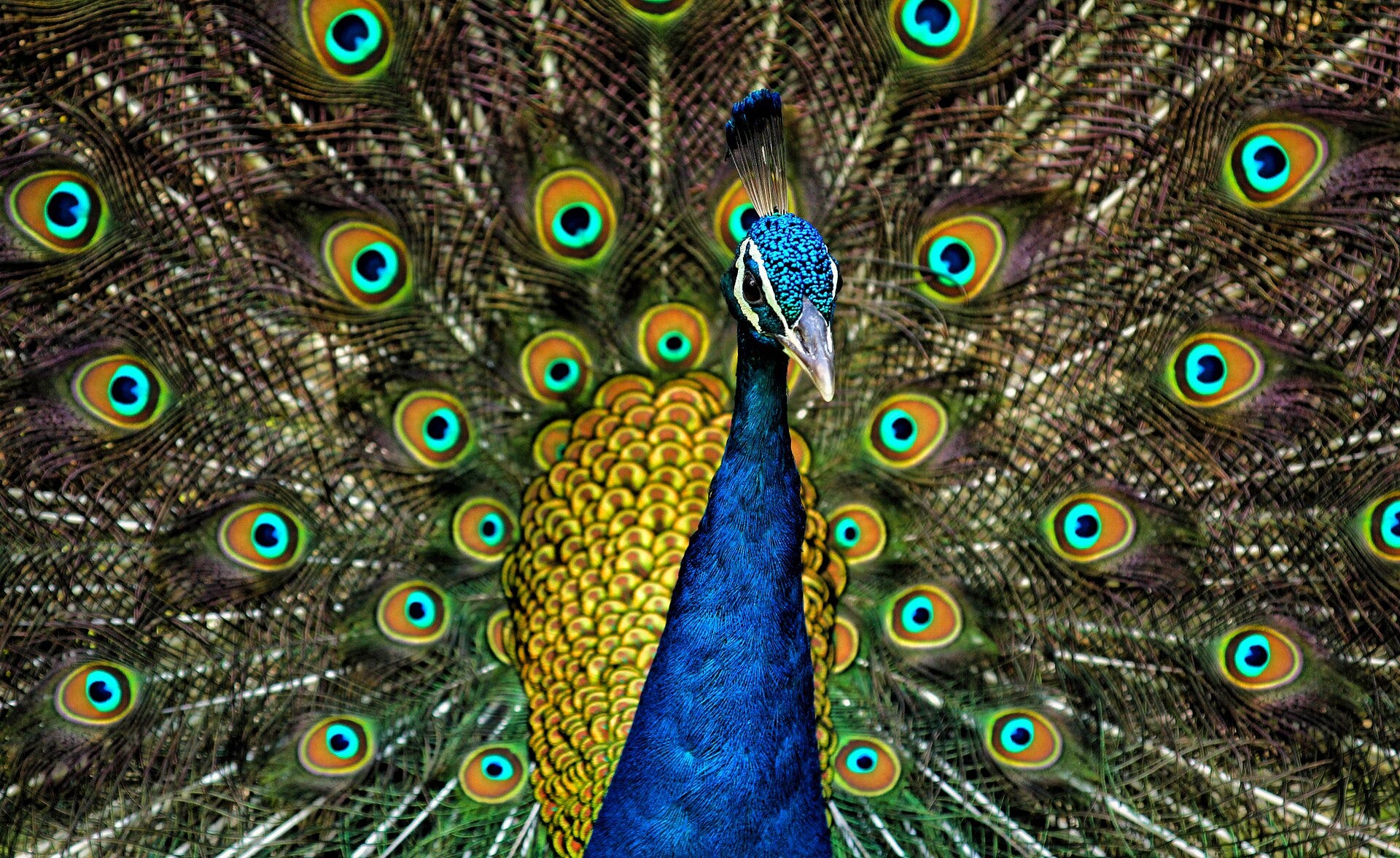
Charles Darwin, like many men, was confused by birds. In a letter to the botanist Asa Gray, sent a year after the publication of On the Origin of Species, he despaired: “The sight of a feather in a peacock’s tail, whenever I gaze at it, makes me sick!”
Darwin’s confusion was grounded in the fact that male peacocks, with their colourful and cumbersome tails, appeared to contradict his theory of natural selection — the idea that evolution favours whatever helps an organism avoid getting eaten for long enough to produce viable offspring.
Surely, the peacock would have a higher chance of survival if it spent its finite metabolic resources on better camouflage or stronger claws? Why would evolution come up with something so impractical and obviously wasteful? We know now this is nature’s equivalent of costly signalling.
In 1991, a research team led by Marion Petrie found that peahens prefer peacocks with “elaborate trains” (unlike human females, who to my knowledge keep a wide berth from men with an interest in retro British Rail insignia).
Peacocking on wheels
Friend of the newsletter, Ogilvy vice chairman and walking anecdote machine Rory Sutherland makes a similar point about cars. A Lamborghini Huracán and a heavy goods vehicle can cost roughly the same amount. Yet no one is driving an HGV in order to signal their wealth or show how really very well they are taking the divorce, thank you for asking, Sandra.

The HGV is expensive because it’s big and heavy and enables the owner to earn money by hauling things up and down the country. The whole point of a supercar lies in its sheer impracticality. Sure, the Lamborghini has a top speed of 200mph but try reaching even half that on New Bond Street.
Which brings me, to absolutely no one’s surprise, to a recent short-haul flight.