


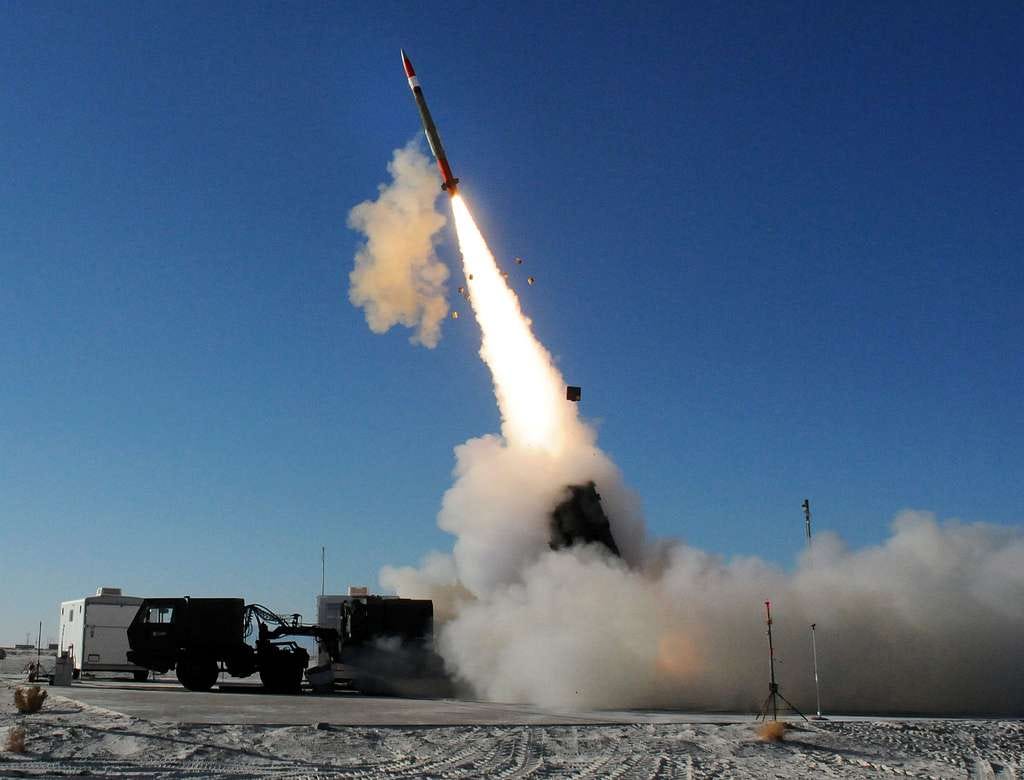
Should you ever find yourself facing a barrage of Iranian, Russian or North Korean aerial attacks, you will be grateful for missile defence. The idea is simple: these systems detect, track and destroy incoming missiles in the sky, before they have the chance to cause damage on the ground.
The most famous example is based in Israel, whose Iron Dome system has since 2011 been used to intercept thousands of artillery shells and rockets fired by Hamas and Hizbollah. This is in addition to further defensive layers such as David’s Sling, Arrow 2 and Arrow 3 interceptors, designed to combat longer-range ballistic missiles, such as those possessed by Iran.
It is not that these technologies do not work. They do. Without them, civilian deaths would be far higher and damage to infrastructure far more widespread. But there is a seductive quality to missile shields which shares the energy of those “one weird trick to lose belly fat” spam adverts one sometimes sees at the bottom of online newspaper articles.
And this helps explain why Donald Trump is so keen on developing a so-called “Golden Dome”, the plan for a vast shield to protect the United States against everything from cheap drones to nuclear weapons. The appeal is obvious — who would not want an impenetrable sky? — but the economics are less forgiving. Were it ever to be built, the sticker price coud run into the trillions of dollars. And here we come to the central problem with missile defence: asymmetric costs.
Put simply, it is a lot cheaper to lob something over the border than it is to shoot it down.
Money up in smoke
In response to a joint US-Israeli attack, Iran responded not only by firing missiles at Israel and American assets in the region, but also at Gulf Cooperation Council members Bahrain, Kuwait, Oman, Qatar, Saudi Arabia and the UAE. This despite the fact that these countries had previously announced they would not allow their territory or airspace to be used for strikes on Tehran.
Between 28 February and 1 March, Iran fired 165 ballistic missiles, two cruise missiles and 541 drones at the UAE, of which roughly 92% were successfully shot down — a remarkable success rate. But, as Kelly Grieco, Senior Fellow at the Stimson Center notes, “the financial toll of sustaining that defense is enormous, raising the prospect that tactical ‘victory’ masks a costly strategic drain.” Grieco lays out the numbers:
Ballistic missiles cost around $1m-$2m each, cruise missiles $1.5m each and Shahed drones $20,000-$50,000 each, for a total outlay by Iran of between $177m and $360m. Meanwhile, each ballistic interceptor costs around $4m-$5m (assuming a two-shot doctrine, you have to double that figure).
Add in a further few hundred million dollars to counter the drones (which, remember, cost Iran in the tens of thousands each) and the total bill for the UAE comes in at between $1.5bn and $2.3bn. Or five to ten times more. In effect, Tehran is trading aluminium tubes and explosives for Gulf capital expenditure.
Of course, this is a calculation that Ukrainians have been dealing with for years.