



Why did the Conservatives win the 2015 general election? Take your pick: David Cameron’s personal ratings, Ed Miliband’s unpopularity, the fact that Tory voters had been largely protected from spending cuts, Labour’s continued reputational damage from the global financial crisis, the Liberal Democrats’ collapse, cut-through regarding SNP influence over UK-wide policy.
But if I could pick only one, it would be this: real wages were rising. This may come as something of a surprise, given that the early 2010s were not exactly famous for their roaring economic recovery. But in the six months prior to May 2015, and after roughly six years of decline, real wages were finally above water. Talk about good timing.
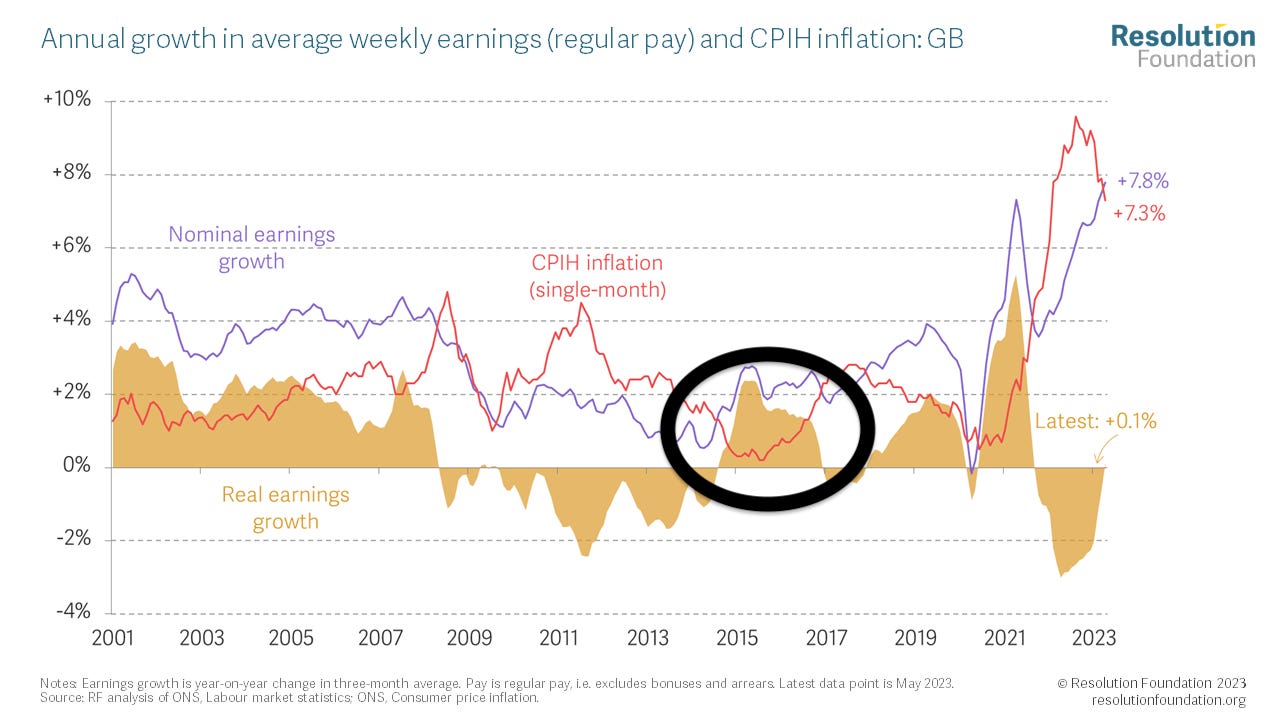
Between March-May 2014 and March-May 2015, regular pay for employees rose by 2.8% in real terms, according to the Office for National Statistics. This was the highest annual growth rate since 2007, driven by extremely low inflation, largely due to the late-2014 collapse in oil prices, which went from nearly $100 a barrel to just over $40.
Of course, rising living standards doesn’t guarantee reelection. Just ask friend of the newsletter, John Major. Nevertheless, you try winning an overall majority without it.

I’m from the government and I’m here to help
Within hours of taking office, Andy Burnham announced a slew of retail-friendly policies to signal his desire to help Britons with the cost of living. For families, this meant cutting VAT on electricity from 5% to zero from October, saving the typical household around £45 a year. For pubs and live music venues, there was a 20% cut in business rates from April 2027, estimated to save them around £1,100.
Putting politics aside, not only could one imagine the ancien régime doing this sort of thing — chancellor Rachel Reeves literally previously announced a 15% business rates relief package for pubs and live music venues from April 2026 — the reaction has been a little, erm, muted.
When Sky News took to the streets of Sheffield to ask people what they thought of the electricity support package, responses ranged from “it’s a gesture, but a bit late” to “£50 doesn’t even buy a meal”. Even the woman who welcomed the move was concerned that the government would only claw the money back through higher taxes.
Fun fact: The only time I was ever vox-popped was at Waterloo Station en route to Paris for the 2006 Champions League final against Barcelona. Though — as I was skipping school to go to the match — this wasn’t especially well thought through on my part. And yes I’m painfully aware that taking the Eurostar from Waterloo is proper showing your age fare.
It’s easy to mock the bloke who, walking around the city in the middle of a weekday afternoon, complained that £50 can’t buy you lunch. But someone had to say it, not least when any savings appear likely to be wiped out by rising wholesale costs. Cornwall Insight predicts that Ofgem’s price cap will climb to £1,700 per year in October.
At present, the government is still stuck in Starmer mode, trying to improve perceived living standards using tools that are simply too small relative to the forces doing the squeezing.