



Longtime readers of this newsletter will be aware that I’m no longer allowed to criticise Sydney after the… unpleasantness. The city is, I have been warned, like a beautiful woman with low self-esteem. She has the stunning harbour, sandy beaches and heiress lifestyle but in her darker moments, wonders whether anyone would still find her interesting were her looks to fade.
London does not have this problem. Such is his security of esteem that his frequent bouts of self-deprecation are really just a flex. At social events, the capital has the power to make you feel like the most important person in the room or, with eyes darting, remind you that he’s waiting for someone more important.
London’s — really Britain’s — vulnerability is centred on whether people like him, or are only there for his name and reputation. And, let’s face it, he’s had a rough few years, what with the divorce and various financial difficulties.

So when there’s good economic news, the response of Brits, or at least economists, tends to err on the side of barely concealed suspicion. “Really? Are you sure? Why?”
Exogenous zones
Some of this comes down to experience. The UK has endured two decades of weak productivity1 and wage growth, punctuated by a series of semi-regular exogenous shocks: the Global Financial Crisis, Brexit,2 Trump, Covid-19, Russia, Hormuz. And with each recovery, Britain always seemed to lag behind its peers.
Then there’s the data itself. In recent years, the Office for National Statistics (ONS) has taken something of a reputational battering over the quality of its data, particularly around the labour market. This is a problem, not least because everyone from newsletter writers to the Bank of England relies on these figures to write articles or raise interest rates.
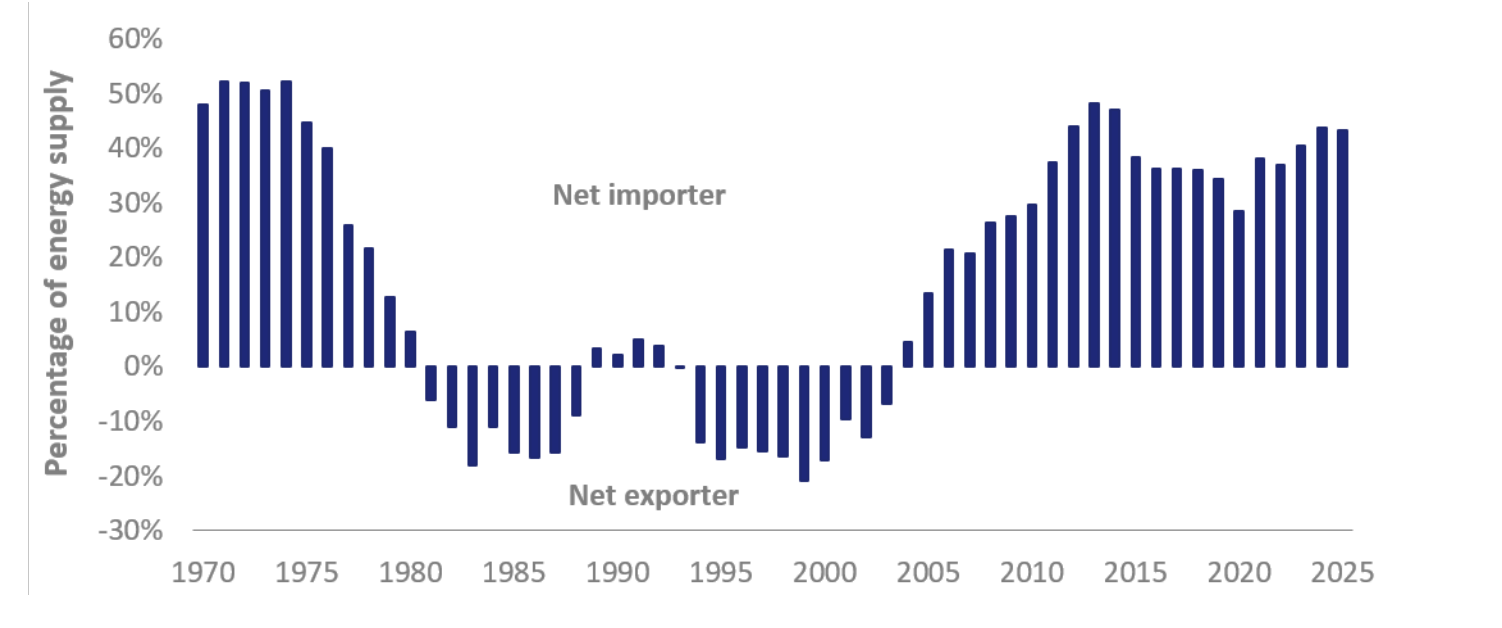
Finally, there is the matter of energy prices. The UK, like much of the rest of Europe, is an energy importer. If the price goes up, we pay more and get poorer as a result. To add insult to injury, the resulting higher inflation tends to send interest rates and government borrowing costs higher.
But I’m sorry, there’s simply no getting around it. The UK economy is, for the moment at least, doing alright. Certainly, less badly than many experts believed. Earlier this year, the International Monetary Fund (IMF) warned that Britain would be the hardest hit of the world’s advanced economies as a result of the energy shock from the Iran war.
In reality, we’ve been resolutely middle of the pack. In fact, in its most recent report, the IMF managing director, Kristalina Georgieva, went out of her way to commend Britain for its deficit reduction plan (even if it’s predicated on pre-election spending cuts that verge on science-fiction).
Then there’s growth. Loath as I am to quote monthly GDP statistics, the UK economy expanded by 0.1% in August, confounding expectations. More importantly, over a three-month period, the economy grew by a positively frothy 0.7%, surpassing the forecasts of both the Bank of England and the IMF.
We are now looking at an annual growth rate of 1.8%, something not seen since the post-Covid recovery. Throw in a labour market showing signs of resilience3 and I can sense the animal spirits emanating from all around.
No, really, why?
Taking a step back, this should perhaps not come as a galloping shock. The UK is a mid-sized, open, services-dominated economy with genuine strengths in artificial intelligence and the global AI investment boom is clearly a rising tide capable of lifting more than just US-flagged vessels.
Digging a little deeper (by which I mean, reading the ONS release and the Financial Times), UK computer programming grew by double digits while professional services were up 6.6% year-on-year in the three months to August. With the Budget a week away, this is clearly good news for the chancellor, John Healey. Can you sense the ‘but’ coming?
Britain is still Britain. Borrowing costs remain high, indeed the highest in the G7,4 thanks in part to Long Liz Truss and also the general view that our inflation problem is stickier than that of our peers. This and the Iran war are expected to have roughly halved the £23.6bn of fiscal headroom bequeathed by Rachel Reeves.

Meanwhile, households are suffering right now. The cost of refinancing a mortgage continues its merry rise, while the energy price cap is forecast to hit £2,000 early next year, near its 2022 peak. And, because in economics good news can also be bad news, more resilient GDP growth makes it more likely that the Bank of England will raise interest rates as early as next month.5
Climate change notwithstanding, the UK will never enjoy Australian weather. Nonetheless, some good economic news is better than none at all.
Although, as it transpires, the productivity puzzle is less puzzling than we thought
Technically not exogenous in that we rather brought it on ourselves
Only yesterday, the ONS revealed that the unemployment rate had fallen to 4.7%, the lowest level since July last year
Benchmark 10-year gilts are hovering at a disagreeable 5.4%
Made even more likely by today’s inflation figures