



Do you remember when Dragons’ Den was must-see TV? Perhaps I’m over-egging the venture capitalist pudding, but the BBC Two programme, in which entrepreneurs pitched business ideas to a panel of wealthy investors, was at one time big enough to make household names of its ‘Dragons’ and turn Evan Davis into something of a gay icon.1
One of the longest-serving Dragons was Theo Paphitis, owner of, amongst other things, the stationery retailer Ryman’s — the place you’d go for school supplies and football magazines in the 2000s if your high street didn’t have a WHSmith. Paphitis, whose estimated worth is around £300m, had a go-to challenge for entrepreneurs asking for money:
“Why should I give you £75,000 of my kids’ inheritance?”
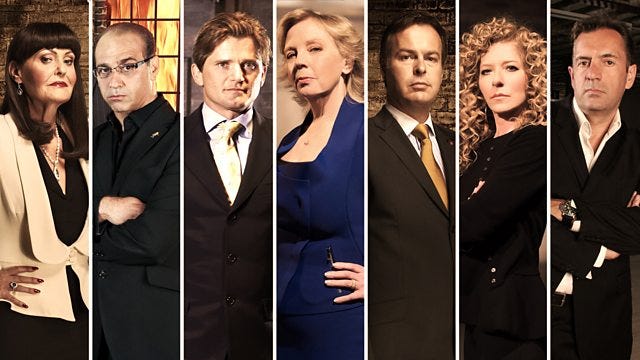
It was a bit cringe and extremely Dad-jokey, but it served a purpose. This was his money, it would eventually be his kids’ money (the seven-year rule on gifts means that, in the words of former Labour chancellor Roy Jenkins, inheritance tax is a “voluntary levy paid by those who distrust their heirs more than they dislike the Inland Revenue”) and why should he give any of it to you?
And a similar question is being asked every time you go to the bank to borrow money. Whether you’re taking out a mortgage or a business loan, the bank has to decide where its money is best deployed. Why should it lend you £75,000 of its depositors’ cash when it could lend that money to the US government instead?
Le système financier international? C’est moi
It might not appear immediately obvious that little old you, with dreams of buying that fixer-upper in Barnsbury, are competing with the mighty US Treasury Secretary for money. But you are. And it isn’t simply that America is bigger than you.
US Treasuries act as the benchmark for global finance, providing the curve against which all other assets — government debt, corporate bonds, mortgages — are priced. That is because they are considered the closest thing to a risk-free investment. Their yields effectively establish the price of money and everyone else has to provide a reason to lend elsewhere.

To be clear, if you are British, the cost of UK government borrowing also impacts the price of your mortgage. Hence, when Liz Truss did her thing, lenders started pulling their products. But that at least feels right. The prime minister does something stupid and you, a Brit, face the consequences.
That the US has a say too is a bit weird, until you remember just how big and bad the market for Treasuries is, and how fundamental the demand for dollars is to the global financial system. Your local Barclays could lend to you. But it could also just lend to the guys and gals in Washington who print the global reserve currency and, look, I’m sure you’re good for it, but they’re a better bet.