


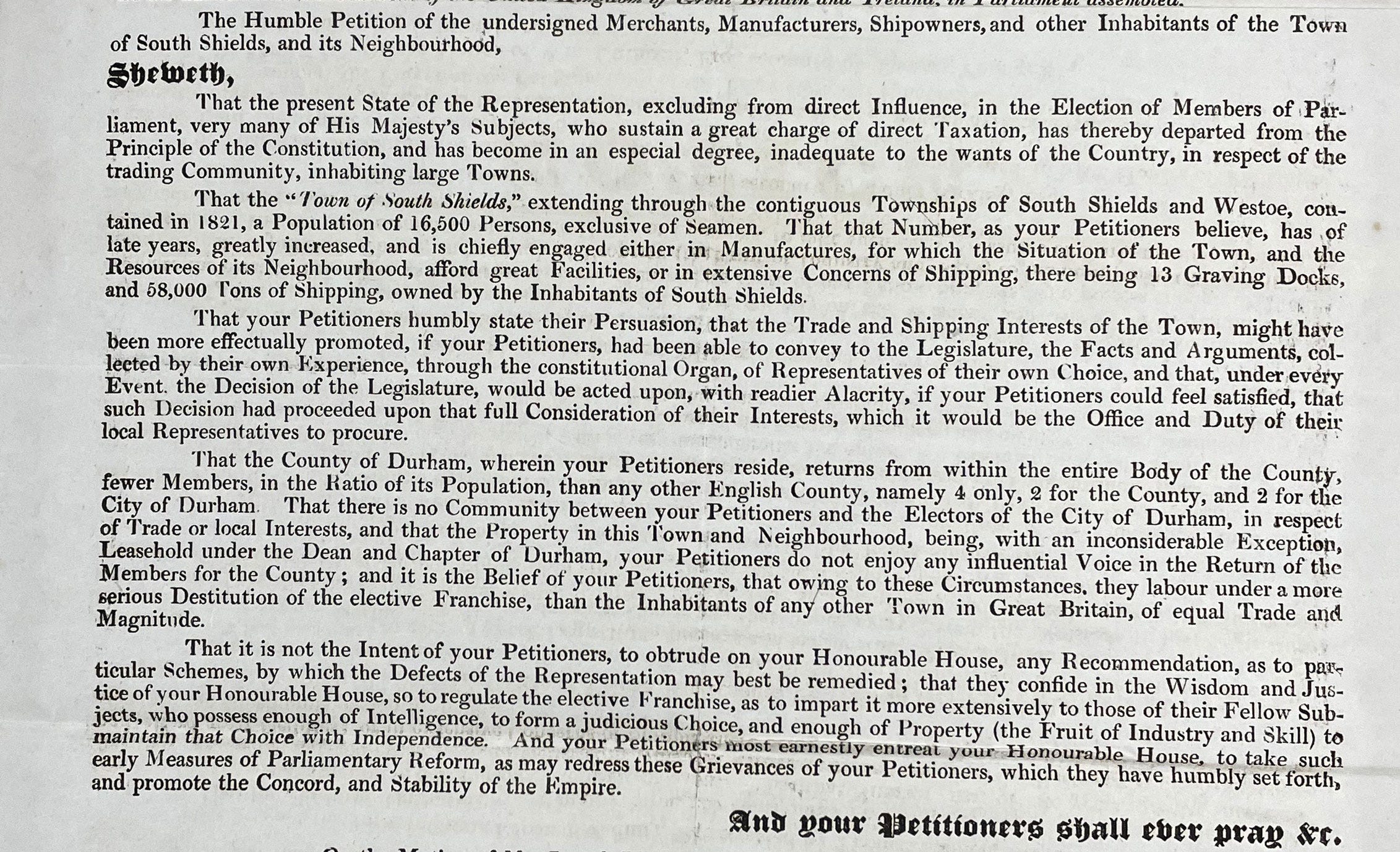
The people of South Shields were not happy — and it is not difficult to see why. The town wanted to be able to elect its own Member of Parliament, but this was 1830, and such things were not permissible.
At the time, elections to Parliament were wildly undemocratic affairs: unevenly distributed seats, a franchise restricted to substantial property owners or those who could navigate weird medieval customs. Most notorious of all were the so-called rotten boroughs, tiny electorates where wealthy patrons could effectively nominate MPs.
Enter, Earl Grey (yes, that one).
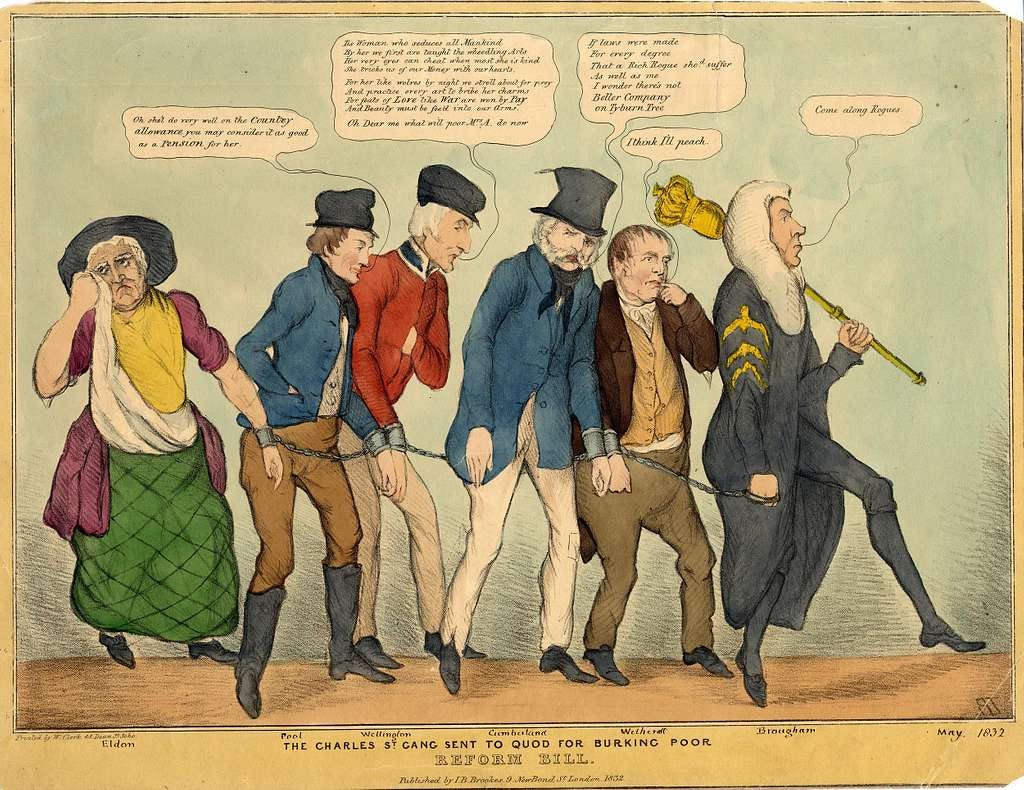
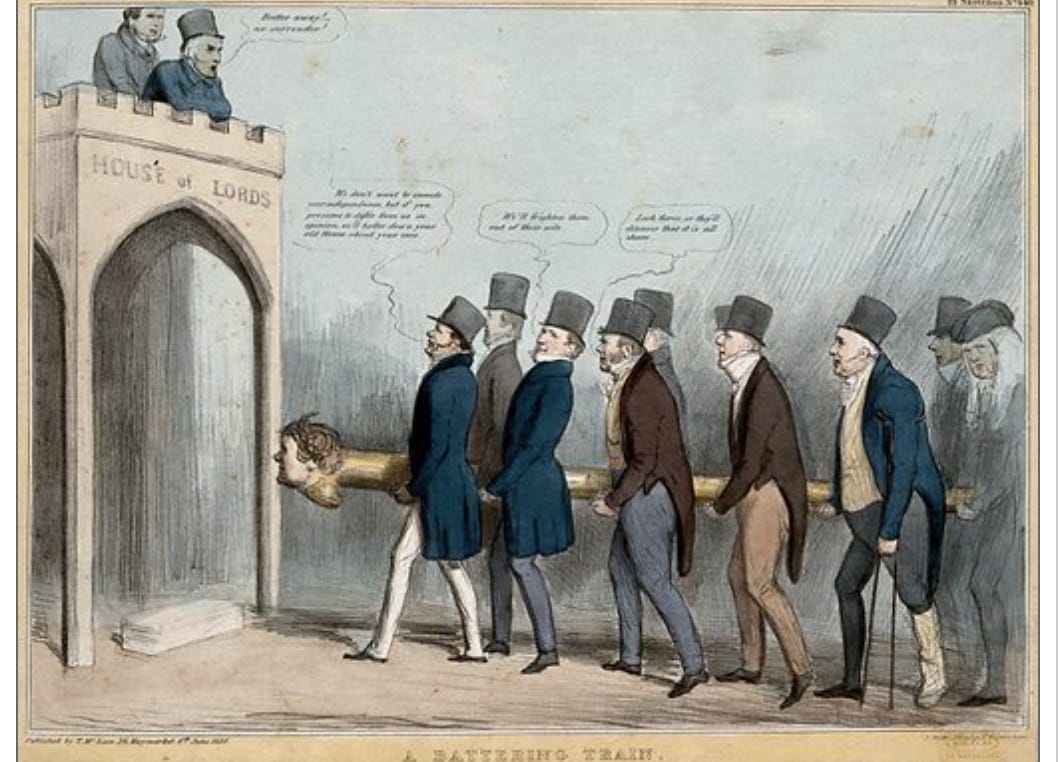
After the Tory government was ousted in late 1830, Grey, a Whig, became prime minister and undertook his promise to carry out parliamentary reform. On being twice rebuffed by the Lords1, Grey managed to persuade a reluctant King William IV of his plan to create new pro-reform peers to force his legislation through. At which point, the Lords relented and the Representation of the People Act — better known as the Great Reform Act — passed in June 1832.
The legislation disenfranchised 56 boroughs and reduced a further 31 to a single MP, created 67 new constituencies for rapidly growing industrial towns such as Birmingham, Leeds and Manchester, and broadened the franchise’s property qualifications2. As an added bonus, it helped to solidify the position of the monarchy, which had looked on a little nervously at the July Revolution in France3.
It also worked out rather nicely for the Whigs and their successor party, the Liberals, which drew support from the urban middle classes, reform-minded elites and industrial interests. The party formed several governments in the 1830s, and while the Tories adapted4 under the likes of Robert Peel, the 1832 Act (as well as reforms later in the century) were broadly favourable to Liberal politics.
Yet the problem with the 1832 Act — in addition to its many actual shortcomings — is that it gave later political actors the idea that electoral reform could be used as a simple tool to benefit either their party or faction. When, in fact, reform frequently produces spectacularly unintended consequences as participants adapt faster — or in different ways — than reformers anticipate.
The most grimly hilarious clearest example in recent British political history is Labour’s 2014 adoption of a one-member, one-vote electoral system for leadership elections.