


I don’t know how she does it — or at least, how she does it while maintaining female friendships: every year, my mother looks younger. But occasionally, she will tell a story that betrays a certain vintage. For instance, when she was younger and her mother stopped short while driving, she would extend her arm out to prevent the children from flying through the windshield. This was the age before seatbelts.
Similarly, my mom never wore suncream as a child. Growing up in New York where, unlike London, the sky was frequently visible, this was the norm. Beachgoers were more likely to slap on tanning oil than anything containing an SPF. The concept of ultraviolet (UV) ratings would have come as much of a surprise to her as the idea that she might one day have a need to speak French1.
Aussie, Aussie, Aussie! Oy vey
Australia is famous for its long and often scorching summers. But while 40°C certainly feels unpleasant, when it comes to sun safety, the heat itself isn’t the main threat — it’s the UV rating. You can’t see it or feel it, even clouds offer little protection. And the radiation will burn unprotected skin in a matter of minutes.2
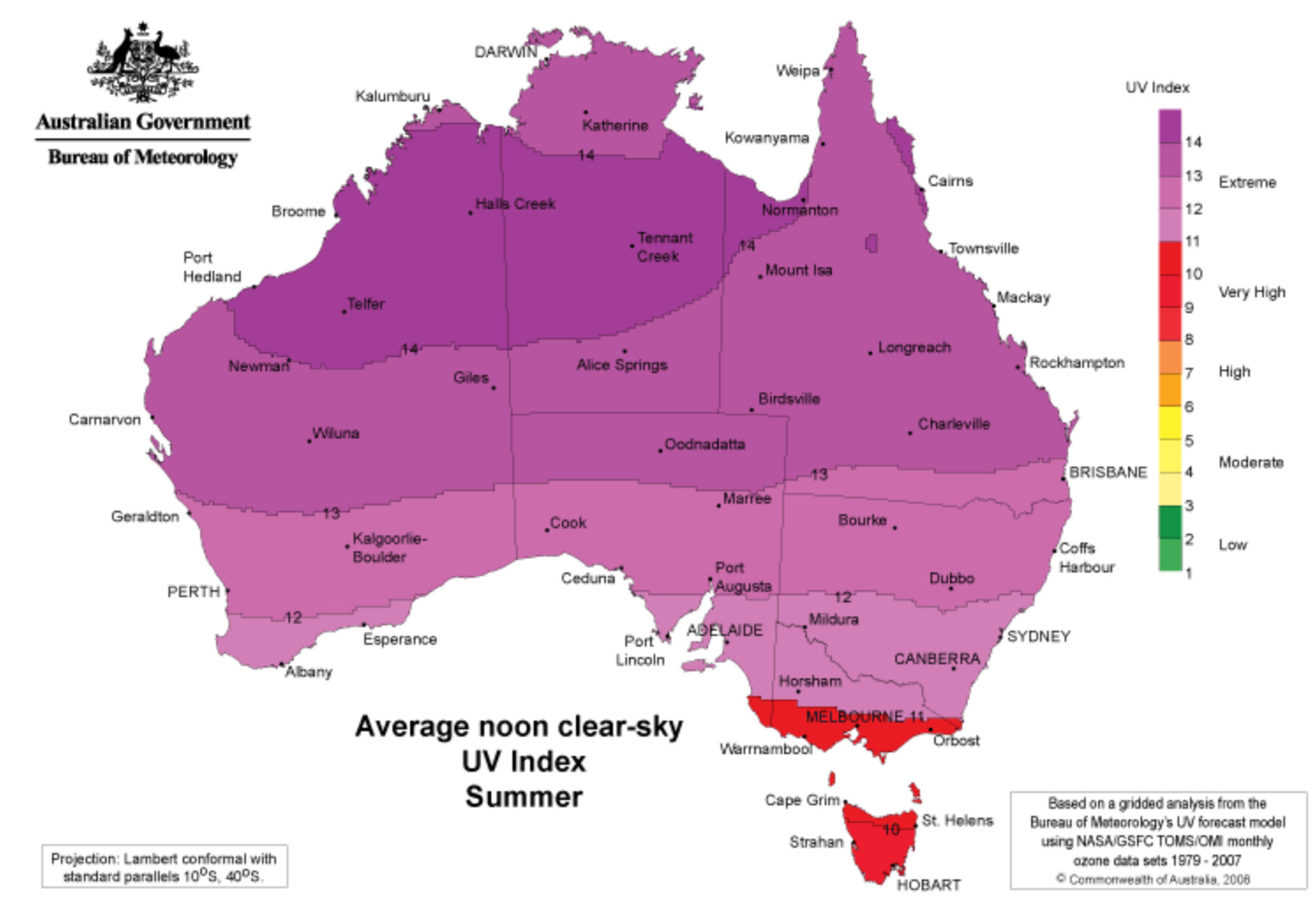
During summer, almost the entire country receives an “extreme” UV rating. And while it can definitely get hot in the Northern Hemisphere — the highest recorded temperature of 56°C took place in Death Valley, California in 1913 — UV levels tend not to climb as high, or for as long as they do Down Under. Little wonder that Australia is considered the skin cancer capital of the world.
Ah, the hole in the ozone layer you might think. As Aussies would say, “Yeah, no.”