



If you had to guess, is the smallest thing smaller than the biggest thing is bigger? Put another way, when thinking about the scale of the Universe, are there more orders of magnitude above or below human scale? If you’re not sure, and frankly even if you are, check out this lovely little interactive tool which takes you from a human all the way down to Planck length and up to the size of the observable Universe.
You’ll find that within the 60 (sixty!) orders of magnitude, the smallest things (Plancks, strings) are many, many times smaller (relative to human scale) than the observable universe is bigger. In the words of the legendary physicist Richard Feynman1 (and with thanks as ever to Jason Kottke), there is “plenty of room at the bottom”.

I like this because it challenges one of the strongest human intuitions. Sure, the universe is vast, with staggering distances between even the nearest stars and galaxies. But when you look at reality on a logarithmic scale, you soon discover that the journey inward, down to the microscopic is at least, if not more, epic.
Floors and ceilings
It’s also a useful framework when it comes to leadership. Take football — fans obsess over managers, chief executives hire and fire them at will, but to what end? Stefan Szymanski, Professor of Sport Management at the University of Michigan School of Kinesiology, analysed the spending of 40 English clubs between 1978 and 1997 and found that wages accounted for 92%2 of the variation in league position.
As the author and journalist Simon Kuper once noted:
The obsession with football managers is misguided. Hardly any of them make any difference to results. The institution of manager is something of a con-trick.
I think this is almost right. The greatest managers — Alex Ferguson, Pep Guardiola, Carlo Ancelotti — can improve their teams’ performance by 2, 5, perhaps even as much as 10%. And in elite-level sport, where even the most marginal of gains are ruthlessly pursued, that is absolutely enormous.
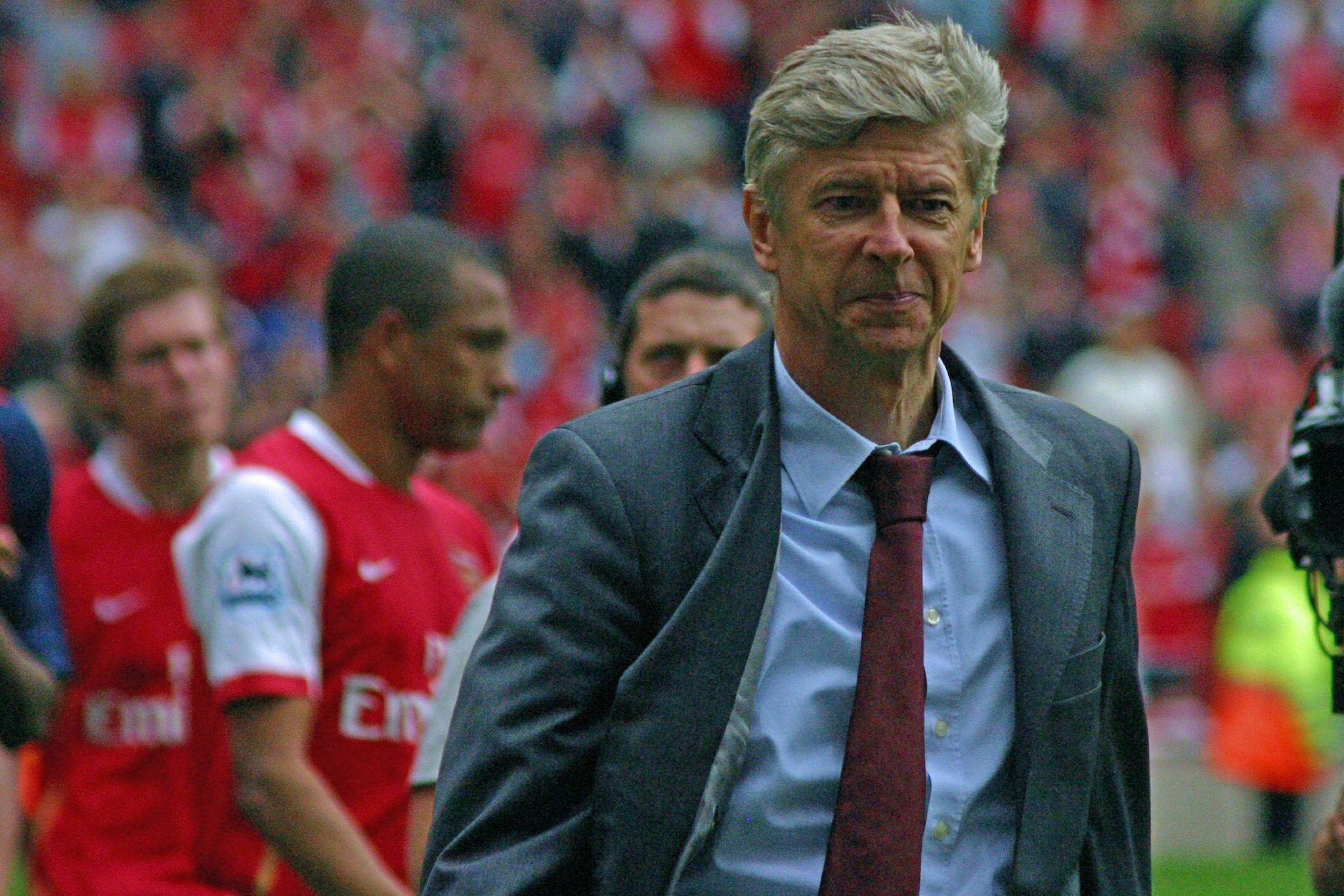
But that is on the upside. It is on the other end of the spectrum — that is, the downside — where the numbers can get truly scary. For a bad manager — one who gets the tactics wrong, loses the dressing room or, despite my desperate yelling from the upper tier of Highbury’s North Bank, refuses to practise set pieces — there is no floor. There is instead, a bottomless pit of hurt, points deductions and back-to-back relegations.
Truss vs. Hunt
Invariably, we turn to politics. Before Jeremy Hunt torched his reputation for sound money with his wildly ill-judged and fiscally ruinous cuts to national insurance, he achieved something rather substantial: convincing the Office for Budget Responsibility (OBR) to raise its forecasts for potential output.
In the November 2023 Autumn Statement, the chancellor’s announcements on full expensing of capital investments and various changes to welfare, childcare and other policies led the OBR to raise economic output in the medium term by 0.3%. For a single fiscal event, this was considered a legitimate achievement. But this only serves to highlight the downside.

The 2022 Truss/Kwarteng mini-Budget had a substantial negative impact on the UK economy. It sparked a gilts crisis, saw mortgages removed from the market and to this day continues to sully the UK’s reputation as a safe investment. But even that pales into insignificance compared to the big one: Brexit.
According to a recent working paper from the National Bureau of Economic Research, by 2025, as a result of Britain’s exit from the European Union, GDP per capita was 6-8% lower than it would have been, investment 12-18% lower, employment 3-4% lower and productivity 3-4% lower. Oops.
Asymmetry
This, of course, was one of the many frustrations with Brexit. Sustainable economic growth, like winning football matches, is really hard to do. On the other hand, causing recessions or reducing standards of living, like losing games of football, is really easy.
A good politician is considered a wild success if he or she can keep the show on the road while making incremental improvements to the economy, infrastructure and public services. A bad one can simply precipitate a gilts crisis or launch a war of choice. The asymmetry is unsettling.
Systems are simply easier (and certainly quicker) to break than to optimise. Not least when the best outcomes are often compounding (GDP growth) while the bad ones (a bank run, institutional collapse) are non-linear.
It’s not all bad news, thankfully. In the long-run, upsides can be enormous. One reason why the United States is so rich despite frequent and often painful recessions is that growth compounds. An economy that expands by 2% a year but suffers a 3% recession every decade will still become fabulously wealthy.
If I may, I’ll end not with Feynman, outer space or even football, but another sport. Played over five days, it can be intensely frustrating. A team (not England, obviously) can build patiently for four and a half days, only to collapse in 25 minutes on the final afternoon. In Test cricket, as in life, only bad things happen quickly; good things take time.
The phrase comes from the title of a 1956 talk by Feynman in which he essentially conceptualised nanotechnology.
Other research puts it at closer to 70% on a year-to-year basis
Yes! Exactly the number, BTW, if you add all the pips on a pair of dice. Not sure if DA used that knowingly but I always think it's a wonderful way to picture life and its meaning.
This is very interesting, esp on an historical level.
So, “Good leadership has a ceiling. Bad leadership has no floor”
I think the latter is true enough, if we just focus on Europe in the last century.(some might go no further then our current time.) Though it could be argued that the floor would be represented by that figure or figures who triggered the end of life on earth.
Or, that excellence is finite & its antonym is the opposite? I think JFK (attributed to him but maybe taken by him) put it another way after the Bay of Pigs fiasco:
“Success has many fathers, but failure is an orphan.”
From the fundamental to the relatively banal: when it comes to footie, I wonder how managers of national teams are evaluated. There seems less of a obvious ranking than those at local club level.
PS completely irrelevant but I’m in a bad mood this morning. I received a raft of email sale promos about 50% of business to Bali or Brisbane or Sydney etc. Or SQ “sale” to X, Y or Z. You’re an expert in airline fare modelling. Why is there such a mismatch between the genesis of any given fare, and the analogue way in which offers are promoted. There is no way any agent can prove the claim that this or that promo fare is 50% off anything. (There being no one published fare for any destination.) I ask because of your interest in this area. Nothing more.