


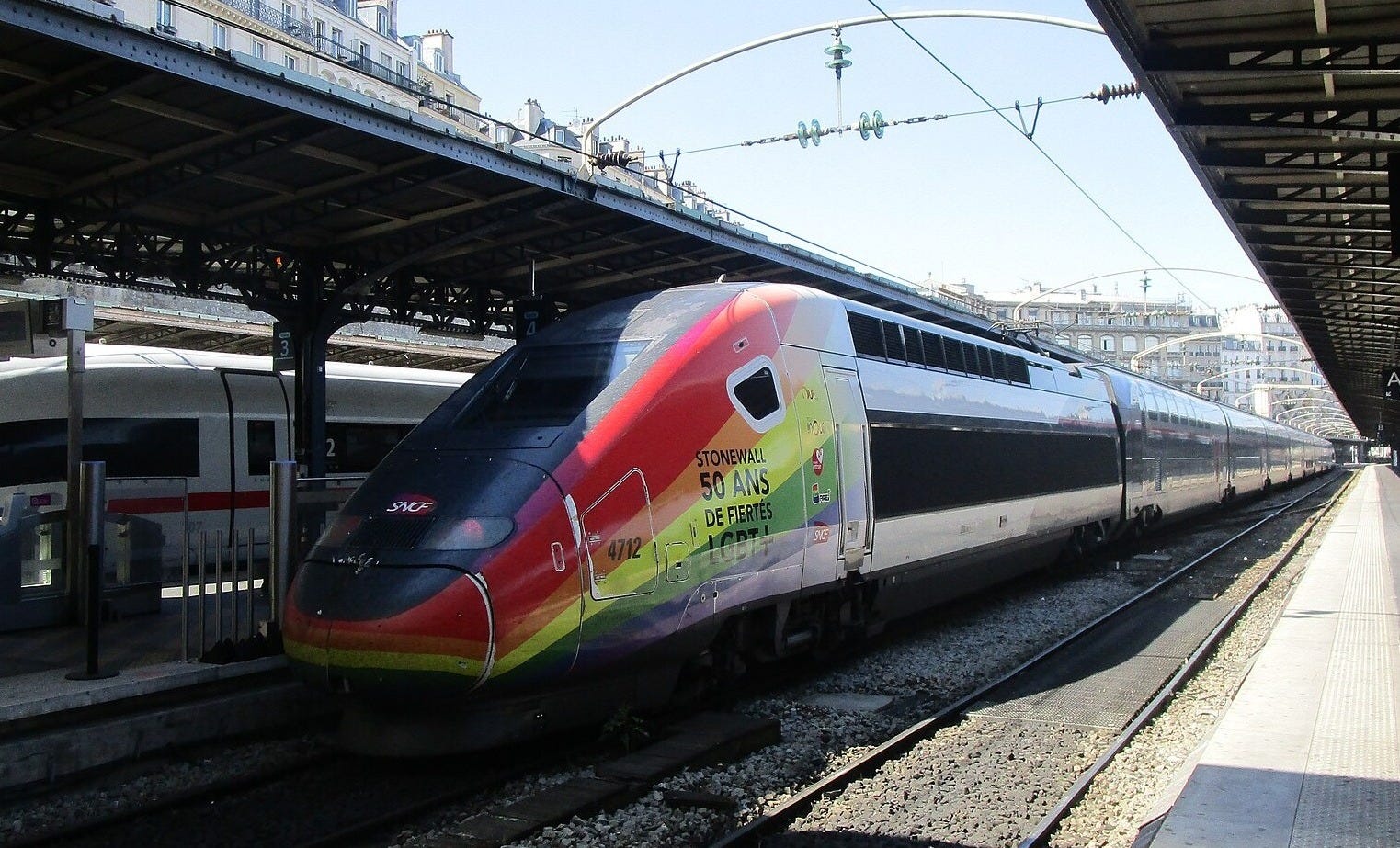
Before we begin, an unavoidably defensive caveat. My life experience is not universal. Happily, that means yours isn’t either. So when I say ‘gays’, I am, of course, referring to a small, unrepresentative slice of middle-class, middle-aged millennial men who aren’t quite at the ‘looking forward to visiting the recycling centre at the weekend’ stage of proceedings, but will happily engage in fierce dinner party debate over the Elizabeth line’s rolling stock or which Heathrow Terminal 3 Oneworld alliance business class lounge deserves their custom1.
By the standards of algorithmic social media, it’s pretty harmless stuff. No manosphere misogyny or racist blinders of your ideological persuasion — just aggressively peppy snapshots of farmer’s league influencers reminding their contemporaries that they love iced coffee, walking fast and have you heard about London’s new super sewer?
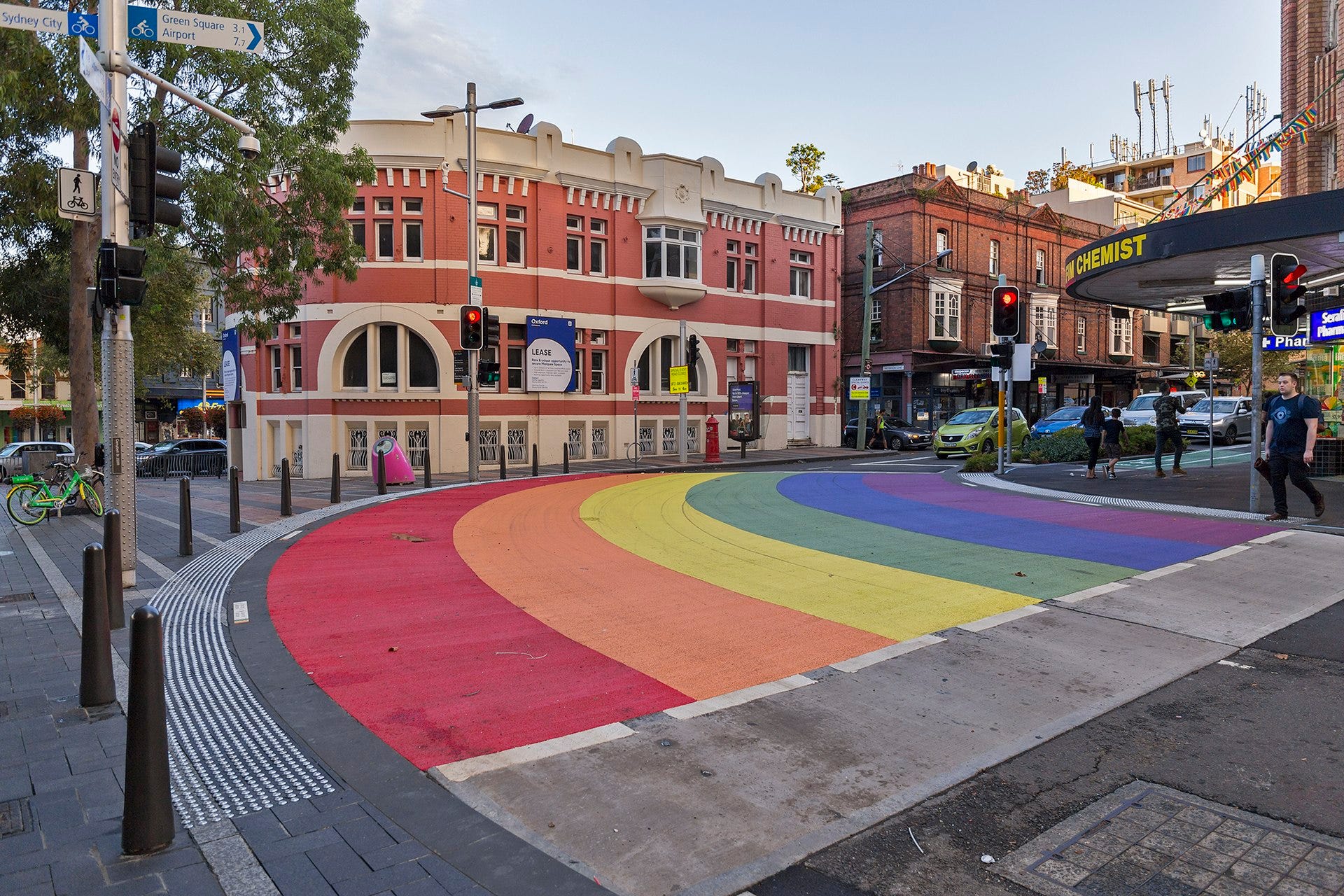
This is one of those theories that I feel to be true, and will rummage for any evidence to support my priors. For instance, millennial gay men are, on average, more likely to live in cities — the sort of places where transport is an important part not only of daily life, but identity. Routes, delays, rumours of retroactive instalment of air conditioning — these form the basis of entire WhatsApp groups.
I used to joke that gays love transport because it’s how they get to the gay bar2. But there is a logistical reality about the need for a critical mass. For many, that means moving to a metropolis like London, New York or Berlin to ‘find your people’. There is safety in numbers. But even for born city-dwellers, the very nature of being a small minority requires meeting in an agreed space at an agreed time. Just don’t end up in charge of giving directions.
Doing it in style
For many gay men — particularly those who grew up in less accepting environments — mobility carries an emotional resonance and a tangible sense of freedom. An interest in the mechanics of that movement (airports, rail networks, routes) isn’t a vast intellectual leap beyond. Of course, there is more to it than that.
Transport, travel and urbanism are a socially acceptable form of connoisseurship. There is a long (and occasionally inglorious) tradition among gay men of curating taste and expertise in culturally coded areas: fashion, interiors, music, food. Think infrastructure as lifestyle curation. You’re not simply getting from A to B — how heteronormative! You’re doing it correctly.