


It was the year 2000 so there were no live threads or viral TikToks — but the prime minister didn’t need to be told that his speech to the Women’s Institute had not gone well. The 10,000-strong audience, unimpressed by the overtly political nature of Tony Blair’s address, began to slow handclap until chair Helen Carey was forced to appeal for mercy.
Visibly chastened, Blair stepped into his car, turned to long-time advisor (in modern parlance, his ‘office wife’), Anji Hunter and said, “That was a complete disaster.” Ever the optimist, Hunter replied, “Actually, apart from that little bit of clapping, I think it went down rather well.” To which Blair said, “Keep it plausible, darling.”
Plausibility is to politics what productivity growth is to economics: it isn't everything, but, in the long run, it’s almost everything. This is true both for the superficial stuff, like ‘does this person look like prime ministerial?’ and for the meat and drink of politics: attack lines.
This explains why Blair’s criticisms of successive Conservative leaders were — as he notes in his autobiography, A Journey, fairly low-wattage. So John Major was “weak”, William Hague “better at jokes than judgement”, Michael Howard an “opportunist” and David Cameron a “flip-flopper”. I don’t think Iain Duncan Smith was around long enough for a fully developed motif. Blair explains:
Any one of those charges, if it comes to be believed, is actually fatal. Yes, it’s not like calling your opponent a liar, or a fraud, or a villain or a hypocrite, but the middle-ground floating voter kind of shrugs their shoulders at those claims. They don’t chime. They’re too over the top, too heavy, and they represent an insult, not an argument.
Just like Huw Pill
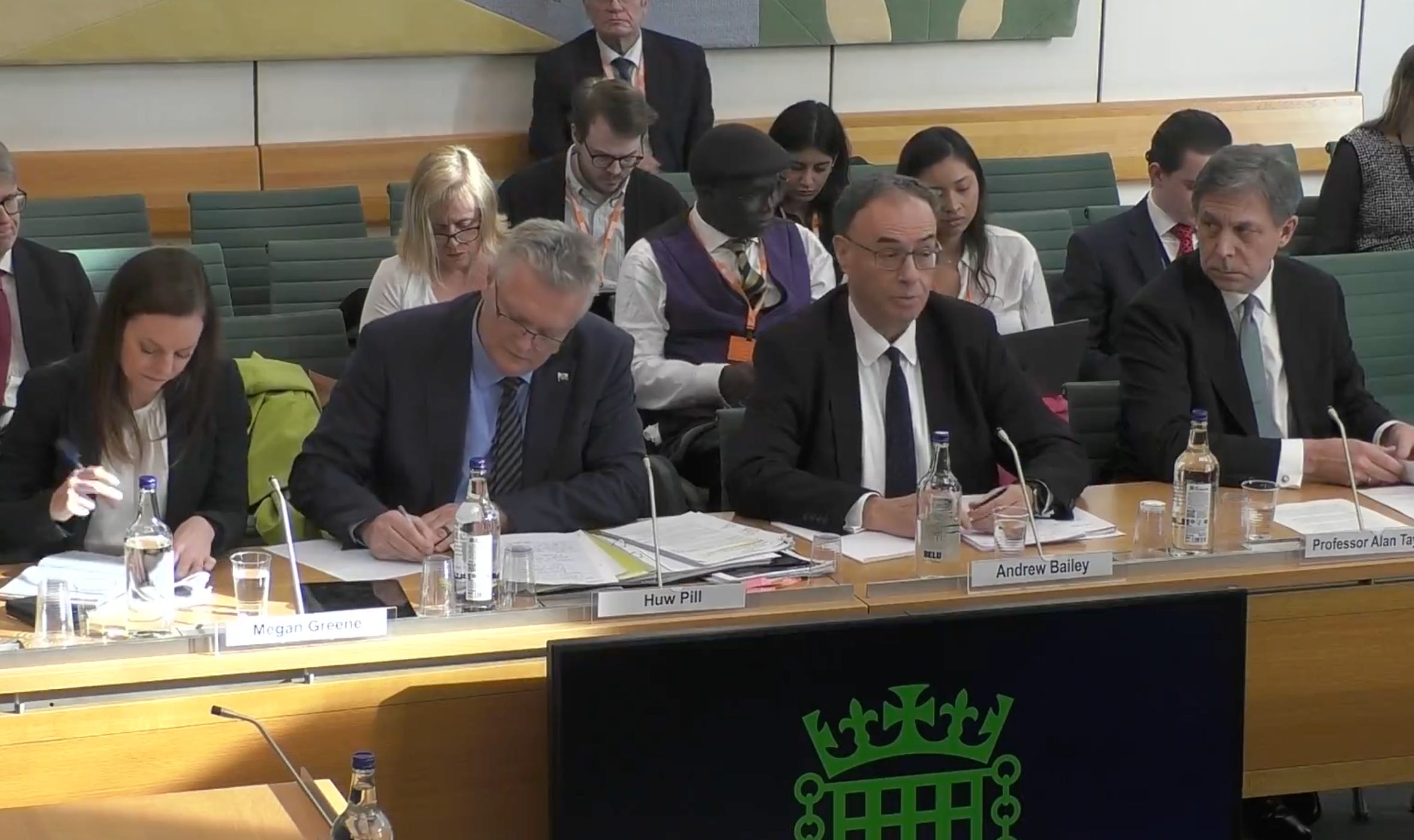
I was reminded of this vignette1 as I watched yesterday’s Treasury Committee evidence session. And by the way, shout out to the good people who run the Parliament Live audio and video service. Sat in front of the mighty Meg Hillier and friends was Bank of England governor Andrew Bailey, chief economist Huw Pill as well as Monetary Policy Committee external members, Megan Greene and Alan Taylor.
They were nominally2 there to discuss February’s Monetary Policy Report and indeed there was a lot of that. Where are interest rates headed? Is inflation on track for the 2% target? The usual. But in discussing unemployment, they weren’t afraid to mine some plausible attack lines for opposition parties.

Pill — on the forthright end of the central banker spectrum — noted that a combination of last year’s hike in employers’ National Insurance contributions and the rise in minimum wage rates for younger workers had “a particular effect on young people”. Youth unemployment now stands at 16.1%, according to the Office for National Statistics — the highest in more than a decade.
Pill did not suggest that Keir Starmer or Rachel Reeves had “crashed the economy”. First, because they haven’t — you can’t crash something that has been essentially stationary for years. And second, that’s clearly not in his remit as a senior Bank official. But that is what makes it all the more powerful.
A Labour government has taken the reins of power and made youth unemployment worse. Furthermore, this was a fairly predictable consequence of its policy choices!