


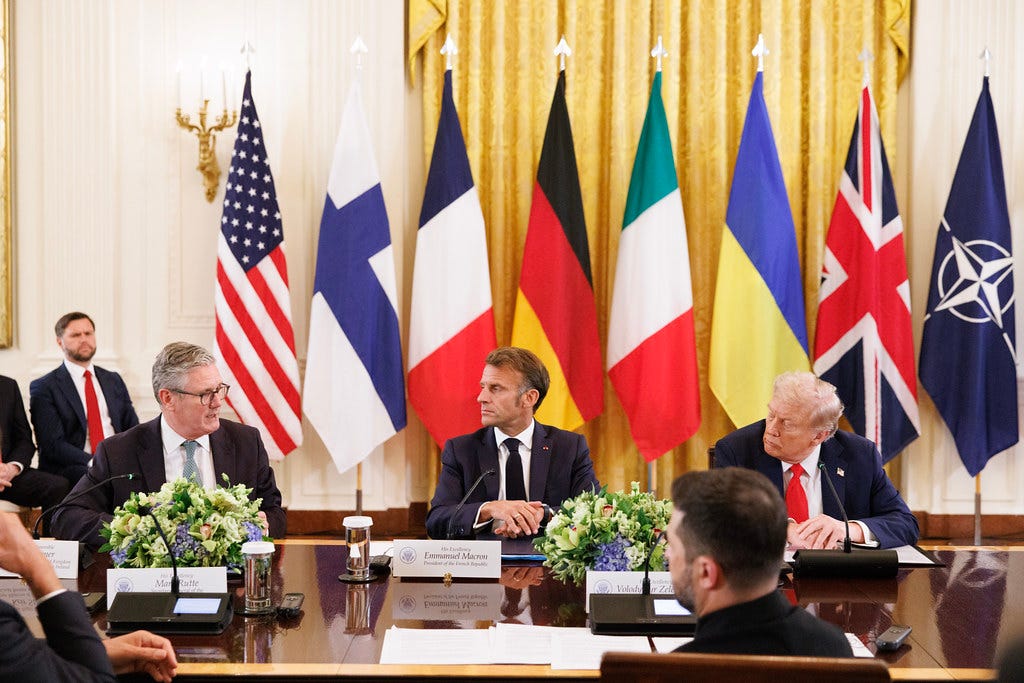
GCSE History was absolutely wild. Specifically, the Cold War module, which contained a set question on whether US President Harry Truman was right to drop the nuclear bomb on Hiroshima and Nagasaki. To which the only correct answer is: “Sir, I’m 15 years old — my focus right now is really on getting invited to parties.”
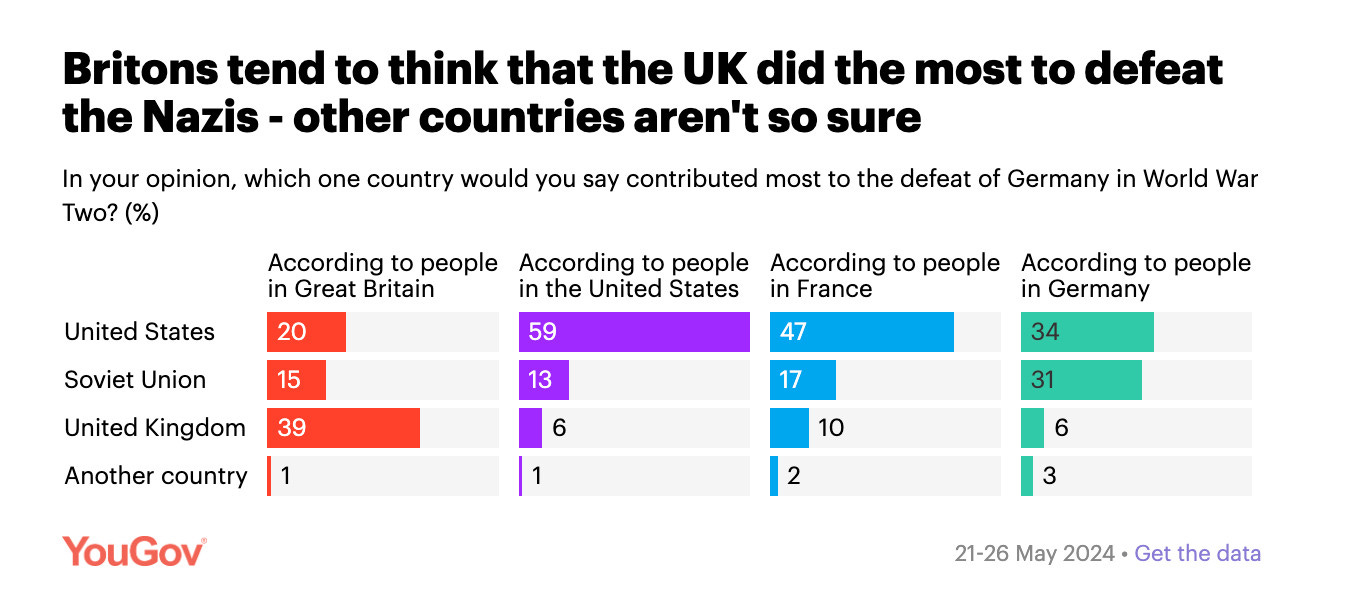
A further oddity was how atomised the teaching felt. We studied the development of a limited monarchy in England from 1558 to 1689 (I got told off at one point for absentmindedly singing James I’s famous “No bishop, no king” maxim from the Hampton Court Conference to the tune of Bob Marley’s “No woman, no cry”) as well as the Second World War, which, polling suggests, Britain won largely by itself.
But it was never quite explained how or why the Soviet Union went from being a vital (if not quite founding) member of the Allies to being on the other side of a Cold War. One moment we closed the textbook on VE Day celebrations and the next we opened a new one on Winston Churchill’s 1946 Iron Curtain address in Fulton, Missouri. What the heck happened?
This is not to say the Cold War was a misunderstanding. As Stephen Kotkin, renowned historian and author of a magisterial multi-volume biography of Joseph Stalin puts it, the Cold War was a rational, even moral response to a fundamental clash of values:
We don’t have to blame someone for the Cold War. We have to give credit for the Cold War. The Truman administration deserves credit for standing up to Stalin’s regime, for standing up to these actions, for saying… we’re not just going to take this.
In many ways, the surprise isn’t that a Cold War broke out after World War II. It is — to paraphrase the great historian John Lewis Gaddis — how long it took for some in the West to acknowledge this fact.
Ruin The Friendship
To be fair, wartime cooperation had been so intense and visible, it was psychologically and politically difficult to accept that a new confrontation was forming. The Allies had only just finished emailing out the slide decks from the meetings at Yalta and Potsdam. Lend-Lease — which supplied the USSR with trucks, tanks, industrial equipment and food — was only wound up in September 1945. And there was genuine appreciation in the West for Soviet resistance at battles such as Stalingrad.
Moreover, just look at vast swathes of the European land mass — devastated for the second time in three decades — in the fight against fascism. The last thing these people wanted to hear was that it was time to gear up for the battle against communism. Can’t a continent catch a break?
I know that was then, but it could be again
I, for one, am not anticipating a war of any temperature between the US and Europe. Not only because that is not a fight we cheese-eating, godless, welfare queens can win, but also because the mere winding down of America’s support for the rules-based international order and multilateral institutions doesn’t make it the Soviet Union.
The Trump regime has not consolidated its power. There will be elections in the US and Democratic candidates may even win them. It’s just that we no longer trust America to come to our aid in a crisis. Which is significant enough.
Still, what stands out is how long it has taken Europeans of all political traditions to accept that this is happening — and then do something about it.
Donald Trump, you may recall, has been president before. In his first term, he made his disdain for Nato allies abundantly clear. But he was treated as an aberration — a view Trump’s successor, Joe Biden, appeared keen to reinforce. In such circumstances, any European moves towards autonomy could be considered wasteful duplication. Just wait for the storm to pass, and either a Democrat or some Atlanticist Republican president will be back.
As a result, it took last year’s Munich Security Conference, in which Vice President JD Vance launched a blistering attack on European values — even comparing the continent’s policies on freedom of speech with Soviet censorship — to turn the dial. Since when, the Trump administration has launched a trade war on the EU, sought in diplomacy to secure for Russia the territorial gains it has failed to achieve on the battlefield and threatened to annex Greenland.
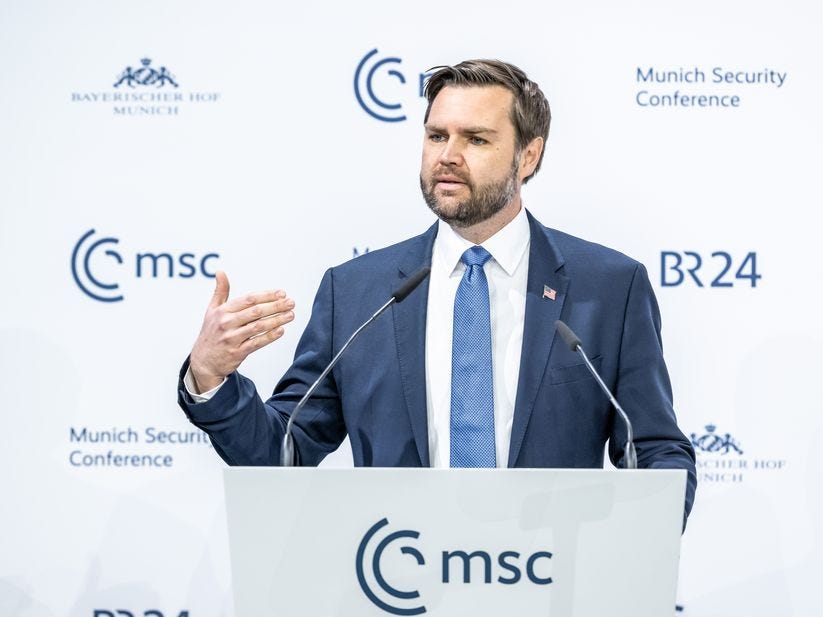
Secretary of State Marco Rubio’s address to the conference this year failed to generate equivalent headlines, but it was largely a more polite version of the Vance show. A view he did not seek to dispel by lending his support to Hungary’s Viktor Orbán ahead of that country’s upcoming parliamentary elections. Meanwhile, as the BBC World Service threatens to shut up shop, the Financial Times reports that the US State Department is set to fund Maga-aligned think tanks across Europe.
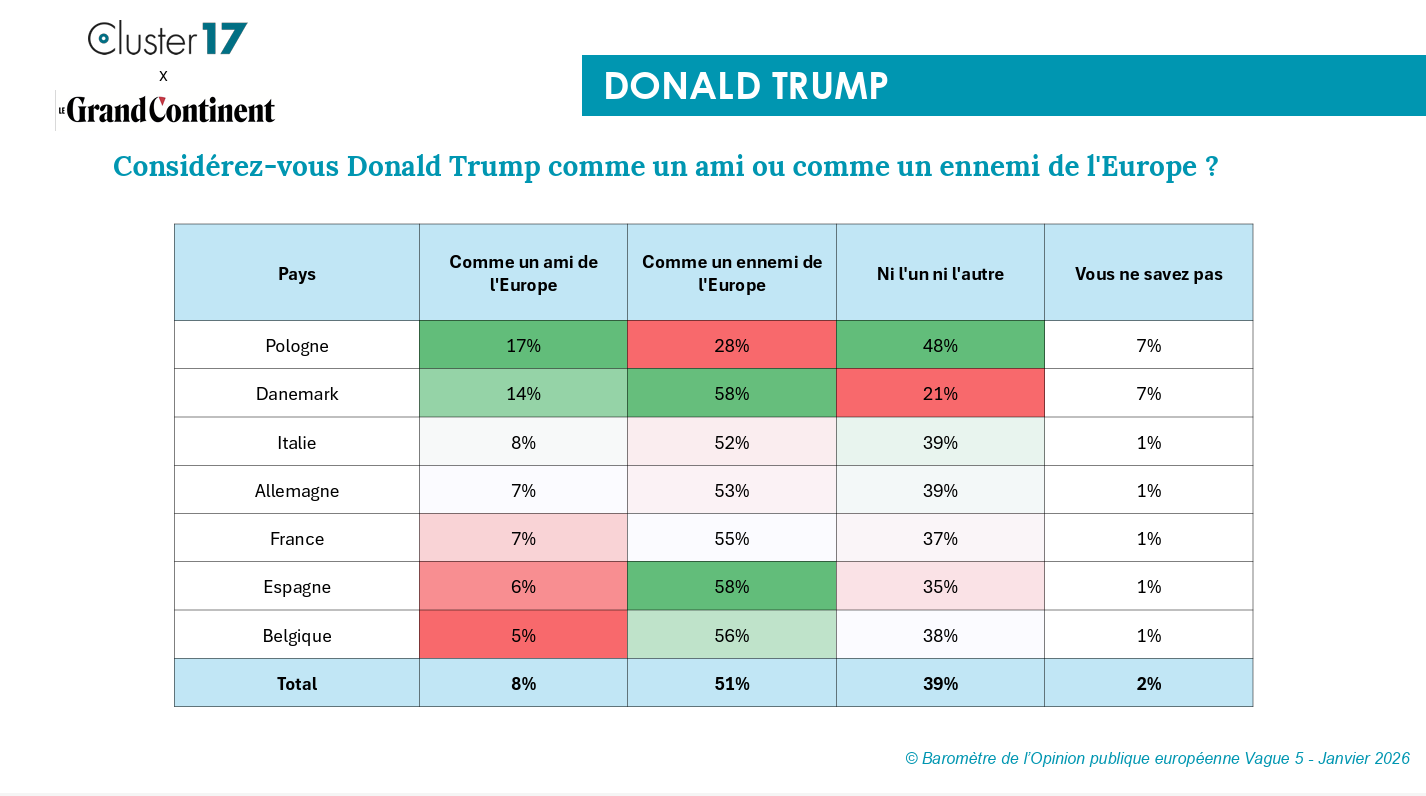
Notably, European citizens have woken up. A poll last month for Le Grand Continent, a French journal, found that 51% of respondents across seven European nations1 said Trump was an enemy of Europe, with 8% calling him a friend.
There are signs of life among the elites as well. Whether through the (at present pie-in-the-sky) prospect of a French nuclear umbrella, the Security Action for Europe (SAFE) funding programme or on energy diversification, Europe is finally coming to terms with this new, unwelcome reality2. I mean, when you’ve lost Friedrich Merz…
During the Second World War, the US and Britain were allies with the USSR for just four years. But America and Europe have been side by side for more than three-quarters of a century. Viewed through that lens, it is impressive that it has taken Europeans only a decade to accept the jig is up.
Germany, France, Italy, Spain, Poland, Denmark and Belgium
Even if British spending commitments never seem to come with payment methods
VG, Jack. So much to unpack and talk about…..
The German Chancellor’s (reported) comment that Europe has just returned from a vacation from its history can be taken as being quite threatening - coming from him……
There’s a new article in Foreign Affairs which chimes with this thought called “The New Hegemon.”