


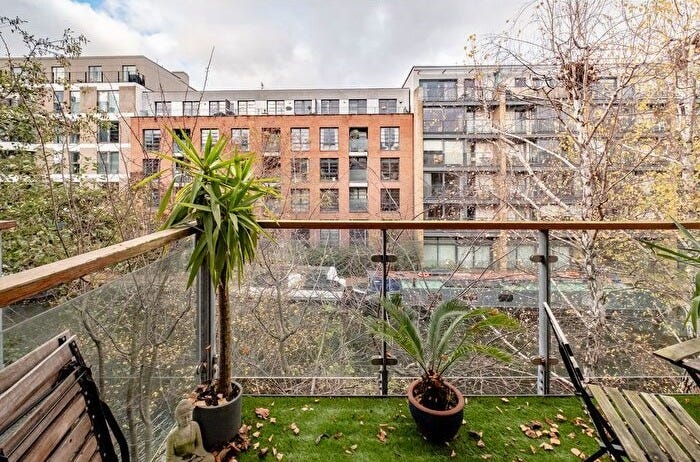
This isn’t exactly a sob story, but then again Britain’s medieval system of leaseholds is no fairytale. Once upon a time, in a land far, far away1, I lived in a low-rise block with eye-wateringly high service charges and ground rents.
This despite the fact that the building had no amenities to speak of: think the cinemas and swimming pools of fancier new builds. Even the front door rarely closed properly. Meanwhile, the managing agents made airport car rental desks look like models of efficiency. And every year, the costs rose by three or four times the rate of inflation.
All this to say, Lines To Take is not preternaturally sympathetic to the interests of freeholders. And yet allow me a raised eyebrow at the prime minister’s decision to overrule his chancellor and cap ground rents paid to freeholders on existing properties at £250 a year from 2028. Because it drives at the heart of the very problem this government faces (or, more accurately, refuses to).
Proper tea is theft
In isolation, the case for a cap on ground rents is strong. Many leasehold owners report finding it increasingly challenging to sell their home or even secure a mortgage, due to rising ground rents. Indeed, there have been particularly egregious cases of ground rents on some new builds doubling every 10 years. As a result, both Conservative and Labour governments have sought to bear down on the issue.
The Leasehold Reform (Ground Rent) Act of 2022 put an end to ground rents for most new residential leasehold properties in England and Wales. This was followed by the Leasehold and Freehold Reform Act 2024, which increased the standard lease extension term to 990 years and reduced ground rent to a peppercorn (zero financial value), upon payment of a premium.
Wait, there’s more. In its 2024 election manifesto, Labour pledged to tackle “unregulated and unaffordable ground rent charges”. But there go those pesky freeholders again. In a submission to the Housing Secretary, Residential Freehold Association director Natalie Chambers warned2 that a cap would weaken “delivery of building safety remediation and other strategic programmes”, lead to “immediate insolvency” for some freeholders as well as effectively result in the “transfer value from pensioners to wealthy overseas buy-to-let landlords.”
These claims may be overstated, though I’m in no position to adjudicate. For instance, the previous government said that pension funds held less than 1% of assets in residential property. The point here is that the prime minister has overruled his chancellor, siding instead with leaseholders (as well as Angela Rayner and other unhappy Labour MPs) in calling the industry’s bluff.
Still, it’s a risk — to the multi-billion-pound post-Grenfell building safety programme, to the solvency of freeholders and to Britain’s reputation as a safe and reliable place to invest. In other words, if it goes wrong, a seemingly popular move with leaseholders and backbenchers could end up a drag on economic growth, on the infamous 1.5 million housebuilding target and on public safety.
In short, there are trade-offs.
Starmer’s Choice
“To govern is to choose” is the aphorism most often attributed to former French prime minister Pierre Mendès‐France. Though I rather prefer Nigel Lawson’s flourish — that “to appear to be unable to choose is to appear to be unable to govern”. At present, Labour often behaves as though choosing can be indefinitely deferred.
As I understand it, the government’s number one priority is still economic growth. And yet this is also an administration that has vastly increased the burden on business, whether through a higher national minimum wage (including an ever bigger rise for younger workers), the hike to employers’ national insurance contributions and the recent rise in business rates3.
A government that still refuses to be honest about the trade-offs required not only to fund greater defence spending but also explain what Britons will have to consume less of. Because, as I wrote last week (and apologies for self-quoting):
Rearmament will not only require more money, but a significant shift in how and what we consume… If the economy is at or near full capacity, defence will invariably compete with civilian uses for the same workers or resources. Something will have to shrink, and that ‘something’ is usually private consumption (consumer goods/services) and private investment.
The risk is, of course, that you end up with a government that is pro-leaseholder, but still leaves leaseholders unable to sell their homes. Pro-growth, but seemingly at every turn adding to the burdens on business. And pro-defence of the homeland, but unwilling to explain how (or even why).
That is a recipe for a bruising electoral rebuke. Because a government that refuses to choose will eventually find voters willing to do it for them.
Hackney
Don’t forget higher visa fees!
If the govt is serious about increasing defence spending to the new agreed NATO average, and the time scales to achieve such have been agreed, why haven’t the bond markets gone delirious*, given that no compensatory economies have been proposed? We’re talking about tens (or hundreds?) of billions on just one expenditure category..
* though I gather they ticked up a bit for a short while when the Burnham issue was alive.