


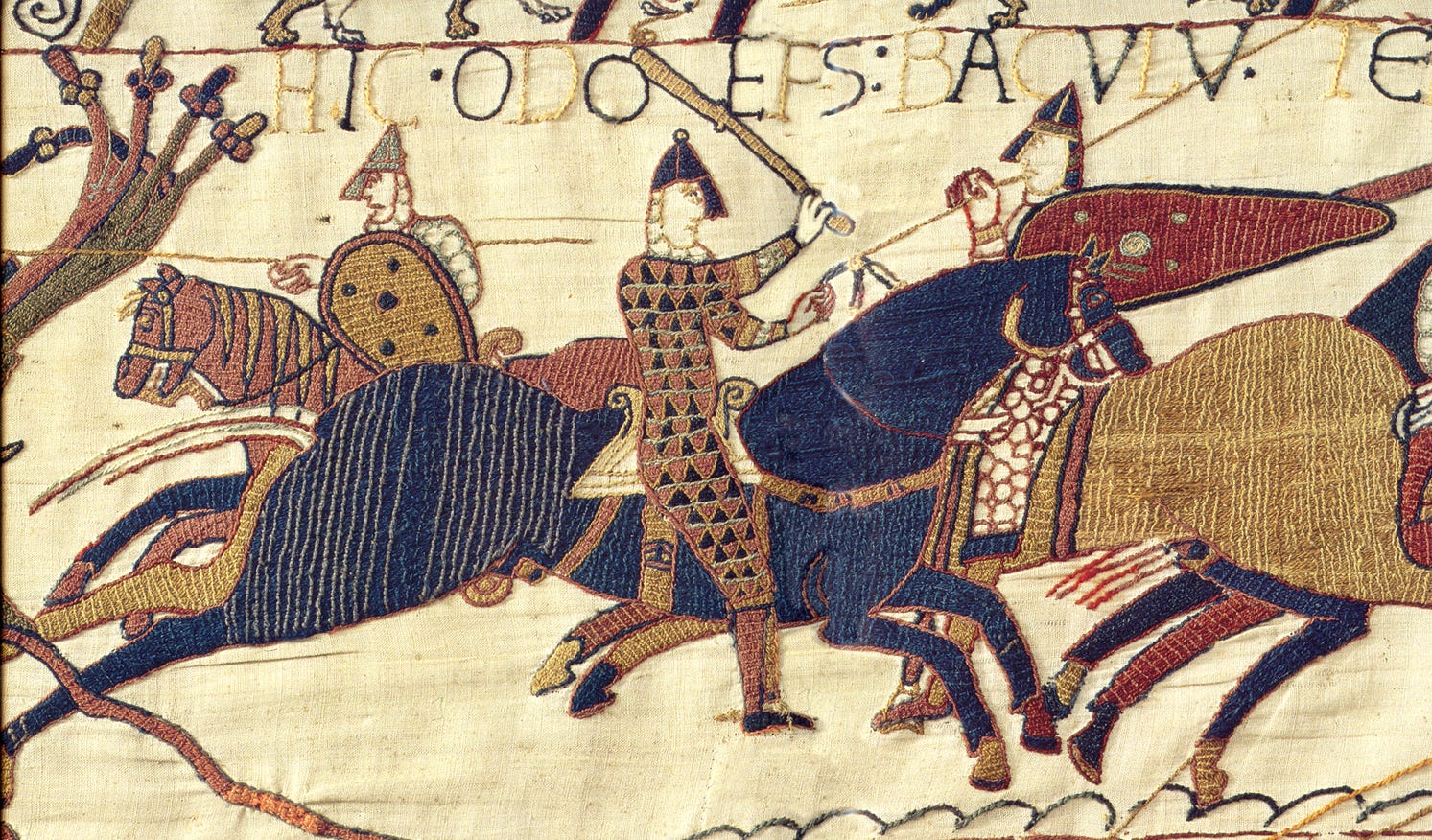
The fundamental issue with the ‘Bayeux Tapestry on loan at the British Museum discourse’ is that my visit to Normandy in 1999 to witness said embroidered cloth is wholly remembered for my introduction to French service station toilets and the concept of squatting.
And this sort of thing happens all the time. Only last week, while reflecting on my leader writing past, I recalled how my memory of the week following the late Queen’s death in 2022 was that the Evening Standard’s comment editor had gone on annual leave, I had to cover and it was a total nightmare.
Surely we all have personal, often trivial relationships with otherwise national events?

I could go on. John Prescott punching a voter during the 2001 general election? That would be my Dad getting bumped from a radio slot to make way for the breathless commentary. The September 11 terror attacks? My school locker being broken into. The death of Osama bin Laden? Phil Neville — who tweeted about the news.
On autopilot
One of the odder aspects of the first Covid lockdown (the proper one that people broadly speaking followed) is that, while a lot of flashbulb moments were happening, it was also a bit same-y. Like a mid-2000s Coldplay record but, you know, low key terrifying.
During the Passover seder that spring, when the youngest child asked “Why is tonight different from all other nights?” the answer was: er, we’re all in our livings rooms, on Zoom, nibbling on food we’d rather not eat. It’s not that different.
For those fortunate enough to work from home, every day was just pretty much like the last, with little need for the brain to disengage the autopilot. The topography of memory resolutely flat, like one of those dead straight desert highways, with their dangerous loss of perspective that drivers are warned about.