


There was no change in government, no great moment of national catharsis nor even a deputy prime minister to liven things up by thumping a voter. Yet the 1992 general election can credibly claim to be one of the most consequential in British post-war history.
This is not, of course, how it is remembered. For many Labour supporters, it is the foundational trauma. If the party couldn’t win after the poll tax and a severe recession, could it ever triumph again? For the Tories, they bemoan the fact that the 14 million votes secured — a figure that remains a record — delivered a majority of just 21.
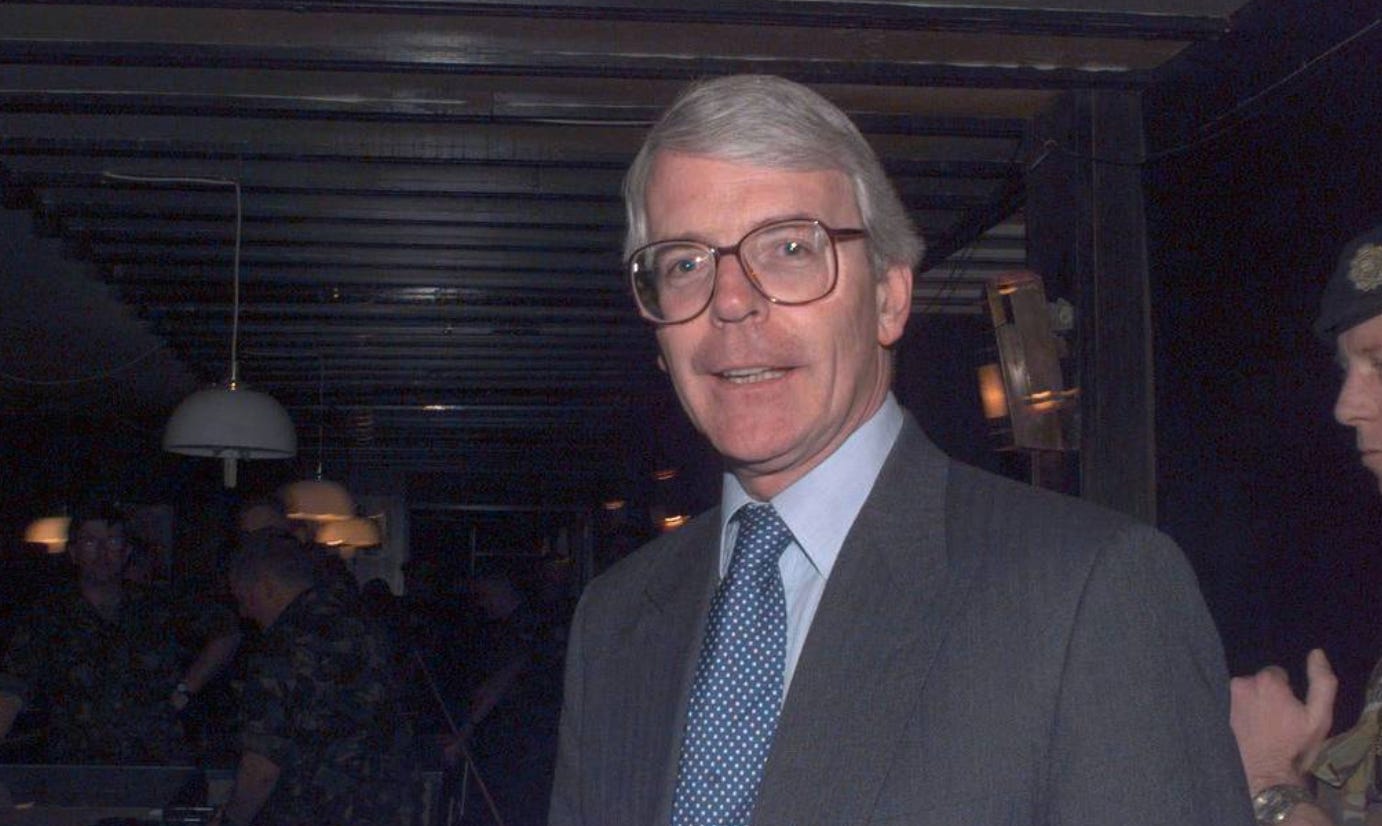
As for the prime minister himself, victory was bittersweet. John Major had proven his critics wrong, but found himself at the helm of a parliamentary party transformed. He recently reflected:
We won the ’92 election against everyone’s expectations. But then the old guard who remembered the war, who were determined we would never break away from Europe and have another war left the House of Commons… and a new, different breed of more ideological young members came in and it was a different House of Commons.
A change election
Some of the names who stood down that year are certainly striking. Former chancellors, Geoffrey Howe and Nigel Lawson, as well as other generally pro-European cabinet ministers such as John Wakeham, Peter Morrison and John Moore left parliament. In their stead arrived the likes of Bernard Jenkin and Iain Duncan Smith.
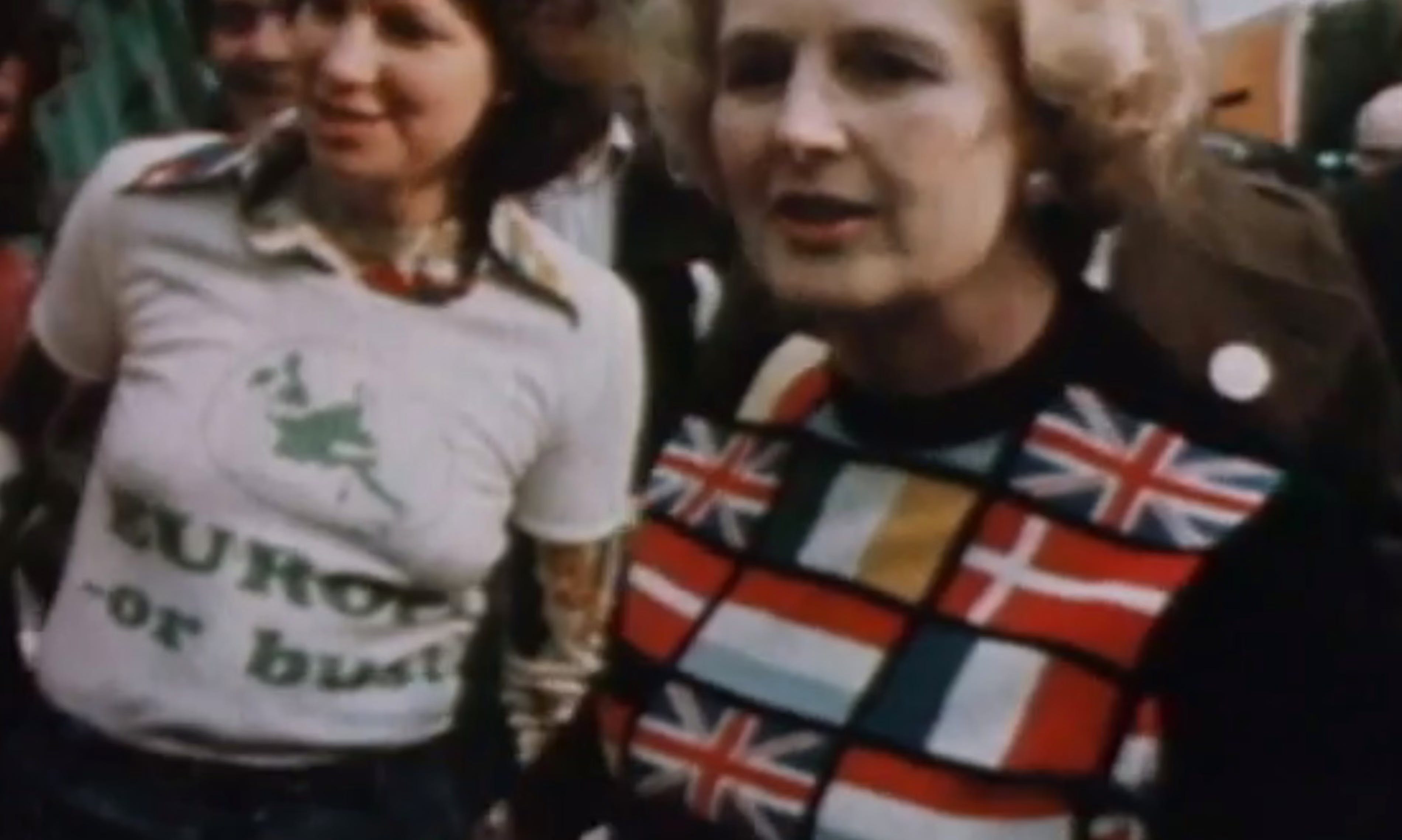
To be clear, people did change their minds as well. Until the mid-1980s, Margaret Thatcher was broadly pro-European. As Education Secretary in the Heath government, she vigorously (by which I mean, she wore The Jumper) campaigned for a ‘Yes’ vote in the 1975 European Communities referendum and as prime minister was hugely influential in the creation of the Single Market.
Lawson himself undertook a similar journey from being pro-European on economic integration (as chancellor, he was instrumental in the UK’s ill-fated entry into the Exchange Rate Mechanism) to becoming a prominent advocate of British withdrawal from the bloc, even going on to lead the pro-Brexit group, Conservatives for Britain.
There were other incentives at play as well. Euroscepticism became a marker of right-wing credibility within the party, gradually morphing into a prerequisite for selection by Conservative associations. Meanwhile, the Tories’ internal rules and backbench power allowed factions, such as the Maastricht rebels, to wield outsized influence.
Finally, there’s the thing that too often gets swept under the Remain carpet. Ever-closer union is a real thing. You don’t have to attend Thatcher Bruges Speech viewing parties to accept that staying in the club or joining a single currency would involve a loss (or at least a pooling) of sovereignty.
But in casting his mind back to the replacement of an old guard, Major was getting at a broader theme: the passage of time.
Peace out in our time
When David Cameron warned during the EU referendum campaign that peace and stability in Europe could be at risk if Britain voted to leave, he was largely mocked. To be fair, this was partly because only months earlier, the prime minister was on record saying he would be prepared to take the UK out of Europe if he didn’t secure the reforms he sought in his rushed renegotiation. But, let’s face it, few would have taken him seriously either way.
Soon after the polls closed, it became clear that the referendum had revealed various demographic cleavages in the country. Broadly speaking, the older you were, the more likely you were to vote Leave. Indeed, the over-65s supported Brexit by a margin of almost two-to-one. But this masks an important wrinkle in the data.
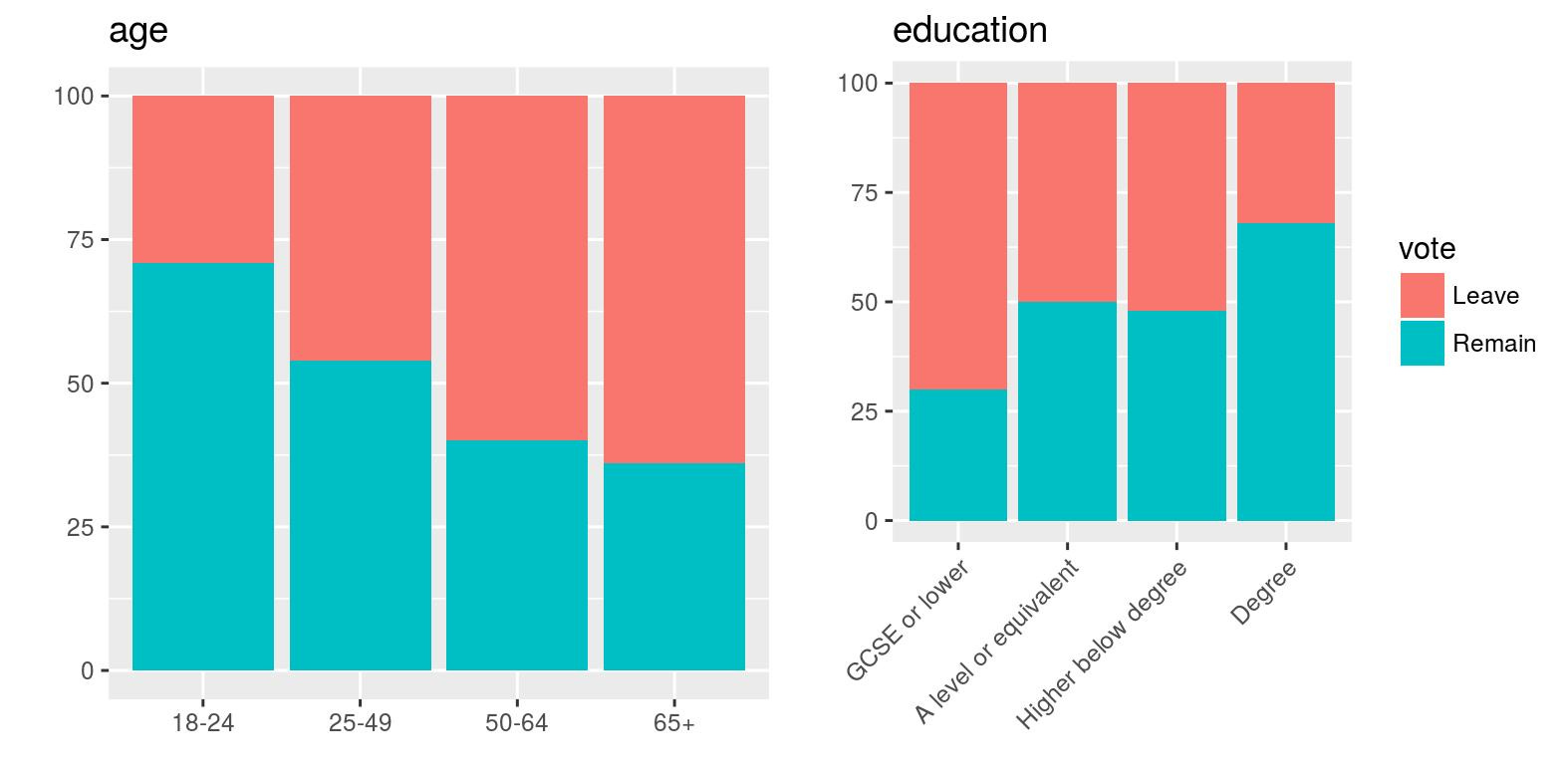
Research Kieron Devine, published by the London School of Economics, suggests that the very oldest generation — that is, those who experienced the majority of their formative years during the Second World War — displayed “significantly more positive views towards European integration than the immediate post-war generations.”
Indeed, only the youngest voters — at that time, millennials1 — displayed more positive attitudes towards the EU than the war generation. This makes a certain amount of sense: having actually experienced a total war on the European continent (rather than just having seen movies about it), that cohort was keen not to go through it a second time, or at least for their grandchildren to avoid a similar same fate2.
We see this sort of thing all the time. As older generations die out, the scope to repeat their errors — whether from ignorance or sheer boredom — appears to grow exponentially. That is why the post-war generation established institutions, from the United Nations and World Bank to the European Union, as a firewall against civilisational relapse.
Yet, from the rise of populism to the social media-supercharged reassertion of conspiratorial antisemitism as the “everything explanation”, it is clear those institutions are not self-reinforcing and the guardrails are not holding. So, I suppose we are all John Major now. The question is: what will we do with the legacies we’ve inherited?
We were the future once
However, the author notes that while the post-war generation are more likely to associate the EU with bringing peace than their younger counterparts, they display more negative overall attitudes towards integration
I much liked your perspective today, Jack. Sorry, but it’s a big one today…
There’s a lesson for politicians who both disagree with a particular policy and likewise do not believe it will come to pass: just because it is of less importance personally, it doesn’t mean it won’t come to pass. That is the failure of Cameron & Merkel & those (ephemeral) EU “renegotiations” in the run up to 2016.
I suppose that given its history, Britain was always “sui generis” in its attitude to Europe. I don’t think Cameron cared to think in those terms. Thatcher did, but expressed herself not in the most rational of terms.
I would have thought repeating the errors of the past is not a sane proposition in a world brimming with nuclear wotsits. Which reminds me that the commentariat today refers to nuclear weapons, and their likely use, in a manner unthinkable during my grandparents’ times. So what’s going on?
It’s pause-provoking to think there must be strategists who are thinking about tightly-focused tactical nuclear usage, such that life on Earth remains, post “apocalypse”. I think that is a lunatic fallacy, if you don’t know exactly how the other side is thinking. (Harry Truman’s calculus in 1945 was relatively easy, if he actually took the final “target” decisions.)
BTW, I only just noticed a detail about Maggie’s EEC ref. jumper: she was always, let’s say, wary of Germany. I suppose it’s just a coincidence that the WG flag is not on it.
Thanks Jack. Most interesting. I was 24 when de Gaulle first blocked the UK from entering the common market and, like many, was mortified; then he did it again in 1967! One of his reasons was that the UK was too closely tied to the USA. Ha! As the EU debate gathered pace, I was clearly an outlier for my age group in adamantly voting to leave the EU. I remain convinced it was the right decision. The dream of unity was/is persuasive. The reality is that the human beings implementing it stumble over their egos, their politics, and their self-interest. This poisons the dream for decades. A time may come for a viable EU, but not for a century or two.