Having never suffered a near-death experience, I am forced to find perspective and spiritual awakening from alternative sources. Specifically, this 2008 Sunday Times review of William Shatner’s autobiography, Up Till Now. It is fair to say that the newspaper’s film critic, Tom Shone, did not enjoy the book. But what bothered him most was the gratuitous punctuation.
As early as the second paragraph (one presumes the Sunday Times’ literary editor refused permission to open the piece with it), Shone observed:
Never trust a man who uses exclamation marks - they're the prose equivalent of canned laughter, signalling looming comic intent together with a fierce distrust that we will not get the joke.
The “prose equivalent of canned laughter”. I’ve never been able to detach that line from my retina, and henceforth committed to using the exclamation mark sparingly. Anyway, there’s rarely a time when something else won’t suffice. In a text, I find that “haha” has more flow, while in a work email, emotional neutrality is key. As for posting on social media, exclamation marks provide a false sense of security — there will always be people who never get the joke no matter how painstakingly telegraphed.
In many ways, Shone’s maxim is the modern-day equivalent of Mark Twain’s position on modifiers:
“Substitute ‘damn’ every time you’re inclined to write ‘very;’ your editor will delete it and the writing will be just as it should be.”
Although, like virtually every quotation attributed to Twain, there’s damn little evidence he actually said it.
What’s GOING ON with titles?
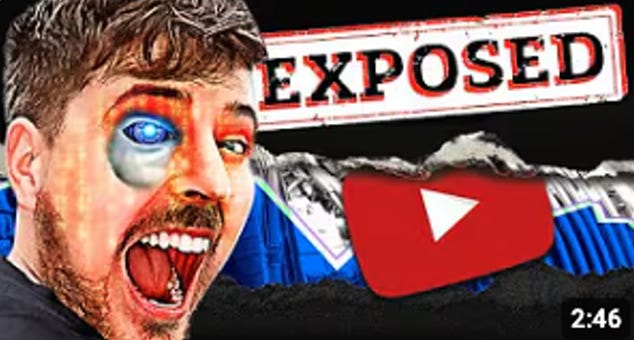
Of course, in our fledgling post-literate society, where scrolling and short-form media are replacing the written word, new patterns have emerged for which fake Twainisms are yet to be invented. My latest special interest, for instance, is YouTube video titles and in particular, the use of capitalisation. Bear with me — this is going somewhere.
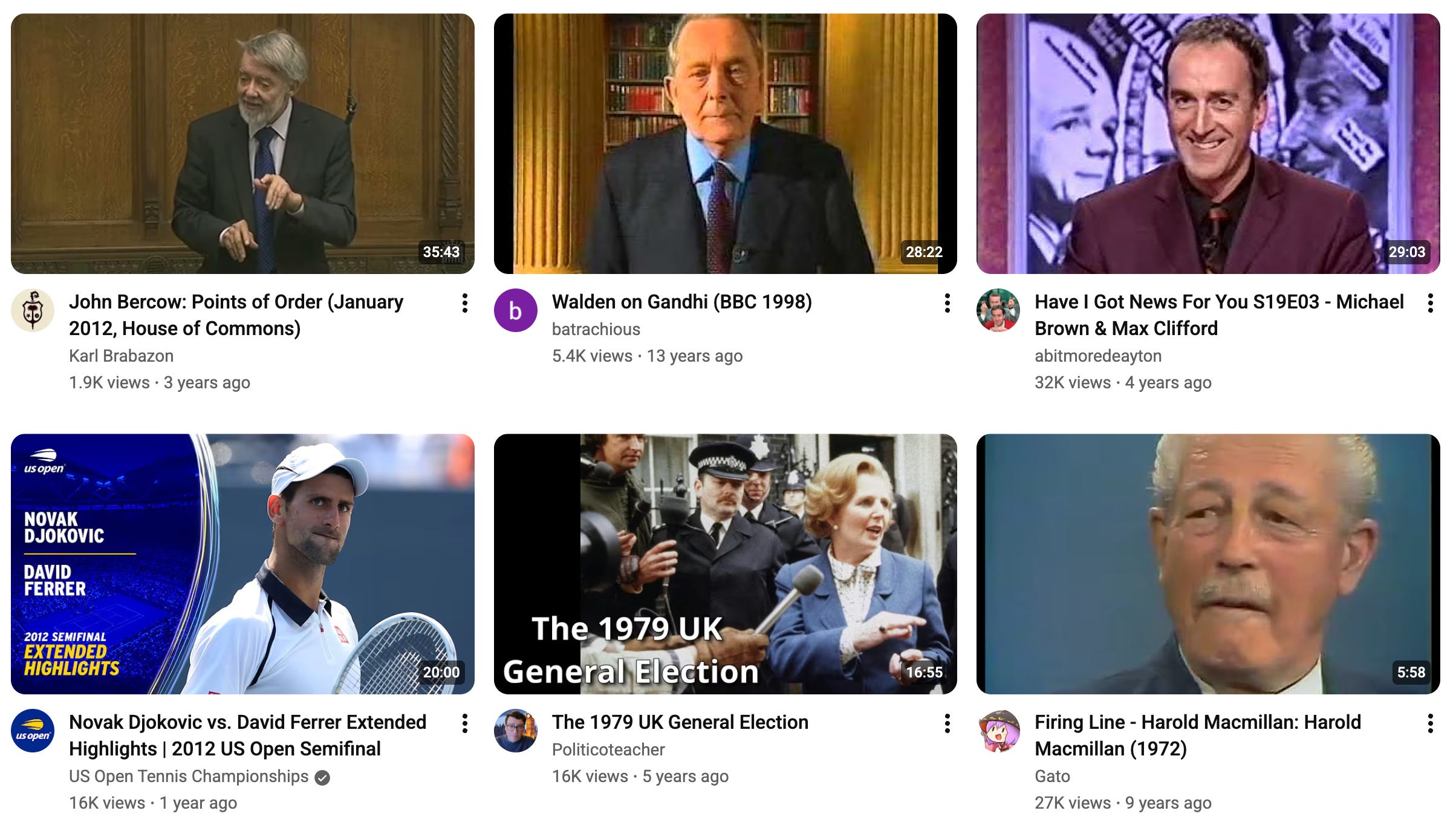
Head to the YouTube homepage and you’ll be greeted by a sea of thumbnails and titles vying for your attention. Results will vary — yours may not have quite so much Brian Walden as mine — but the point stands. The image is clearly important, as it determines whether someone clicks, and the platform uses higher click-through rates and watch time to determine its recommendations.
Titles are critical too, both for searchability and in building intrigue. Yet everywhere I stream — in the living room, bedroom and bathroom — I witness the same phenomenon: seemingly random capitalisation. TalkSPORT is a particularly enthusiastic exponent of the art.
Simon Jordan REACTS.
Simon Jordan SUGGESTS.
And my personal favourite, Andrew Flintoff REFLECTS1.
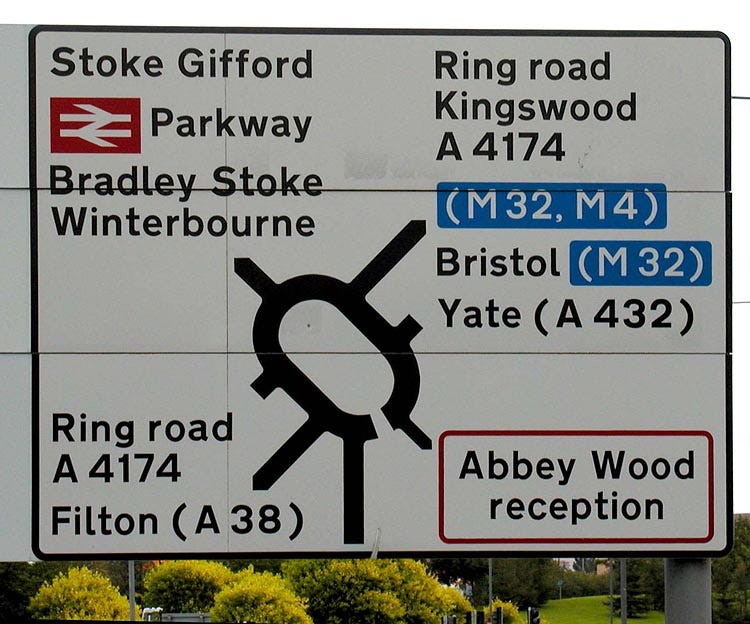
Look, we’re all vying for the resource curse of our age — attention. I put thought into newsletter subject lines (biggest takeaway: never include “climate change” or “EU”). But the random caps lock generator and its faux drama has got to go. Don’t take it from me — take it from British road signs2.
The system, created by designers Jock Kinneir and Margaret Calvert, has been used on all UK roads since 1965. Kinneir and Calvert came up with their own typeface, now known as Transport, and adopted lower-case words (with initial capitals) because this helped people to recognise words more quickly and from a greater distance — handy when whizzing down the recently constructed M1.