


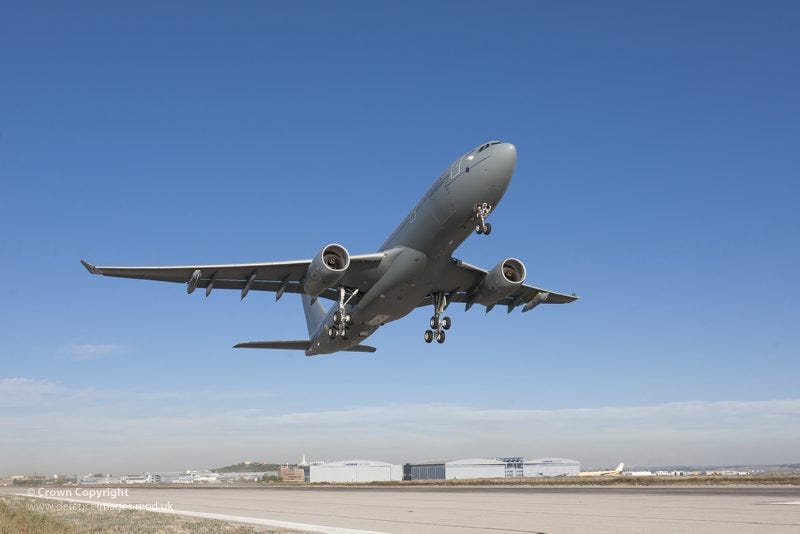
My instinctive reaction was snark. Speaking en route to New York for the UN General Assembly, Andy Burnham revealed he had agreed to provide Saudi Arabia with “defensive air-to-air refuelling” in order to combat the cost of living.
What next: scrambling Royal Air Force F-35s to intercept a plan by Greggs to raise the price of a sausage roll to £1.40? Except, of course, the prime minister has a point — keeping oil supplies flowing is absolutely critical to the cost of living.
Last week, Houthi rebels launched a missile attack on Riyadh. This follows the Iran-backed militia, which already controls vast swathes of Yemen, seizing Bab al-Mandab, the strait that separates the vital shipping lanes of the Red Sea from the Indian Ocean.

If earlier this year we risked running out of sky, now it is the turn of waterways.
A barrel of laughs
Since February, when the US and Israel launched major air strikes against Iran, which in turn effectively shuttered the Strait of Hormuz, the oil price has risen from $70 a barrel to $100 or so, the exact figure depending on the US President’s most recent social media posts.
This not only impacts the price of petrol and diesel, but everything from food and fertiliser to construction and plastics. Really, anything that needs to be transported from one place to another. This has contributed to the UK’s stubbornly high inflation, and why interest rates are expected to rise this year.

So, if British armed forces can assist the Saudis in protecting oil assets and keep shipping lanes open, that may calm the markets and put a lid on price rises. Hey, it’s worth a try — and a lot less insulting to voters than the Liberal Democrats’ latest plan to cut fuel duty by 10p per litre. Moreover, it helps to guard against the populist and reductive ‘welfare or warships’ narrative.
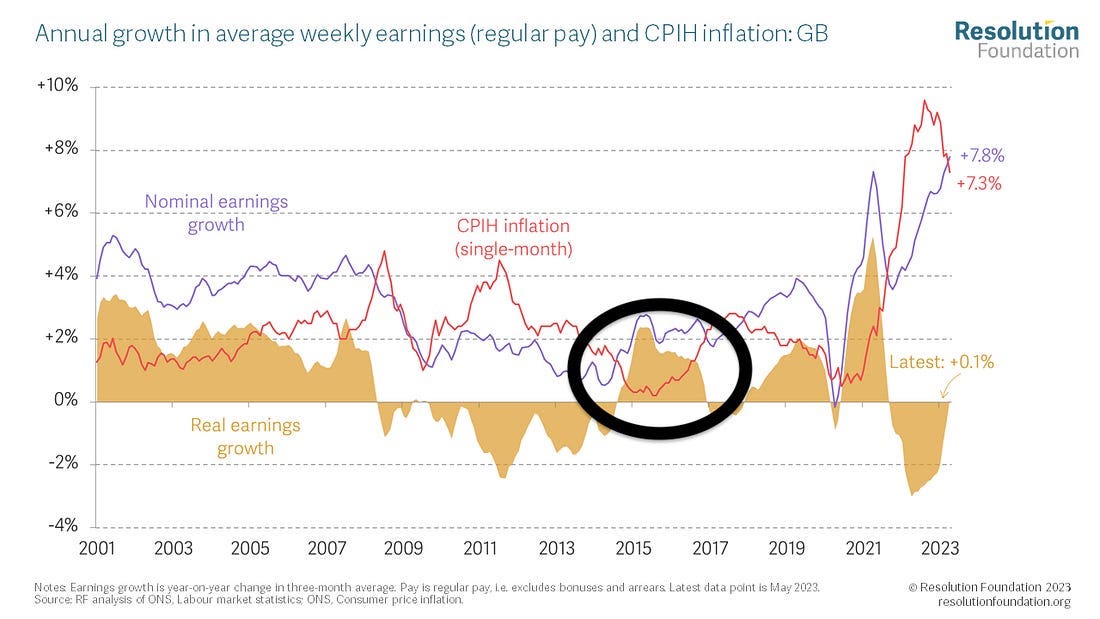
But it remains an open question whether a political dividing line centred around the cost of living is a wise one for any government. On the one hand, voters really do care about the growing cost of the weekly shop and visibly wince at the forecourts. If you had a free choice between rising or falling living standards, my advice is to take the former. That’s how David Cameron got re-elected in 20151.
On the other hand, no prime minister is in control of the cost of living, let alone given the proclivities of the current occupant of the Oval Office, who is proving adept at raising the price of everything from oil to government bonds. But there’s another problem — sometimes it is the government’s job to make things more expensive.
Chim Chim Cher-ee
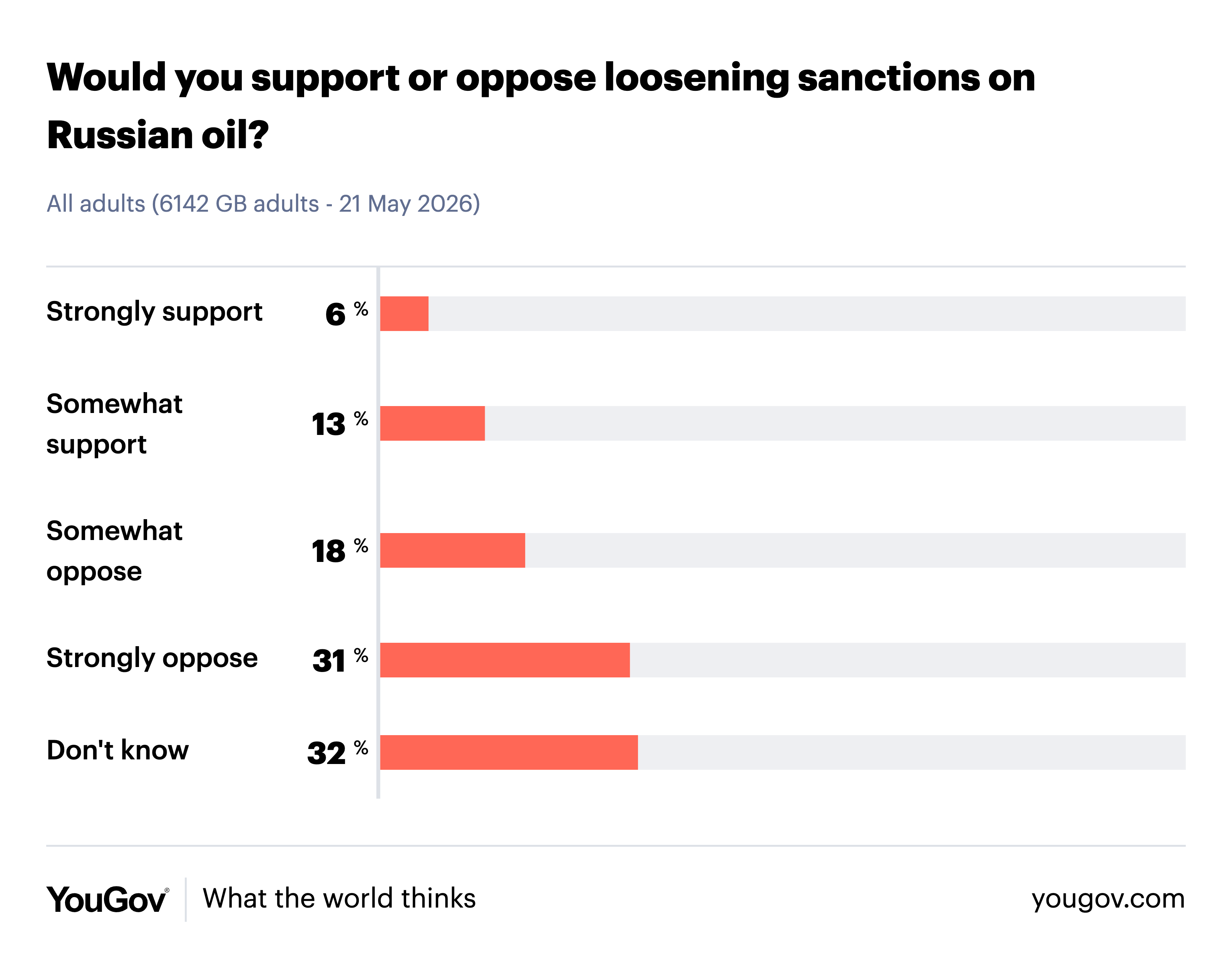
When Vladimir Putin launched his full-scale invasion of Ukraine in February 2022, the UK was at the vanguard of imposing sanctions across the Russian economy and individuals, which (alongside supply disruptions) contributed to the soaring cost of energy and an inflationary spike.
In other words, the government made the cost of living worse but deemed this a necessary price to pay to degrade Russia’s war effort and uphold international law. This was broadly supported by the public back then and to this day.
And this pattern recurs repeatedly outside of war. Thanks to child labour and animal welfare laws, it costs a little extra to get your chimney swept or make scrambled eggs. Governments have introduced building codes to prevent fires and banned asbestos to cut cancer rates. There they go again, promoting safety, fairness and sustainability over short-term affordability.
And then there is the cost of money itself. The Bank of England — which was handed operational independence to set interest rates by the government — can raise rates and make everything from car loans to mortgages more expensive in order to secure a longer-term goal which is something resembling price stability.

God Hates Flags
A government dedicated to improving the cost of living beats plenty of alternatives, from personal revenge (Trump) to territorial revisionism (Putin). And, in the words of Nobel laureate John Hume, who was in turn quoting his father, “You can’t eat a flag”. By which he meant that “politics is about the living standards, about social and economic development. It’s not about waving flags at one another.”
Far be it for me to disagree with one of the great peacemakers of the 20th century. And I really don’t. But at the same time, not every decision can be judged by whether it makes life cheaper. From raising taxes to shifting consumption spending to defence, sometimes, governments have to do things that make voters poorer in the short-run but protect our values.
The trick, as ever, is which ones and then how to get re-elected later.
In the six months prior to May 2015, and after roughly six years of decline, real wages were finally above water. Talk about good timing