


“If you can’t love yourself, how in the hell are you going to love someone else? Can I get an amen?” These words, popularised by shale gas rights lessor and drag queen, RuPaul, can also operate as a reasonable first principle for political parties.
For several years, Britain’s two largest parties have appeared intent on throwing shade at their respective electoral bases. Labour alienated core supporters with its rhetoric on immigration and asylum, while it had to be dragged kicking and screaming to repeal the two-child benefit cap.
The Conservatives, for their part, have effectively told anyone who doesn’t consider Brexit a triumph or climate change a fuzzy, future-tense phenomenon, that they can take their business across the street. It’s all a little strange, and a Downsian median-voter explanation doesn’t neatly track.
Vote counting
True, across the democratic world, but most especially in first-past-the-post systems such as Britain’s, parties are incentivised to broaden their appeal and in doing so discomfort their base, in order to attract floating voters. This remains true even in an era of bloc party politics, and it comes down to simple arithmetic:
Driving a die-hard supporter to the polls earns you precisely one vote. In Labour-Tory marginals, convincing that voter to switch is effectively worth double. The trick to winning parliamentary landslides is to balance both needs. And to be fair, it’s harder than it looks.

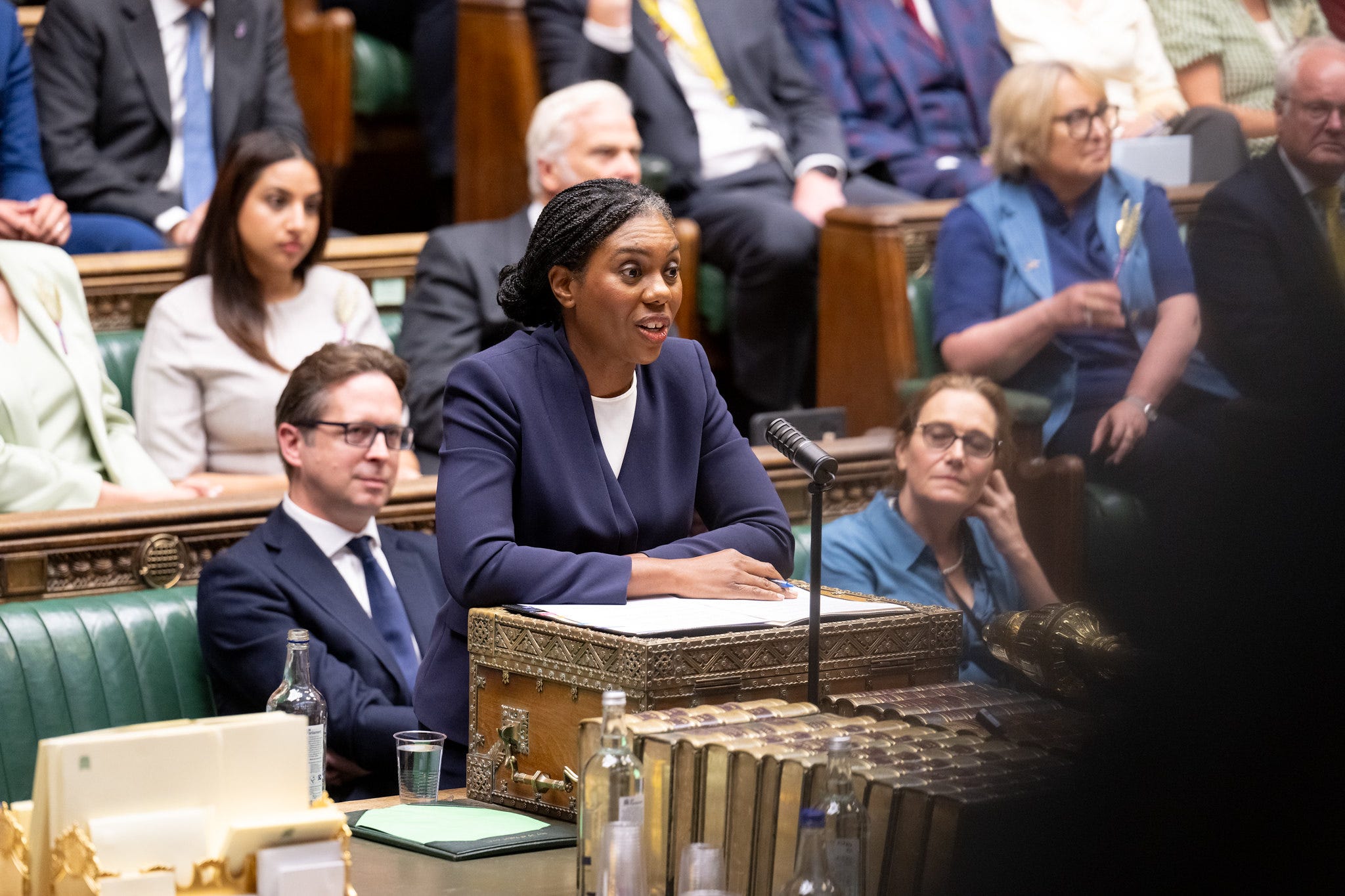
But a good place to start is by identifying potential supporters. That is, those who may be predisposed to voting for you and just need a little fiscal persuasion or rhetorical reassurance. Ideally, they should also live in marginal constituencies, and earning their support shouldn’t cost you too much politically (by pushing as many or more out of the tent). In this regard, Kemi Badenoch is finally onto something.
In an interview with the BBC ahead of her party’s conference in Birmingham, Badenoch confirmed that the next Conservative government would scrap the so-called £100,000 cliff edge. At present, if either parent in a household earns more than £100,000, the family loses eligibility for free childcare hours, so one extra pound of income can cost thousands.
(This compounds a second problem, which is that those earning between £100,000 and £125,140 lose £1 of their tax-free personal allowance for every £2 earned above £100,000, which pushes their effective marginal tax rate to 60%.)
Speaking as a former Treasury official who wanted nothing more than to raise your fuel duty, the current system is completely mad, economically damaging and any sensible party would seek to reform it. The surprise is only that the Conservatives are the ones proposing to do so.